
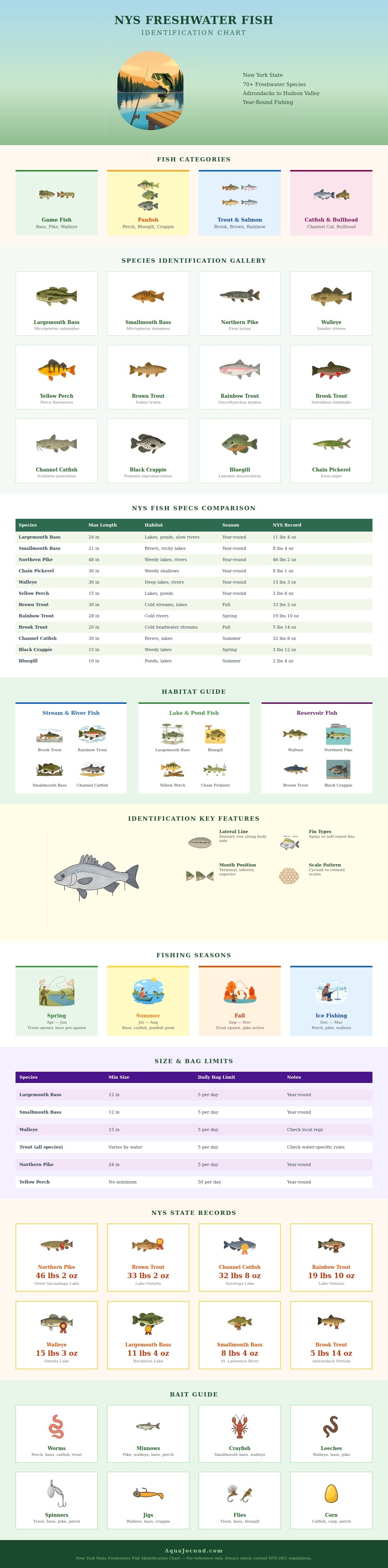
To be able to identify the fish in New York, you must have an understanding of the physical characteristic of the fish species and where the fish species live in the state. Each fish have specific physical characteristics in its body that provide the information necessary to identify the type of fish. By being able to correctly identify each type of fish species, you will be able to follow the regulations for that type of fish species, but incorrectly identify the fish will result in you violating the fishing regulations of New York.
To find fish in New York, you should first learn about the different categories of fish in the state. For example, game fish such as bass, pike, and walleye requires heavy fishing gear and require the angler to be patient in there attempts to catch these type of fish. Panfish, such as perch, bluegill, and crappie, can be caught with light fishing gear.
How to Identify Fish in New York
Trout and salmon species lives in areas with cold water, and catfish live in areas with murky water. The type of fishing gear that you use will depend upon the category of the type of fish that you want to catch in New York. Some examples of the physical characteristics of specific types of fish include the different types of mouths that live on bass fish species.
Largemouth bass have large mouths that extend beyond the eye of the bass, and the largemouth bass may display a dark stripe on its lateral line. Smallmouth bass have smaller mouths than largemouth bass, and may have bronze bars on their bodies. Pike and pickerel fish can be identified by the scales on their bodies and the pattern of those scales.
Walleye have glassy eyes that glow in the dark. Trout have spots on their bodies that can be either brook trout spots, brown trout spots, or rainbow trout spots. Characteristics of fish to examine for identification include the lateral line, shape of the fins, angle of the mouth, and texture of the scales of the fish.
The habitat in which fish live is a major factor in finding those fish. Brook trout, rainbow trout, and smallmouth bass lives in cold streams. Largemouth bass, bluegill, perch, and pickerel live in lakes and ponds.
Walleye, pike, and crappie live in reservoirs. The type of water that you use will determine the different types of fish that will be found in the waterways of New York, and you must find a match between the water type and the fish species that you wish to catch. Where fish are located and their behavior change with the different seasons of the year.
For instance, trout and bass are most active during the spring, but panfish and catfish is active during the summer. During the fall, pike and trout are active during these months, and during winter, perch and walleye can be found caught through the holes in the ice cover of the New York lakes and ponds. Additionally, there are limits to the number of fish that can be caught during each season of the year, such as limits on the number of bass that can be caught or the size limit of the pike that is catch.
In order to catch the fish species in New York, there are certain type of bait that will be required. For instance, worms are a type of bait that will attract many species of fish. Minnows is a type of bait that will attract pike fish.
Crayfish bait will attract smallmouth bass. The type of bait will depend upon the type of forage that the fish eats, and you want to make the fish less suspicious of the bait by using the correct bait for the specific type of fish. A common mistake in fishing for fish in New York is not checking the specific rules regarding the fish in each waterway.
For instance, each waterway has specific lengths of fish that are allowed to be caught, as well as the specific locations in those waterways where the fish species are located. Additionally, it is beneficial to first learn how to identify panfish before learning how to identify the larger fish species in New Yorks waters. Following these steps will ensure that anglers accurately identify fish, enabling anglers to fish more effectively in New York.
