
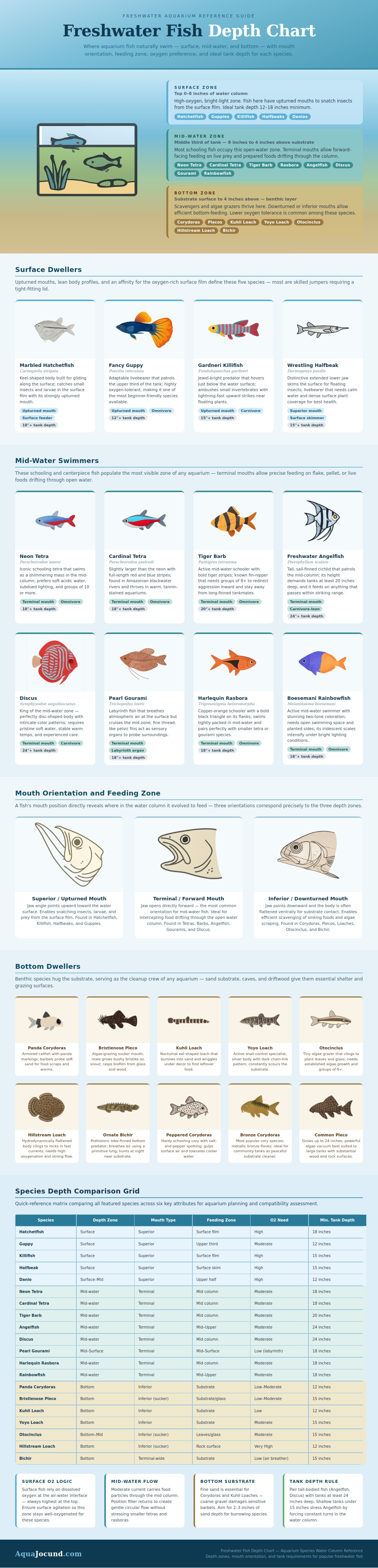
An aquarium can contains different layers of water within the aquarium. Each of these layers is used by different species of fishes. Within an aquarium, there are actualy three different zone that are represented by these layers of water.
These zones include the surface zone, the middle zone, and the bottom zone. Each of the different species of fish are adapted to only one of these zones due to the body shape of their fish species, the shape of their mouths, and their requirement of the amount of oxygen that exists in there environment. If these factors do not correspond to the features required of that zone, those fish species will either starve or become stress within the aquarium.
The Three Zones in an Aquarium
The zone at the very top of the aquarium is referred to as the surface zone. The surface zone contains the most oxygen within the aquarium. Many fish species lives within this zone due to the presence of an incoming oxygen into the aquarium.
Most fish that live within the surface zone have mouths that point upward towards the surface of the aquarium where food will drift. Two example of fish that live within the surface zone are hatchetfish and guppy. Because most fish that live in this zone will jump out of the aquarium, it is importance that the aquarium contains a lid.
The middle zone of an aquarium is the zone that exist in the center of the aquarium. This zone tends to contain the most fish within the aquarium. Most of the fish species that live in the middle zone include schooling fish like tetras and gouramis.
Most fish in the middle zone have mouth that face forward so that they can eat the food that floats through the water within the aquarium. Additionally, these type of fish require that there is a current in the aquarium so that the food can drift to them. However, if there are too much fish in this zone, the fish will begin to fight over space within the aquarium, and some will begin to nibble on the fin of other fish in the aquarium.
The bottom zone within the aquarium is the zone that is in the lowest portion of the aquarium. This zone is where the fish eats the food that has fallen to the bottom of the aquarium. Most of the fish species that live in the bottom zone include corydoras, loaches, and plecos.
Most fish species in this zone have mouths that point downward towards the bottom of the aquarium where the food is. Because these fish spend most of their time on the bottom of the aquarium, it is important to ensure that the substrate of the aquarium are suitable for these species. For instance, if the substrate is made of sharp gravel, it may damage the sensitive fin of these fish species.
The mouths of the fish species can reveal to aquarium owner the zone in which that species lives. Fish species that have upward pointing mouths live in the surface zone. Fish species that have forward facing mouths live in the middle zone.
Fish species that have downward pointing mouths live in the bottom zone of the aquarium. Additionally, the mouth of the fish species indicate the type of food that that species will require. For instance, if a species has an upward pointing mouth, it will require food that float on the surface of the aquarium.
Similarly, fish species with downward pointing mouths will require food that sink in the aquarium. Any provision of the wrong type of food for the fish species can result in the fish species not being able to eat, and the food possibly rot in the aquarium. The levels of oxygen within the aquarium also differ depending on the zone within the aquarium.
The surface zone will have the highest level of oxygen within the aquarium. The bottom zone will have the least amount of oxygen in the aquarium. Each species of fish have adapted to their zones according to the amount of oxygen that is required to survive.
Therefore, it is up to the care for the aquarium to ensure that there is enough oxygen in the water to accommodate for all of the fish species within all of the zones of the aquarium. When creating an aquarium, there are two factor to consider: the depth of the aquarium and the species of fish to be contain within the aquarium. The aquarium should be deep enough for the tallest fish species to completely live within the aquarium.
Additionally, it is important that each zone of the aquarium has at least one species of fish that live within that zone. If the aquarium contains each species of fish to one zone within the aquarium, then the aquarium will be balanced. A balanced aquarium is one where each species of fish has enough space and food to survive.
