
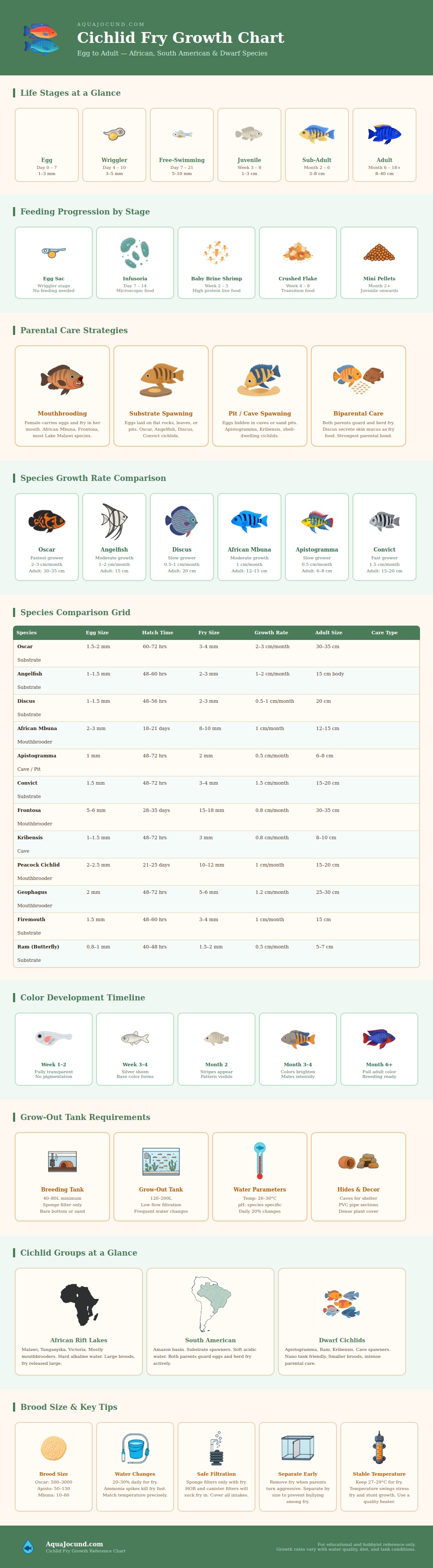
Cichlid fry rearing involve several life stages of the cichlid fry, and each stage has specific requirements for feeding and care to ensure the survival of the fry. When a female cichlid lays the eggs, they can either be laid on flat surface or be attached to rocks. In some species, the adult fish will hold the fry within there mouth.
After the eggs are laid and hatch, the fry will become wrigglers. Wrigglers have not yet absorbed the nutrient from the yolk sacs attached to them, so they cannot swim active. At this stage, they will remain in one place to absorb the nutrients from the yolk sac.
How to Care for Baby Cichlids
When the fry have absorbed all the nutrients from the yolk sac, they will become free swimming fry. At this stage, the fry will require microscopic food to survive as they dont yet have developed stomach. The feeding cycle for cichlid fry must be followed according to the size of the mouths and digestive systems of the fry.
Initially, the fry will require infusoria as there mouths are so small that they cannot eat food larger than infusoria. After they have consumed all the infusoria, the breeder will provide the fry with baby brine shrimp as they are high in protein necessary for there growth. Eventually, they will outgrow the baby brine shrimp and require crushed flake.
Finally, they will outgrow the crushed flakes and begin to be provided with mini pellets. If any of the food that is provided are too large for the fry, the fry will not be able to consume the food, and the uneaten food will contribute to the ammonia levels in the water. Depending on the species of cichlid, the fry may require the care of their parent.
Some cichlid species will have mouthbrooding behaviors, where their parents will hold the fry within the mouth for several week. Other cichlid species will lay their egg on flat surfaces, such as rocks, and both parents will guard their eggs and fry. In these cases, humans must ensure that they dont interfere too much with the fry as they may cause their death when the fry were able survive within their parents mouths.
The growth rate of the fry will determine the amount of tank space that you will need for the fry, and the tank space that you will need will vary depending off the species of cichlid that you plan to purchase. For example, species like oscars will grow quick to there adult size in less than one year, so you will need to provide larger tank for these species. Conversely, species like discus will take longer to grow to their adult size and will remain relatively small throughout there life.
Additionally, you can also determine the age of the fry by observing there color; cichlid fry typically start as a transparent color, but will develop the color and patterns of their adult fish as they grow to adulthood. The proper setup of the aquarium will also be important for the survival of the fry. For instance, the tank should contain bare bottom and a sponge filter for the fry, and you should avoid powerhead that may suction the fry into the filter.
The breeder should change the water in the tank each day by approximately 20% to balance the ammonia in the tank, and the water temperature should be maintained at levels between 27 and 29 degrees Celsius. If the temperature of the water is allowed to swing within the tank, these temperature swing may stress the fry due to the high metabolism rates of fry. Finally, the fry should be separated according t
