
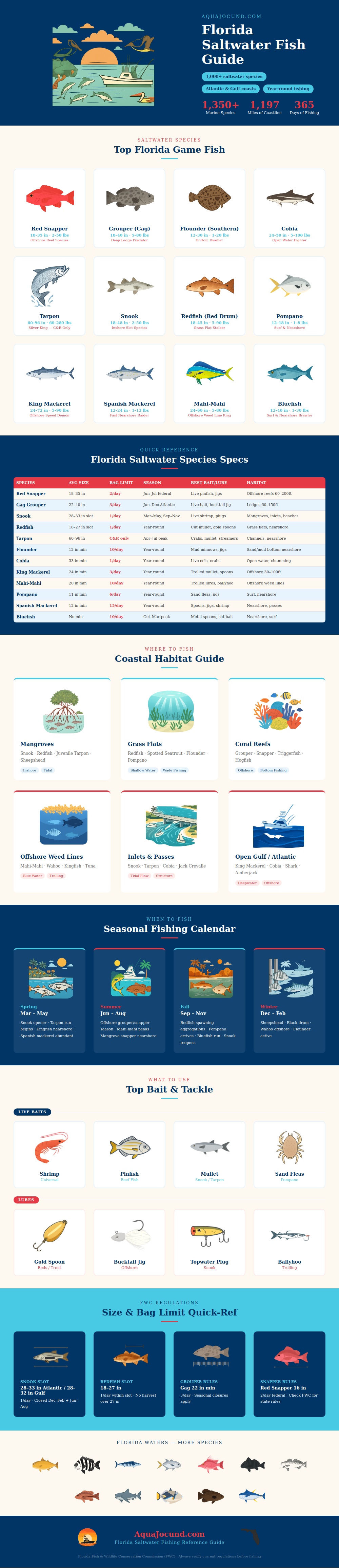
Florida offer many different types of saltwater fishing due to the fact that Florida has over a thousand mile of coastline and over a thousand different species of fish in it’s waters. In order to catch these fish, the fisherman must understand the specific type of fish that they is trying to catch, as well as the rules regarding the catching of these species. Using a reference chart for each type of fish will allow the fishermen to use strategy to catch the fish rather than using guesswork to determine how to catch them.
Redfish lives in the inshore area of Florida, and live within the grass flats in their area. Redfish use their copper bodies to hide within the grass. Additionally, redfish eats crabs and shrimp, so using cut mullet or a gold spoon will attract the fish.
Florida Saltwater Fishing Guide
The slot limits for redfish must be followed to ensure that the redfish population is protected, as well as to ensure that the redfish that are large enough to eat is protected. Snook live in the inshore areas of Florida, and typically live near the mangroves in there designated area. Snook eat the prey that is found near tidal flows, so using live shrimp that is held under a popping cork will attract the snook.
Additionally, snook spawn in the spring and the fall, so paying attention to these seasons will assist the fishermen in finding snook. Offshore fishing techniques are used to catch the species of fish that live in these areas. Groupers live near the ledges in the ocean, and live within holes in the rocks in these areas.
One way of catching groupers is to drop a live pinfish near the grouper. However, gag grouper will dive into these hole to escape the area. Red snapper live in schools in the reefs in the ocean.
Additionally, using jigs placed upon the bottom of the reef will attract the red snapper. Federal season for red snapper must be followed in order to sustain the populations of red snapper in Florida’s saltwater areas. Additionally, using heavier tackle for red snapper and grouper is required because both of these species lives deeper within the ocean than the other fish species.
Pelagic fish are the fish species that live in the nearshore and offshore areas of Florida’s coastline. King mackerel are fish species that live in the nearshore areas of Florida. Additionally, mullet rig will attract the king mackerel to be caught.
Spanish mackerel live in the same areas as the king mackerel, and you will find them using spoons to catch these fish. Mahi-mahi live in the offshore areas near the weed lines and sargassum. Additionally, using ballyhoo will attract the fish to be caught.
However, because Mahi-mahi will stay near floating debris in the ocean, fishermen may have to move their boat to where the fish are located. The habitat of the fish will determine where you will find the fish. Different habitats will have different type of fish.
For example, mangrove ecosystems will have juvenile snook and juvenile tarpon, as the roots of the mangroves will provide shelter for these young fish. Grass flats habitats will have redfish or flounder, but to fish in these areas you will need to use a poling skiff to remain silent on the grass flats. Reefs will contain snapper and grouper fish species, while the open water areas of the Bahamas will have fish species that require chumming to attract them.
Inlets will contain fish species like cobia and jacks as the currents in these areas will pass these species by. The proper timing for fishing will also affect your success in catching fish. For instance, snook and tarpon is active in the spring months, as the tarpon also make their seasonal migrations through these channels during the spring.
Offshore fishing for species like grouper and mahi-mahi will be at a peak in the summer months. Pompano will be migrating to the surf and redfish will be forming spawning balls in the fall months. The winter months will reveal that sheepshead fish will be active around the pilings of marine structures, and that flounder will be present on the sea bottoms.
Use of bait will also depend off the type of fish you would like to catch. For example, shrimp will catch a variety of fish species, pinfish will be found on reefs, and sand flea will attract pompano. Fishery management regulations will help to protect the fish populations of the Bahamas.
For example, slot limits will protect the breeders of snook and redfish populations, and bag limit will prevent fish populations from being harvested at an excessive rate. You must read and follow federal and state fishery management regulations because federal and state fishing regulations are not the same. Fishing for target species will require that you measure the fish to ensure that the fish species meet the legal size requirements for that species, or you will end up with an illegal catch.
