
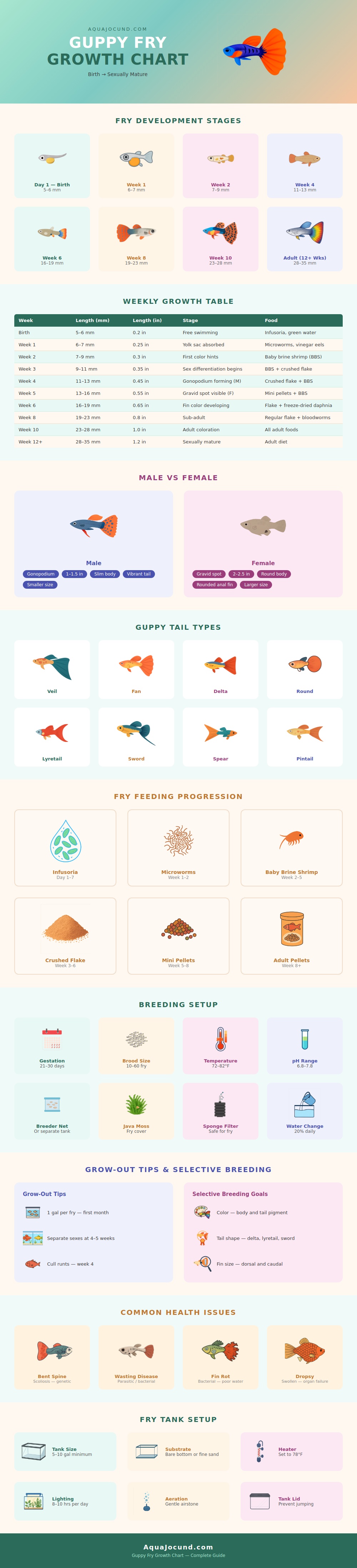
Guppy fry requires specific care for these very small and fragile fish. The fry must be fed an appropriate food at the appropriate times because giving them the wrong food will lead to there demise. Guppy fry grows quickly and reach sexual maturity in less than three months of age.
You must feed them food that is the same size as the fry because if the food is too large for them, it will clog their digestive system. If you dont provide enough nutritious food for the fry, they will lack the bright color and healthy bodies that they need to reach adulthood. In the first few days after they are born, the fry will be free swimming but is too young to eat fish flake.
How to Care for Baby Guppies
You must feed them live culture such as infusoria or green water because the fry will eat the microscopic organism in the live culture. When the yolk sac dissapears from the fry, feed them microworms or vinegar eel because these contain the proteins that they need to grow. If you do not feed them these food during the first week of their life, they may develop a pinched belly.
At two weeks of age, begin feeding them baby brine shrimp because the fat content in the brine shrimp will aid the growth of the fry. At three weeks of age, begin crushing the fish flakes into small piece so that the fry can eat them. Eventually, they will transition to mini pellets.
However, do not feed them too many food because this will dirty the tank water. Perform a twenty percent water change every day to maintain the nitrate content of the water so that the fry can reach sub-adult size in eight weeks of age. There is physical difference between the males and females of the fry.
The males will develop a gonopodium and will remain slim in comparison to the females fry. The females will develop a gravid spot and grow to be larger than the male fry. Separate the male fry from the female fry after four weeks of age because the males will begin to chase the female fry which is stressful to the fry.
For the health of the fry, use a specific type of tank to house them. Use a bare bottom tank of five gallons in size with a sponge filter and java moss. The java moss will provide the fry with hiding spot from other fry and the sponge filter will prevent the tank from sucking the fry into the filter.
The water temperature should be seventy-eight degree in the tank and the pH should be kept to a neutral level of seven. Use a lid on the tank to prevent any of the fry from jump out of the tank. Monitor the health of the fry.
Watch for sign of illness such as bent spine, which stress or overcrowding in the tank may cause; fin rot which is caused by dirty tank water; wasting disease which is caused by feeding them insufficient food or parasite in the tank water. To prevent any of these illness, continue to feed them sufficient amount of food, keep the water in the tank to a pristine standard and cull any fry that appear to be weak compared to the other fry in the tank. When the fry reach ten weeks of age they will have reached near adult size and can be added to a community tank with other young fry.
