🧱 Aquarium Bracing Calculator
Estimate eurobrace width, clear bay span, brace count, and added glass weight for custom aquarium tops. Use it as a design aid, then confirm final dimensions with your fabricator.
Quick Presets
Tank Inputs
Layout Results
Full Breakdown
Reference Tables
Glass Thickness vs Span
| Thickness | Light | Reef | Heavy |
|---|---|---|---|
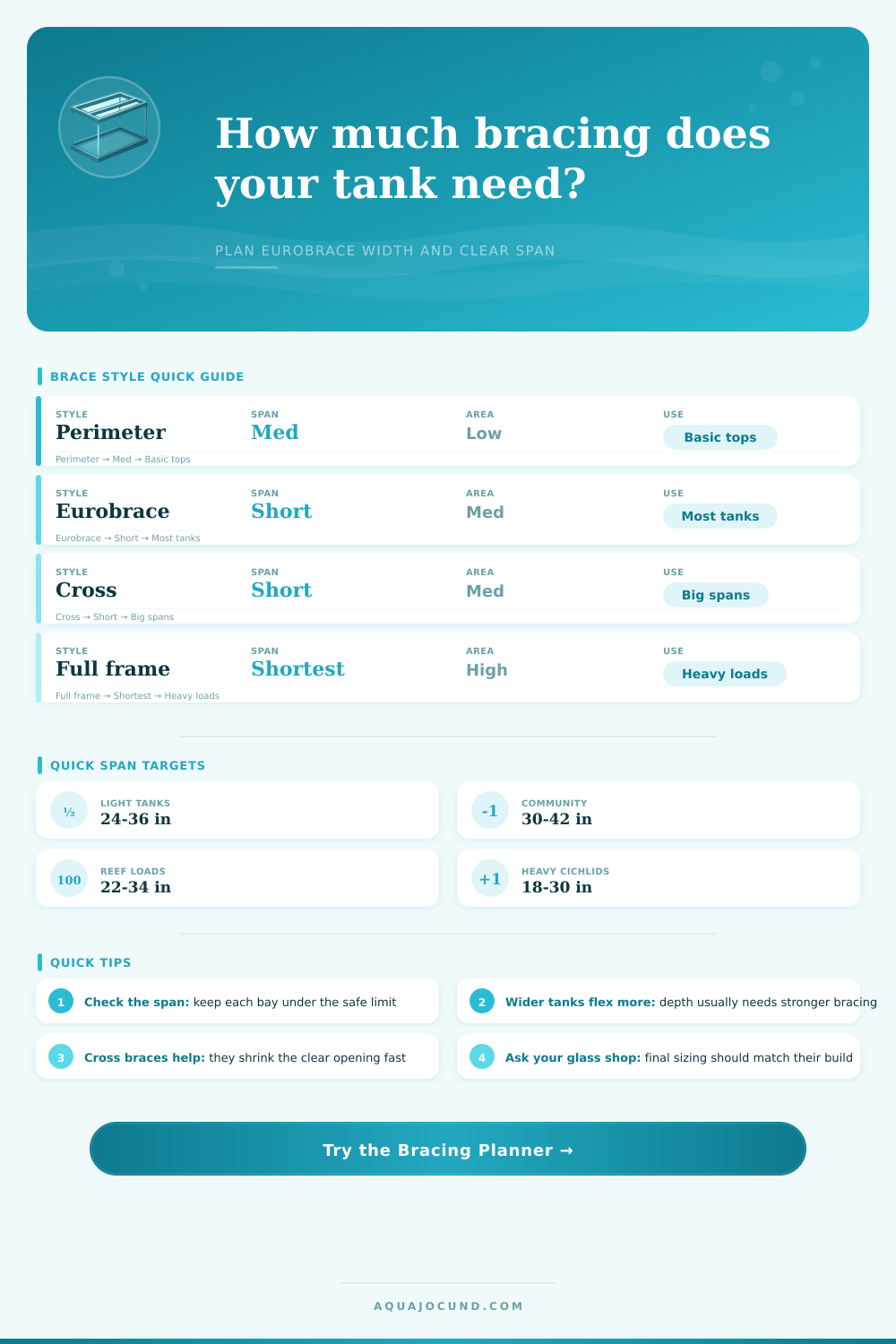
| 1/4 in | 26-34 in | 22-30 in | 18-26 in |
| 3/8 in | 34-46 in | 28-40 in | 24-34 in |
| 1/2 in | 44-58 in | 36-50 in | 30-42 in |
| 5/8 in | 54-70 in | 46-62 in | 38-52 in |
| 3/4 in | 64-82 in | 54-72 in | 44-60 in |
Brace Style Comparison
| Style | Open view | Support | Best use |
|---|---|---|---|
| Perimeter lip | Best | Moderate | Simple tops |
| Eurobrace | Good | High | Most builds |
| Euro + cross | Fair | Very high | Long spans |
| Full frame | Lowest | Max | Heavy loads |
| Rimless ref. | Open | N/A | Thickness check |
Material Comparison Grid
| Material | Clarity | Strength | Note |
|---|---|---|---|
| Float glass | Good | Baseline | Most common |
| Low-iron | Very high | Baseline | Cleaner view |
| Laminated | High | High | Safer breakage |
| Borosilicate | High | High | Special order |
Common Strip Sizes
| Tank length | Strip width | Cross braces | Notes |
|---|---|---|---|
| 24-36 in | 2-3 in | 0 | Small display |
| 40-48 in | 3-4 in | 0-1 | Common eurobrace |
| 60-72 in | 4-5 in | 1-2 | Needs span control |
| 84-96 in | 5-6 in | 2-3 | Wide access loss |
Aquarium bracing are used to provide structural support to an aquarium. Aquarium bracing prevents the glass of an aquarium from bending or bowing due to a water pressure against the aquariums glass edges. The water in the aquarium create pressure against the edges of the aquariums glass.
If the aquariums glass edges flexes too much due to the waters pressure, the silicone seams on the edges of the aquarium can fail. If the silicone seams fail, the aquarium will leak or fail structural. Using aquarium bracing ensures that the aquariums glass remain rigid so that the aquarium remains structurally stable.
Why Aquarium Bracing Is Important
The design of aquarium bracing depend on the dimensions of the aquarium and the weight of the aquariums contents. Deep aquaria require more bracing then shallow aquaria because deeper aquaria experience more water pressure against there sides. Aquaria that contain heavy items require more bracing than aquaria that contains only light items.
For example, aquaria that contains heavy fish or coral require more bracing than aquaria that contain only shrimp. Aquarium bracing can include perimeter bracing or cross-bracing. Perimeter bracing thickens the perimeter of the aquariums edges, while cross bracing break up long spans of aquarium glass by adding bracing in the middle of the aquaria.
Many people wish to allow as much open space as possible within their aquaria. However, if there is too much open space within the aquarium, the glass could flex and lead to the aquarium break. Bracing strips that are wide provide more rigidity to the aquaria than narrow bracing strips.
The type of glass used in constructing the aquaria also impact the rigidity of the aquaria. Low-iron glass allow for more clarity within the aquarium but provides the same amount of structural strength as standard glass of the same thickness. Laminated glass provide more safety for the aquaria because laminated glass panels will not separate from each other if the aquarium break.
One of the most common mistake in constructing aquaria is using bracing that is too small for the aquarium. If the bracing strips are undersized, the aquarium may bend or bow under the weight of the water in the aquarium. For instance, a very long aquarium without cross bracing may develop significant flexing in the middle of the aquarium that could lead to the aquarium cracking.
The best way to determine the proper thickness for the aquariums glass and the size of the aquarium bracing strips is to use reference grids that displays the relationship between the thickness of the glass and the weight of the water in the aquarium. When constructing an aquaria, you should prioritize the width of the bracing strips before the cross bracing strips are added. Adding an inch to the width of the bracing strip provides more rigidity to the aquaria than adding another cross bracing strip.
For aquaria that are very deep, increasing the width of the bracing strips will provide more rigidity to the aquaria. To determine the dimensions of the aquaria, the number of bracing strips to be used, and the total weight of the aquarium when completed, is a must before speaking to the glass fabricator. The fabricator may be able to assist in adjusting the design of the aquaria to accommodate feature such as overflows or silicone beads.
However, understanding the requirements of the aquaria before a fabricator visit is ideal. Aquarium bracing ensure that the aquarium remains rigid and reliable in its use.