
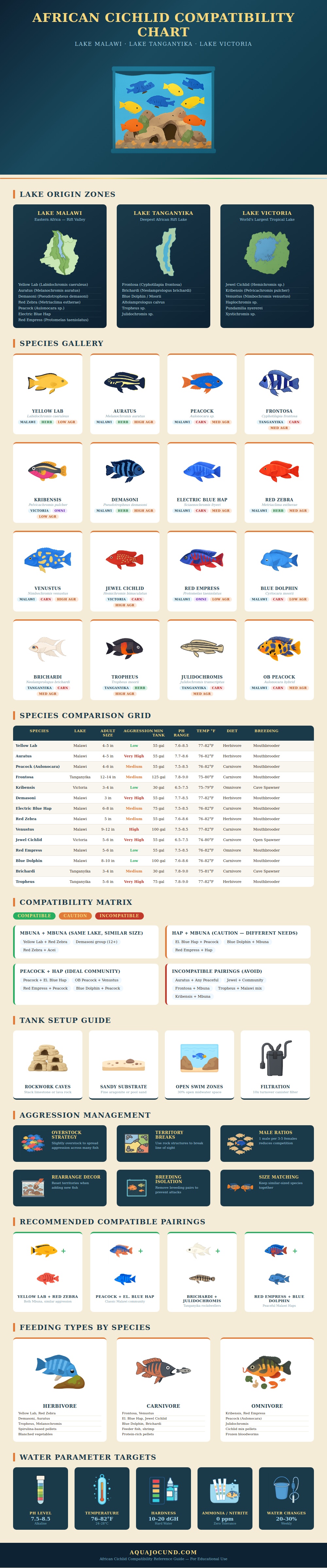
African cichlid are fish species that originate from a Rift Valley lakes, including Lake Malawi, Lake Tanganyika, and Lake Victoria. Due to the fact that African cichlids originate from differents lakes, there is specific needs that must be considered when choosing the type of African cichlids to keep in an aquarium. If the aquarium contain African cichlids from different lakes, the African cichlids may become stressed, which could lead to weakened immune system or fighting between the fish.
Thus, it is best for the African cichlids to all be native to the same lake from which they originate. The aggression level for different type of African cichlids vary. For example, mbuna are African cichlids that originate from Lake Malawi.
How to Keep African Cichlids Safe and Healthy
These fish live amongst the rocks in their native lake and eat algae. Some mbuna is more aggressive than others, but if many mbuna are kept in one aquarium, the aggression levels will even out among the group. Aggression amongst African cichlids has a great impact upon which fish should be kept together in one tank.
High aggression levels, such as among striped demasoni and auratus fish, require more space and tankmates to allow the fish to behave adequate. Low aggression levels, such as among peacocks and red empresses, can live in calmer environments. Additionally, you should also consider the physical size of the fish for compatibility in an aquarium.
Large sized fish may bully smaller fish if not accounted for in the formation of a community of African cichlids. The water parameter for African cichlids must mimic the water where the fish originate from the Rift Valley lakes. Most African cichlids requires alkaline and hard water in their tanks.
Additionally, the water temperatures for most African cichlids should be maintained between 76 and 82 degrees F. Most fish from Lake Tanganyika require higher levels of pH than those from Lake Victoria. To maintain their health, you should maintain the necessary pH for each species of African cichlid in an aquarium. If not maintained proper, African cichlids will fade in color, cease to breed, and display more aggression.
Performing water changes once a week will help to maintain the proper water parameters and allow the water to be clear of the waste from the food given to the fish. African cichlids should be fed the same diet that they eat in their native lakes. Herbivorous species like mbuna must be fed spirulina and blanched greens; feeding them protein will cause them to develop bloat.
Carnivorous species like frontosa require protein foods like shrimp or protein pellet. Additionally, because hungry fish are often aggressive with others in their surroundings, it is essential to make sure that the diet of each species are provided for as needed for their health. The physical setup of the aquarium for African cichlids should include feature for each to claim their own territory.
Using limestone caves and fine sand and rock for these territories will help to ensure that the fish has their own areas within the tank. To continue, using rocks in the aquarium will make it so that the fish cannot always see each other. Additionally, the aquarium should have powerful filtration in order to ensure that the water is changed ten times per hour.
Should new fish be added to the tank, you should rearrange the decoration in the tank in order to avoid bullying among the fish. Finally, observe the fish to ensure they are behave well together within the tank. Avoid adding species that are known to be very aggressive to tanks that contain other calm species.
For instance, avoid adding jewel cichlids to other more calmer species as they will harm them. Additionally, avoid adding fast-moving species like mbuna to tanks with other fish like frontosa as the two species may exhibit behaviors that is incompatible with one another. By ensuring that the types of fish have the same origin, size, aggression levels, and dietary need, the African cichlids will live together in a stable environment.
