
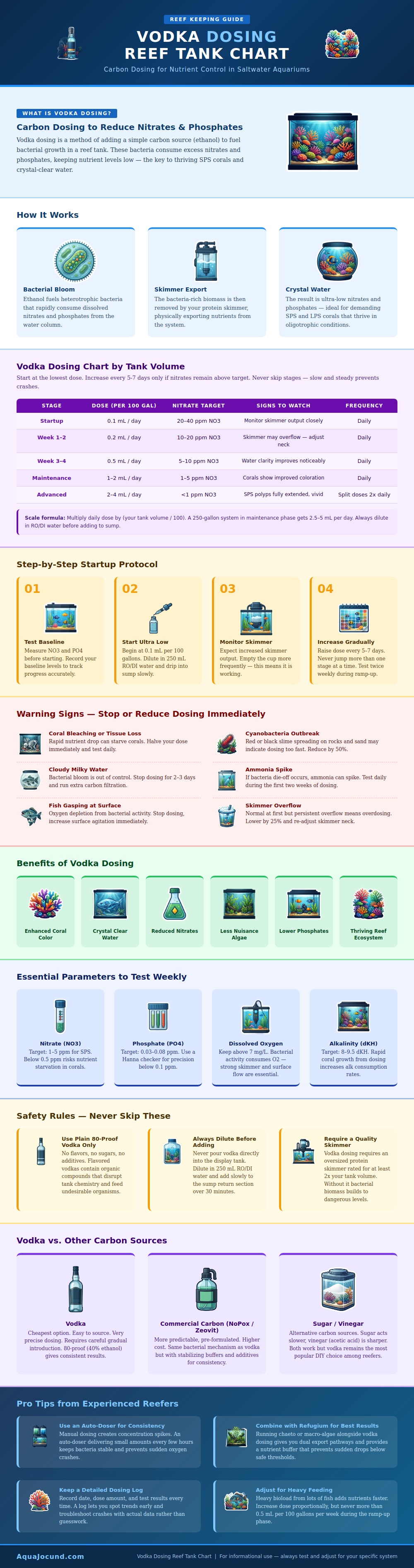
It’s also pretty cool the first time you dose and within a couple of days start seeing dark foam coming out of your protein skimmer. Your ethanol has been turned into weapon against nutrients. Why does vodka dosing work? Because ethanol causes heterotrophic bacteria to grow more faster than algae or corals, the bacteria consume phosphate and nitrate without letting algae get their dirty hands on it. Check out infographic to see how ethanol causes bacterial growth that the skimmer then exports out of system.
This isn’t about poisoning your water with booze. This is about creating a controlled biological imbalance where the balance is in favor off clean water against nuisance growth.
How to Start Dosing Vodka Safely
Inexperience makes most newbies overlook this build up phase. I have seen far too many folks jump right to maintenance doses without going through first few steps (see the chart). Don’t get me wrong, there’s no noticeable effect during the first few weeks of very small dose, which is why most folks bypass it. However, patience is key here. You’re establishing a bacterial population and it require time to develop and grow.
Without that, you could of not dose more. Jumping right to maintenance doses without completing the first couple of step will cause you to crash your tank. Why? The bacteria will reproduce so quickly that they consume all available oxygen and then die off in large numbers. This result in a crash and releases ammonia back into water. Again, this isn’t an instant fix; it’s a slow build.
This visual guide shows that because your feedback loop is based off what comes out of your skimmers, the first month focuses on watching your collection cup. As the bacterial biomass increases, you should expect your collection cup to overflow more frequent. If you handle this properly, it’s a good thing. It signals that your export mechanism is doing its job. If you find yourself constantly overflowing, you are taking on too much.
According to the data, the nitrate goals for every stage of your system vary from twenty parts per million at initial start-up through to less than one part per million in high end systems. Why does this matter? SPS corals does best in a low-nutrient environment, which mirrors their native reef habitat. You cannot achieve that crystal clarity by guessing. To do this, you’ll need to test.
According to the infographic, that means testing your water each week for alkalinity, dissolved oxygen, nitrate, and phosphate. Phosphate needs to be kept between zero point zero three to zero point zero eight parts per million. To accurately measure it, you’ll want to get a high-precision checker instead of typical test kit.
Once the water quality improves enough that your corals begin to grow rapidly, you’ll frequently see alkalinity decline more quicker, adjust your dosing accordingly. Maintain an oversized skimmer capable of handling the job and ensure good surface agitation to keep the dissolved oxygen level above seven milligrams per liter.
The rules for using it are safe ones. Only use plain (no flavors or additives) eighty proof vodka. Vodka with flavors has added oils and sugars that will impact tank chemistry. Add the diluted dose to the return side of sump. Do not add directly to the display tank. Don’t ignore warning signs such as gasping fish or cloudy water. This indicates a lack of oxygen or uncontrolled bacterial blooms.
According to the infographic, reduce your dose by half if you notice any coral bleaching or coral tissue loss. It’s better to reduce the dose slowly rather then stopping all at once, because cutting nutrients too fast can cause your corals to starve. Advanced reefers use this together with a refugium that grows chaeto algae to have two export mechanisms. We will talk about that another day.
Rather than dosing once a day, use a slow drip (every few hours) via an auto-doser. Small frequent doses is better. They don’t spike the tank, which gives the bacteria time to catch up and stabilize. This also help maintain a stable bacterial population. Also, make sure you test regularly and record all your dosages so you can recognize any patterns.
Your goal isn’t to only have clear water, but to also create a healthy environment where corals has nice colors, their polyps stay out longer, etc. Once you get those SPS colonies growing healthily, you’ll know it was all worth the wait.
