
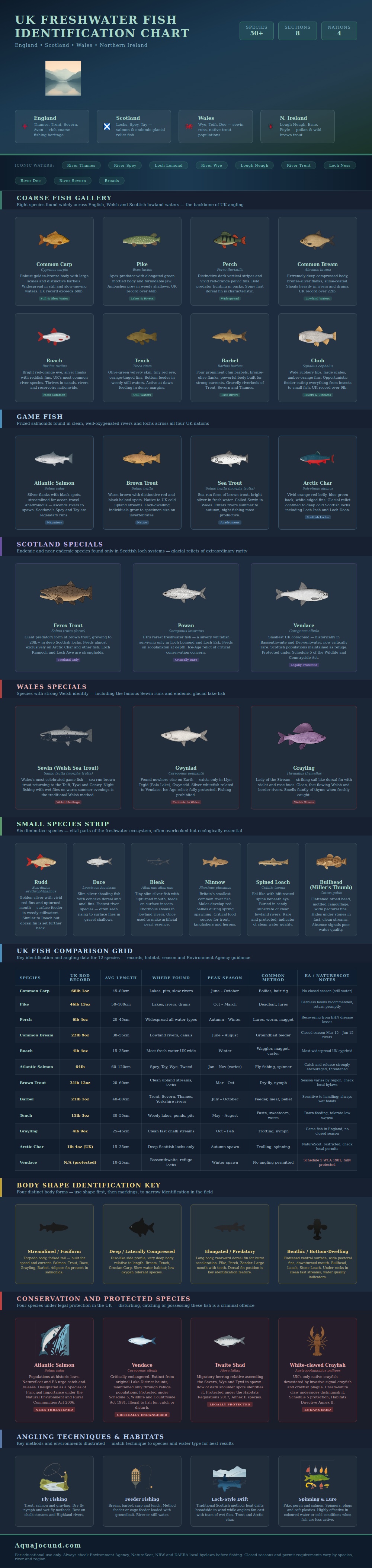
Identifying freshwater fish is an important skill for anglers who would like to identify the specific species of freshwater fish that may be in the water where they are fishing. Angling for fish can lead anglers to encounter many different species of freshwater fish, but may lead to difficulties in identifying similar species, such as the roach and the rudd. One of the first features of a fish that an angler can examine is the shape of its body; body shapes can help anglers to categorize the species of fish that they encounter.
For instanse, fish with torpedo shaped bodies and forked tails is typically salmonids or fish that live in rivers like dace. Conversely, fish with disc shaped bodies are likely bream or tench fish. Coarse fishing in the English countryside encompasses many different species of fish, including both carp and pike.
How to Identify Freshwater Fish
Carp lives in still waters, while pike live in areas with abundant weeds where they can hide and ambush other fish for there meals. Because all fish interact with their environments, these environments can help anglers to identify the species of fish in those area. For instance, barbels have a powerful build to allow them to search for food in the gravelly currents common in rivers like the Trent and the Severn rivers.
Many of the fish species that live in certain geographic locations are different than those species in other parts of the country. For instance, fish species in Scotland are different from those in England. Scotland is home to species like the glacial relicts, which are fish that have remained in deep lochs in the country since the last ice age.
Additionally, species like the powan and the vendace is only present in Scotland. The ferox trout is another species that lives in the country and is a type of brown trout that lives in specific environment in Scotland. Each of these species are different from the fish in the lowland canals of the south portions of the country due to the differences in the environments between these two area of England.
Finally, Wales also contains different species within its rivers than are found within England or Scotland. The sewin is one of the fish species that live in the rivers of Wales and is a type of sea run brown trout. Additionally, another species that can be found in Wales is the gwyniad, which is only found in one single lake in the entire world.
Species that are only located in one specific location on the planet are referred to as endemic species, and they are a rare category of fish. Many anglers overlook many fish species, but some of those overlooked species is essential to the ecosystem due to there role as food for other predatory fish species. For instance, species like the minnow and the bleak are small fish species, but they provide the fuel that other, larger predatory fish require to survive.
Additionally, other small fish species, such as bullheads and spined loach, can act as indicators of the quality of the water in which they live. Bullheads and spined loach are individuals that live on the riverbed and in water that is of good quality. Thus, the presence or the absence of these species can indicate whether the water in which they live is of good quality or has dropped in it’s quality.
Anglers must understand how to best catch the fish that they target. For instance, anglers should not utilize a heavy feeder jig when targeting grayling fish, and they should not utilize a delicate dry fly when attempting to catch carp. In order to be successful with angling for different fish species, anglers must understand the seasons during which the fish species are most common, and the habitats in which they like to live.
Finally, anglers have a responsibility to utilize practices that will ensure the survival of native fish species in their native homes. Many native fish species in England are struggling, whether due to habitat loss, or due to the presence of other, invasive fish species. To protect these native fish species, anglers should utilize barbless hooks when fishing for these native fish species, and should also practice strict catch and release techniques to ensure that these species has time to remain in their native waters for the future generations of anglers in their native homes.
