
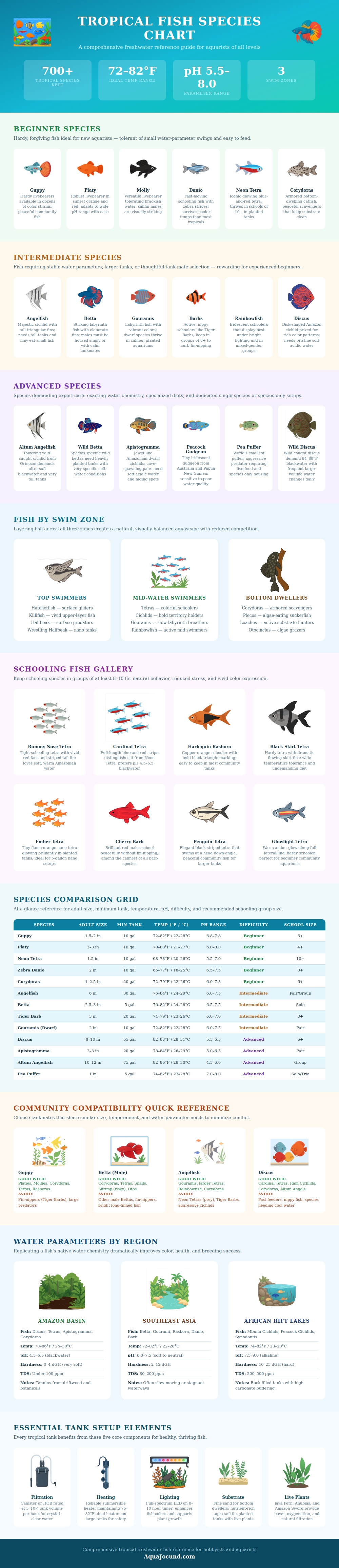
An aquarium are a miniature ecosystem, and therefore, requires careful management of both the chemistry of the water and the behavior of the fish to ensure the health of the species contained within the aquarium. Many fishkeepers makes the mistake of selecting fish for there aquariums based solely upon the color of the fish. However, selecting fish for their color only can lead to problems within the aquarium; some fish are aggressive towards other fish, or some fish require specific water chemistry to survive.
Aquariums, therefore, are a biological system that must be managed in order to ensure the health of the fish contained within the aquarium. Beginner should begin there journey into the care of aquarium fish by beginning with species that is able to tolerate mistakes in the care of their aquarium. For instance, species like guppies and neon tetras is considered beginner species due to their ability to handle slight changes in the water temperature of their tanks.
How to Choose and Care for Aquarium Fish
Aquariums for beginners will help to teach individuals how to perform water changes for the aquarium and how to maintain feeding schedule for the fish. After gaining experience in caring for aquariums with these beginner species, individuals can begin to attempt to keep intermediate species. For instance, species like bettas and gouramis are labyrinth fish, which mean that they have a unique organ that allows them to breathe air from the surface of the water.
These intermediate species, however, have specific temperaments, so individuals must consider the relationship among the different fish in its aquarium. For those who wish to attempt to care for more challenging species, aquarium fish can be categorized as advanced species. For example, species like discus fish or Altum Angelfish are considered to be advanced fish species, and both of these species often require blackwater setups for there tanks.
Blackwater setups involve adding tannins to the water, which make the water appear dark. Additionally, the water chemistry in these tanks must be acidic and soft for the fish, or the fish will become stressed or even develop disease. Regardless of the size of the aquarium, however, the owner must adjust the chemistry of the water to accommodate the needs of the advanced species.
Another consideration for the care of fish in an aquarium is the use of what are call swim zones. Fish that are purchased that all swim in the same part of the aquarium will lead to the aquarium feeling empty; there will be empty space both at the top and at the bottom of the aquarium. To avoid this, individuals can purchase fish from different part of the aquarium.
For instance, fish like hatchetfish prefer to swim in the upper part of the aquarium, while fish like Corydoras tend to prefer to live and swim in the bottom part of the aquarium. By purchasing different species of fish for different parts of the aquarium, the fish will not compete with one another for space or food. Social dynamics exist within the aquarium, as well.
For instance, some fish are solitary being, but many are schooling fish. Schooling fish, such as rummy nose tetras or cherry barbs, require large group of fish to feel safe in their tanks. Additionally, keeping schooling fish in large groups will allow there colors to become more brighter and there behaviors to become more noticeable.
Finally, in order to ensure that the species feel comfortable within the aquarium, the native region of their natural homes should be replicated within the aquariums. If the chemistry of the water in the aquarium is matched to the chemistry of the native region of the aquarium fish, the fish will not have to fight against there natural environment, and they will thrive in their aquarium home.
