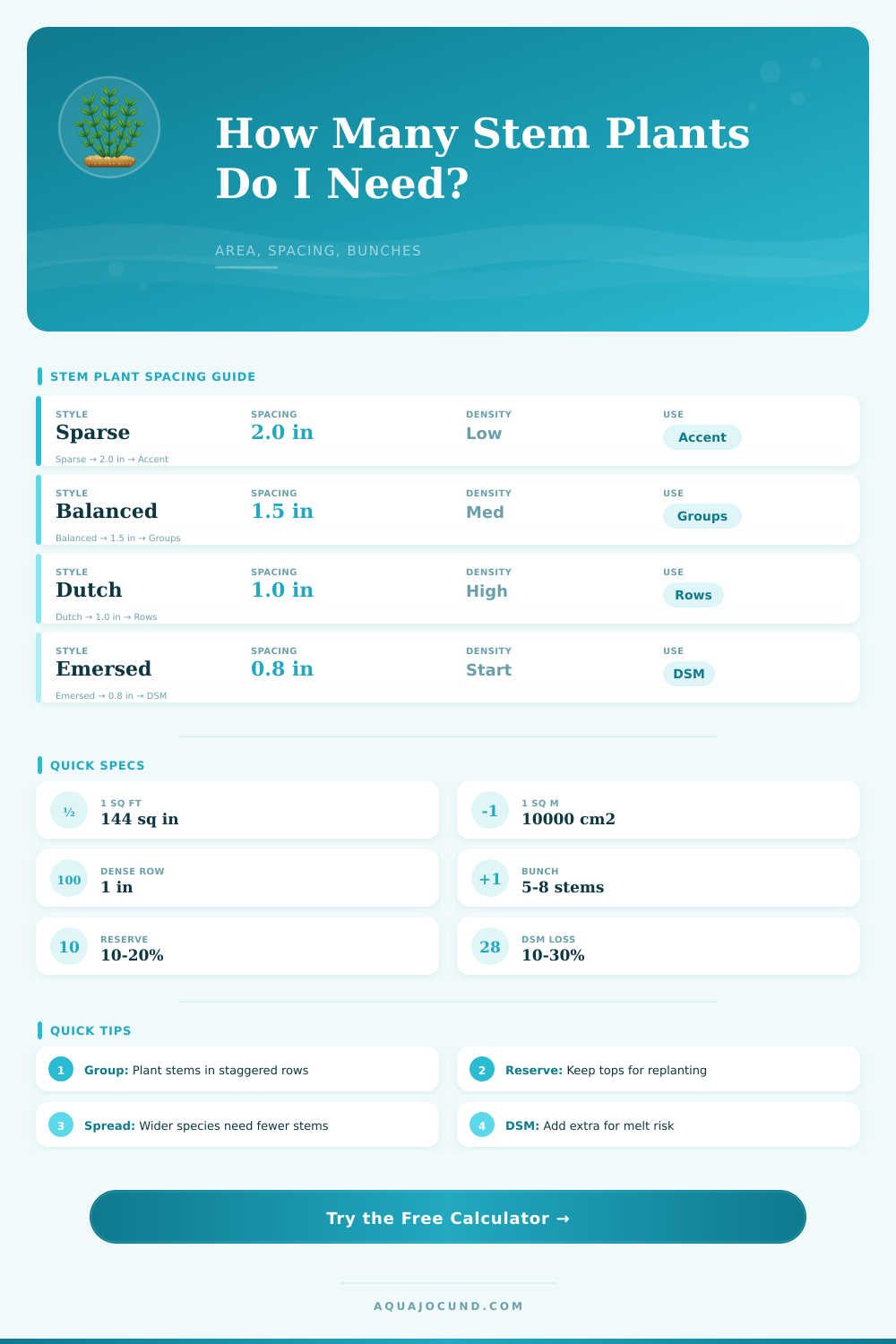
Stem Plant Count Per Area Calculator
Estimate stems, bunches, planting positions, reserve cuttings, emersed conversion, and coverage density for aquarium stem plant beds.
Stem Planting Estimate
| Stem species | Starting spacing | Mature spread | Typical bunch | Best layout use |
|---|---|---|---|---|
| Rotala rotundifolia | 0.8-1.2 in / 2-3 cm | 1.2-1.8 in / 3-5 cm | 6-8 stems | Dutch rows, color streets, rear corners |
| Ludwigia repens | 1.2-1.6 in / 3-4 cm | 1.6-2.4 in / 4-6 cm | 5-7 stems | Mid-back red groups and contrast blocks |
| Hygrophila polysperma | 1.4-2.0 in / 4-5 cm | 2.0-3.0 in / 5-8 cm | 5-6 stems | Fast background fill and low tech thickets |
| Limnophila sessiliflora | 1.0-1.5 in / 3-4 cm | 1.8-2.5 in / 5-6 cm | 6-8 stems | Feathery background texture |
| Bacopa caroliniana | 1.5-2.2 in / 4-6 cm | 2.0-3.0 in / 5-8 cm | 4-6 stems | Slow, upright groups with open lanes |
| Myriophyllum mattogrossense | 1.2-1.8 in / 3-5 cm | 2.0-3.2 in / 5-8 cm | 5-7 stems | Soft green background and flow movement |
| Pogostemon erectus | 0.9-1.3 in / 2-3 cm | 1.2-1.7 in / 3-4 cm | 5-8 stems | Compact vertical hedge lines |
| Cabomba caroliniana | 1.2-1.8 in / 3-5 cm | 2.0-3.0 in / 5-8 cm | 6-8 stems | Soft clusters where flow is gentle |
| Tank or bed | Typical bed size | Area | Balanced count | Dense count |
|---|---|---|---|---|
| 5 gal nano back | 12 x 3 in / 30 x 8 cm | 36 sq in / 232 sq cm | 20-28 stems | 32-45 stems |
| 10 gal background | 18 x 4 in / 46 x 10 cm | 72 sq in / 465 sq cm | 40-55 stems | 60-85 stems |
| 20 long rear third | 28 x 6 in / 71 x 15 cm | 168 sq in / 1084 sq cm | 90-125 stems | 135-190 stems |
| 40 breeder back half | 32 x 9 in / 81 x 23 cm | 288 sq in / 1858 sq cm | 150-215 stems | 230-320 stems |
| 60P Dutch street | 20 x 5 in / 51 x 13 cm | 100 sq in / 645 sq cm | 65-90 stems | 95-135 stems |
| 75 gal background | 42 x 8 in / 107 x 20 cm | 336 sq in / 2168 sq cm | 180-250 stems | 270-380 stems |
| Planning factor | Typical range | Calculator effect | When to use it |
|---|---|---|---|
| Airy accent density | 55-70% of grid | Fewer stems, more negative space | Small groups, slow growers, open layouts |
| Balanced background | 80-90% of grid | Standard full group estimate | Most community planted aquariums |
| Dense wall or Dutch row | 105-130% of grid | Extra stems for immediate fullness | High light, CO2, show tanks, color streets |
| Trim reserve | 10-20% | Adds stems kept for top replanting | Fast stems that are topped and replanted |
| Emersed conversion | 10-35% | Adds stems for melt and transition loss | Emersed pots, tissue cups, dry start changes |
| Loose substrate grip | 5-12% | Adds uproot allowance | Coarse gravel, new shrimp tanks, weak roots |
| Pattern | Spacing behavior | Visual result | Best use |
|---|---|---|---|
| Square rows | Even row and column spacing | Predictable grid, easy trimming lanes | Beginner groups and simple backgrounds |
| Staggered rows | About 15% more efficient coverage | Natural fill with fewer visible gaps | Most background beds and nature aquariums |
| Dutch street rows | Tight rows with controlled width | Dense ribbons and color contrast | Rotala, Ludwigia, Pogostemon streets |
| Clustered pockets | Bunches split into small pockets | Rounded clumps with open substrate around | Accent plants, corner groups, mixed species |
For those who keep a planted aquarium, you might be familiar with panicking about how many stem plants to buy. They don’t add up! There are six stems, right? Yes, that is what the plastic bag’s label says. But what does that mean? Does that mean six individual stalk or one big clump? When you put them into the substrate, you’re afraid they won’t fill out and will show gaps between them, making the tank look bare. Or perhaps you fear putting them too closely together, blocking out each others’ light and causing rot.
With the stem plant calculator above, you can plug in size of your bed, how densely you want to pack it, and let it crunch the numbers for you. No more guessing by the inch. Several critical factors matters beyond just spacing, including your planting pattern, emersed conversion, and trim reserve. Depending on your budget vs. This can be a lot or little depending on your time preference.
How to Use the Stem Plant Calculator
In general, most stem species grows outwards in a predictable manner, showing how fast they expand. For example, *Rotala rotundifolia*, being a fast grower, initially looks good with two inches between stems. However, if you desire a solid wall of color, then you need to space them more closely from the beginning. Each species grow differently, such as a bulbous *Bacopa* spreading different than a delicate-looking *Myriophyllum*. The tool allows users to tweak their spacing to match the species. Beginners tend to over/underestimate the amount of space that a single stem occupies later. With presets as baseline data, you don’t have to memorize such rates.
Another important consideration most hobbyists overlook is planting pattern. On paper, a square grid might be nice and tidy, but when you actualy arrange the substrate, there will be obvious diagonal gaps where the substrate is exposed between your planted section. Packing the plants into triangular shapes (also known as staggering) uses fewer stems to cover more surface area, since every plant fit into the gap created by surrounding plants. Depending on the planting style, the stem counter adjust to match. This slight change in number also results in a more natural appearance in the aquarium without needing more plants to hide bare spot.
However, there is another factor to consider that has nothing to do with the aquarium, the environment under which the plant was grown before being purchased at the local fish store. It’s safe to say that most plants is not going to be in peak condition when bought. Stems, specifically, that were grown emersed (in the air) will undergo shock when submerged and typically shed some lower leaves as they acclimate to life in the tank. That doesn’t mean anything went wrong; it’s simply biology. The emersed conversion factor above includes a safety margin on the overall stem count because you know 20% might melt down anyway. Don’t forget about this variable or you’ll find yourself making extra trips to the LFS to make up for planless gaps.
And lastly, there is the trim reserve. To maintain the stem plant’s form and promote bushy-ness, stems needs regular grooming (i.e., cutting back). The cut-off ends can be used as fresh plants to plug up holes and even create more colonies. By reserving a portion of your total number of plants, you’ll have a ready-made supply on-hand to replant right away when you trim instead of having to wait weeks while nature catches up. This ensures that the aquascape stays nicely filled-in all along its lifespan. Planting becomes not just a one-and-done deal but a recurring process that pays off well if done consistently over time.
The calculator adjust your stem count based off whether you choose a square grid or a staggered layout to cover more surface area. How do you know what to do? Well, not by math so much as by sight: Your eye tells you what it wants, then your hand follows those numbers to get there. No guessing required; just think about where things go once you know how many to order. You should of planned first, space second, let them grow.