
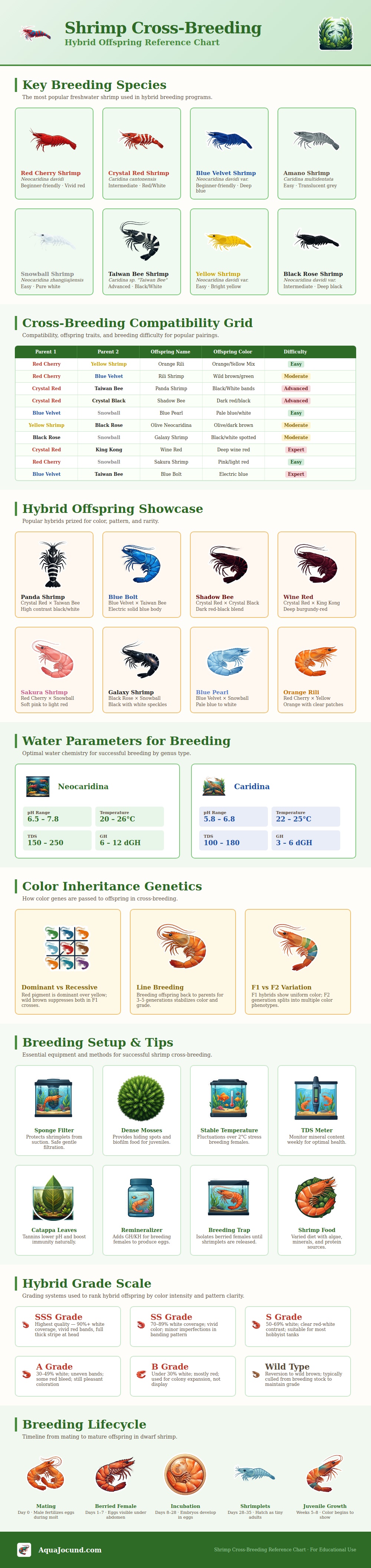
Breeding Red Cherry shrimps yields some surprising color variations. Sometimes you begin with a tank full of nice, red critters and end up with brown reverts (and sometimes orange hybrids). Why? Because it’s all about planning. And genetics. Use this visual guide to determine the safe pairings from the risky ones.
If you’re new to shrimp keeping, stick with the Neocaridina species. They are hardy. Crossing Red Cherrys with Yellow shrimp will typically yield Orange Rili. They feature clear patches, making them pop on dark substrate. It is not rocket science and it does not requires perfect water chemistry.
How to Breed Red Cherry Shrimps
Things become more complicated when you try to cross Caridina types such as Crystal Reds with Taiwan Bee shrimp for example, which result in Panda Shrimps. To get that black-and-white panda coloration in the offspring, you have to be able to control precise hardness and pH levels. Let’s say your water parameters begin to shift. The white bands starts fading from the offspring. This results in a juvenile shrimp that appear brown different than nice and clean white.
What many hobbyists believe is that all it takes to breed shrimp is toss two in a tank together. In reality, it’s keeping things stable. Neocaridina prefer harder, alkaline water. Caridina prefer softer, acidic water. Try mixing those two genera? They would of suffer from failed molts and stress.
Shrimp Color Variations and Genetics Your colonies’ final colors come from genetics. Yellow is typically dominated by a red pigment. First generation hybrids is most likely going to appear red. In the second generation, recessive traits start to show themselves, and variation occurs. To get certain colors stable, you can line breed. You mate the best-looking offspring over multiple generations. It trains the bloodline to display the traits you want.
Grading helps you choose what stock to keep. The grading system on the guide defines how well each shrimp have color contrast and coverage. Perfect coverage with good contrast is a SSS grade shrimp. Shrimp lower than that has red bleed or uneven banding. This help you decide which shrimp to keep and which to trade.
Genetics aside, tank set up matters too. Use a sponge filter. This will prevent small shrimplets from getting sucked in. Provide lots of hiding places and biofilm for baby shrimps by planting some moss. Tannin-rich catappa leaves not only reduce water pH (naturaly), but they increase immune response.
Watch out for temperature changes… This stresses breeding females and will cause them to either stop spawning or drop eggs. The key is stability. Temperature spikes will kill berried shrimp fast.
The shrimp life cycle is quick; it takes about four weeks to mate and produce shrimplets. Within two months, juveniles exhibit color. Because the life cycle is so fast, mistakes can compound rapidy. Quality water doesn’t take years to result in poor water quality; it shows itself in weeks.
Make keeping records easy. Document what pairs yield high grade. If a pair reverts back to wild type, note that too. Brown culling maintains a clean gene pool. It’s harsh but essential if you want high-grade lines.
Soon enough you’ll have a tank full of vivid colors. Your efforts will be rewarded by visual appeal and clarity.
