🦐 Shrimp Color Genetics Calculator
Estimate Neocaridina and Caridina color-line crosses, target offspring probability, grade retention, wild-type reversion risk, and the number of selected breeders to keep.
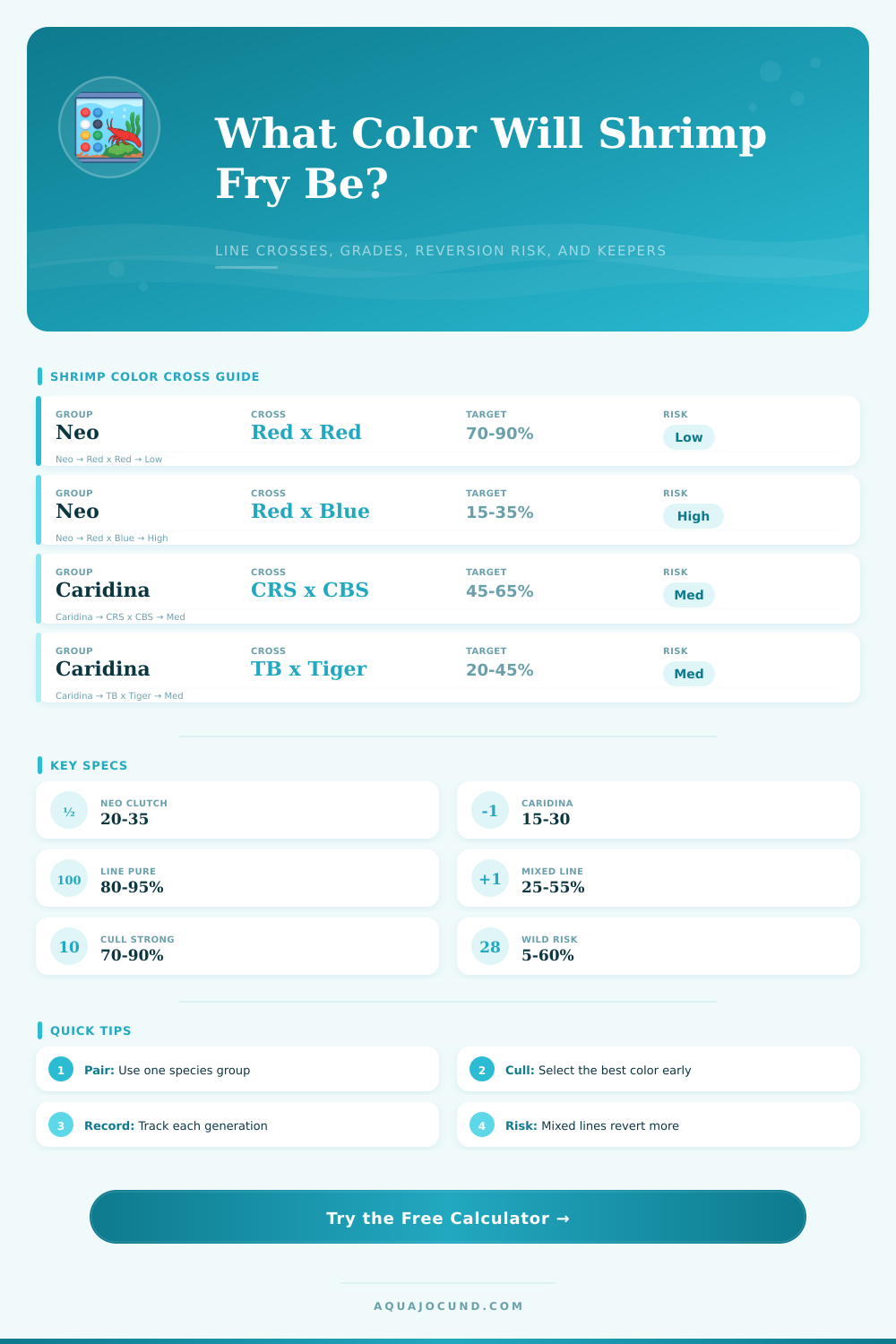
| Cross type | Target color odds | Grade retention | Wild-type risk | Selection note |
|---|---|---|---|---|
| Same red family | 65-90% | 55-85% | 5-18% | Best for stable cherry, fire red, and bloody mary projects. |
| Same blue family | 55-85% | 45-75% | 8-24% | Blue lines benefit from strict culling for depth and shell coverage. |
| Red x blue or yellow | 10-35% | 15-40% | 30-65% | Mixed recessive and polygenic color tends to produce clear or brown young. |
| Rili backcross | 35-70% | 30-65% | 18-42% | Pattern can sharpen after several selected generations. |
| Wild or unknown outcross | 5-25% | 5-25% | 45-80% | Expect heavy sorting before a color line looks stable again. |
| Cross type | Typical target odds | Grade retention | Wild or off-pattern risk | Best use |
|---|---|---|---|---|
| CRS x CRS or CBS x CBS | 65-90% | 55-85% | 5-18% | Maintaining crystal red, crystal black, and bee grades. |
| CRS x CBS | 40-70% | 35-70% | 10-28% | Color-separated bee projects with visible pattern selection. |
| Taiwan bee x Taiwan bee | 55-82% | 45-75% | 8-22% | Blue bolt, panda, king kong, and wine red maintenance. |
| Tiger x Taiwan bee | 20-50% | 20-55% | 18-45% | Tibee and fancy tiger projects where pattern variety is wanted. |
| Galaxy x fishbone | 30-65% | 25-60% | 15-40% | Pattern consolidation over several selected generations. |
| Parent grade pair | Base high-grade retention | With standard selection | With elite selection | Practical note |
|---|---|---|---|---|
| Show x show | 70-88% | 75-90% | 80-94% | Small defects still appear; keep several backup breeders. |
| Show x high | 62-82% | 68-86% | 74-90% | Good balance between quality and enough young to select from. |
| High x high | 52-76% | 58-82% | 65-86% | Most stable colony-building pairing for hobby lines. |
| High x medium | 35-62% | 42-68% | 50-74% | Works if the medium parent has strong color genes hidden in the line. |
| Low or cull parent used | 10-38% | 15-45% | 22-54% | Expect a longer rebuild and remove weak juveniles early. |
| Project size | Females | Shrimplets per female | Juvenile survival | Selection pool |
|---|---|---|---|---|
| Nano test cross | 2-3 | 15-25 | 60-75% | 18-56 juveniles |
| Small colony | 4-6 | 20-30 | 70-85% | 56-153 juveniles |
| Breeder rack | 8-12 | 25-35 | 75-90% | 150-378 juveniles |
| Elite line work | 12-20 | 20-30 | 75-90% | 180-540 juveniles |
If you’re breeding fire red cherry shrimp, chances are you expect fry to have bright, deep crimson bodies. More often than not, reality fall short. The color genetics of shrimp aren’t a guarantee; they’re based on probabilities. Preparing yourself can mean the difference between having a pure colony of shrimp or a tankful of brown wild-types.
Before dropping those shrimp in a dedicated tank, you must know exactly what you’re breeding. Once you’ve plugged in your selection intensity and line purity, use the calculator above to do the math for you, no more guessing at coefficients and survival rates.
How to Breed Better Shrimp Colors
Most hobbyists do not realize how much grade retention impacts things. Two show grade parents doesn’t mean you’ll get show grade offspring; color genes dilutes each generation. You can stack the odds by selecting for high visibility in both parents. Even so, this doesn’t eliminate reversion. Adjusting the parent grades allow you to model this in the tool, where it shows that a show-by-show pairing will hold up better then mixing a high grade with a medium. Why? Because it determines if you’re going to end up keeping five shrimp or fifty to identify your next generation of breeders.
That’s why the other variable, which is a silent variable in every project, is so important: line purity. Stock that may appear bright and colorful in pictures is likely imported and contain the wild type genes from previous outcrosses. When you know your line purity is less than eighty percent, you know there’s a much higher chance of having clear fry or even brown fry. The assumption used in the calculator isn’t realistic in most mixed tanks. Since you’re working with a history, you have to adjust accordingly. A lower entry gives more accurate picture of what you’ll need to do to get back to stable. Because of this, you’ll see the keepers list change greatly and notice how long it will take to stabilize.
Caridina and Neocaridina also differ in their response to selection pressure. While the latter can result in very colorful species (e.g., Tsumagoi), these colors are typically polygenic (i.e., produced by several genes). Conversely, Caridina is characterized by distinct patterns like black or red bees, which depends on dominant traits. Because each individual has two copies of every gene, recessive wild-type alleles recombine often when two different color families are crossed (e.g., blue x red) in Neos. Those are among the least likely combinations to produce your target color; the best odds occur from same-family crosses. This mixed-line cross is a time suck leading down the rabbit hole with thousands of young ‘dinos to sort through to find a handful of keepers.
There are also real-world constraints like survivability. Not every egg becomes a shrimplet. And not every shrimplet make it to selection size. These factors vary based off tank stability, water quality, food consistency. Considering juvenile mortality, you’ll get a more accurate estimate of how many breeders you’ve got. Expecting 20 off each female? You only get ten that make it. Your breeder population dwindles quicky. So instead of estimating your “egg production,” the calculator takes into account survivability and gives you an estimated number of actual SELECTABLE juveniles. It’s grounded in realism so you don’t waste time or fill up empty tanks only to be disappointed.
Culling too. And it’s got to be strict, makes us cringe but it’s what makes for better lines. Keeping weak color individuals dilutes the gene pool faster then letting them breed. Only keeping the best of the best (elite selection) improve grade retention over time. Eliminating off-color shrimps isn’t easy but they’re your marginal types and they bear the genetic baggage you’re trying to shed. That’s where the tool shows how both elite and strict selection affect the long term while cutting back short term numbers. Quantity doesn’t equal quality in developing a color line. And quality always wins!
So what’s it all mean? At its core, breeding shrimps is a game of patience and trusting in the numbers rather than our hopes. There are no guarantees that genetics will work together, but knowing your chances going in puts you ahead of the curve before ever beginning. Keeping track of every generation and changing variables according to actual outcomes makes this crazy hobby a well-honed craft. It may appear muddy at first, but consistency and keeping good notes brings out those beautiful colors even better than before. You should of known that breeding shrimps could be this hard.