☀️ Pond UV Sterilizer Size Calculator
Estimate pond UV watts, safe branch flow, algae clarification dose, turnover, bypass, bulb age, sunlight, and fish-load reserve.
| Goal | Dose Basis | Flow Character | Pond Use |
|---|
| Pond | Dimensions | Volume | Typical UV |
|---|
| Factor | Low Pressure | Moderate Pressure | High Pressure |
|---|
When choosing a UV sterilizer for your pond, there is many variables to consider because these variables will change the effectiveness of the sterilizer. A UV sterilizer that is correct for one pond may not be correct for another of a different size. If you choose a UV sterilizer that is too large for your pond, it may waste electricity and bulb life.
You must understand your pond’s conditions in order to choose the correct UV sterilizers. The reason that pond water turns green is because of the multiplication of single-celled algae in the water. The UV sterilizer will damage the DNA of the algae cells, which will cause the algae cells to clump together and be caught on the filter.
How to Choose the Right UV Sterilizer for Your Pond
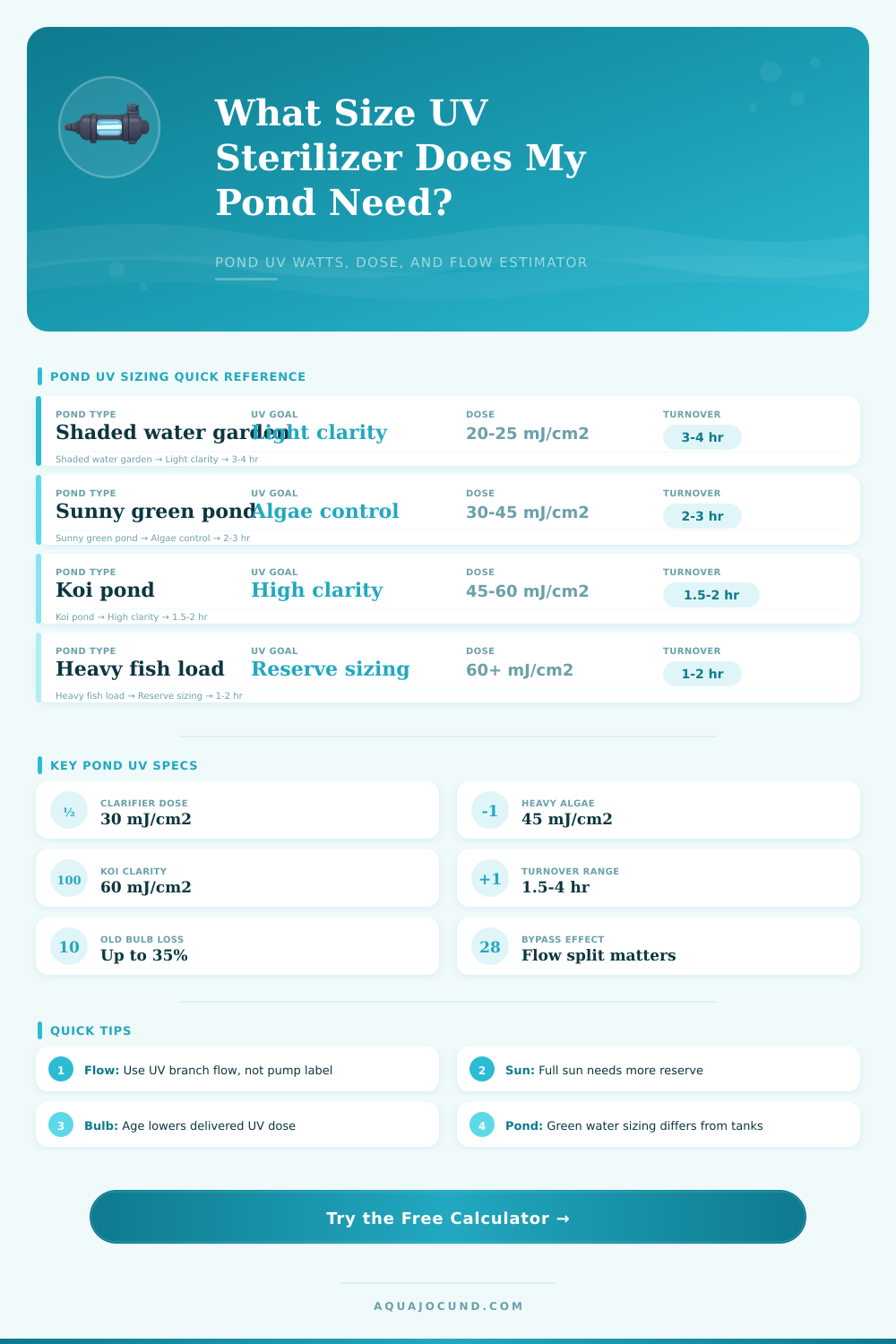
The amount of UV light required to damage the algae cells is referred to as a dose, which depends upon the conditions of the pond. A pond that has clear water with a low number of fish and exposure to sunlight will require a more lower dose of UV light than a pond that has green algae, a high number of fish, and exposure to heavy amounts of sunlight. The flow rate of the water through the UV sterilizer is another critical variable.
If the flow rate of the water through the sterilizer is too high, the algae cells will not be exposed to enough UV light to effectively kill the algae. Alternatively, if the flow rate of the water through the sterilizer is too low, the water will not turn over in the pond enough to prevent the regrowth of the algae before the water can pass through the sterilizer again. Many people use the flow rate indicated on the manufacturer’s label of the pump to calculate the flow rate of their pond.
However, you can measure the flow rate of the water through the UV sterilizer in the pond after the water passes through the filter. The actual flow rate of the water in the pond may be lower than the flow rate calculated from the pump’s flow rate specification. Additionally, some ponds have bypass loops that allow some of the water in the pond to go through the pond without passing through the UV sterilizer.
The age of the UV bulb should also be considered when choosing a UV sterilizer. Even if the UV bulb glows an indication of the passage of light through the bulb, the UV light may not have enough strength to effectively kill the algae. After two seasons of use, the UV bulb may have lost more than one-third of its strength.
What was once an appropriate amount of UV light to kill the algae in the pond may no longer be enough as the UV bulb age. In this case, you will need to replace the UV bulbs periodically. A calculator can help determine the extra wattage needed for the UV sterilizer if the UV bulb is several months old.
The amount of sunlight that falls upon the pond and the number of fish in the pond can also impact the amount of UV light that is required to kill the algae. Both sunlight and fish have an impact upon the growth of the algae in the pond, so the UV sterilizer will need to be equipped with additional wattage if the pond receives six or more hours of sunlight per day or if the pond have a high load of fish. The fish contribute to the organic load of the water.
High levels of organic matter will reduce the amount of UV light that passes through the water to kill the algae. Many people make mistakes when they purchase a UV sterilizer for their pond. Some of these mistake include purchasing the UV sterilizer based off the pump’s label, ignoring the amount of water that the shelves in the pond will displace, and running the UV sterilizer for longer periods of time then recommended.
However, running the UV sterilizer for longer periods will not fix the problem of a flow rate that is too fast for the UV bulb. Furthermore, the flow rate that is too fast for the UV bulb will create issues in relation to the turnover of the water in the pond. Depending upon the goal for your pond, it will require different setting for the UV sterilizer.
If your goal is for the pond to be clear of algae, the requirements for the pond may be less than if your goal is to raise the load of fish in your pond or control the algae growth in your pond. Additionally, the goals for the UV sterilizer may have an impact upon the amount of UV light that is required for the pond. If your goal is to control fish pathogens, the UV sterilizer may emit more UV light than is required for algae control.
Similarly, a UV sterilizer that is sized for algae control may not have enough strength to kill the fish pathogens if there are too many fish in the pond. The conditions of your pond will change over time. If you set up your pond with the goal of having clear water for three seasons, the pond may turn green due to changes in the environment surrounding the pond or due to changes in the fish or filter in the pond.
To combat these changes, it may be a benefit to start with a UV sterilizer that has some reserve wattage built in over the specifications for your pond. Use of a calculator can test the different levels of margin that the UV sterilizer will have built in over time and how much extra wattage it will require. To find the correct UV sterilizer for your pond, you must match the specification of the sterilizer with the conditions of the pond.
Measure the flow of the water in the pond, account for the bypass in the system, consider the age of the UV bulb, and adjust for the sunlight and the number of fish in the pond. By entering these values into a calculator, you can find the recommendation for your UV sterilizer that will allow you to maintain your pond throughout the seasonal changes.