
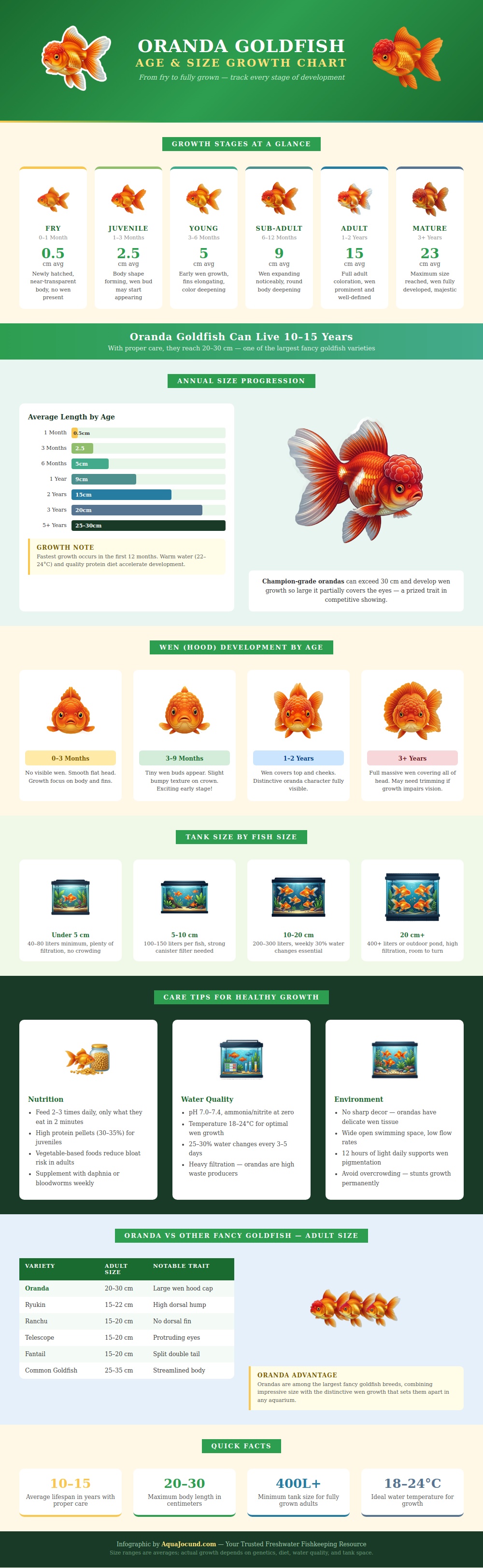
The size chart of an Oranda goldfish will help change your way of thinking, if you understand it. Goldfish aren’t little fish that remains small. They’re going to get really big! So they need attention…serious attention! By knowing how old they are, you’ll re-frame your expectations: you’re getting yourself a lifelong pet, not a temporary decoration. What you expect from them changes everything about how you care for them.
Think about it, if you think they’ll live in a two gallon bowl, youve just set yourself up for failure. The breakdown of this progression is well done in the visual guide. Six-month old fish don’t just stay at that size indefinitely. Within the first year, those transparent fry turn into sturdy juveniles. The early stage of growth happen quickly and depends on water conditions as well as proper diet. It’s easy for newbies to think their one-year old Orandas can fits in what used to be their fry tank. Before you know it, your fish isn’t doing so hot and is either stunted or you’re forced to move him/her up anyway.
How Oranda Goldfish Grow
What sets them apart from other fancy kinds is what’s called their wen. The fleshy cap on the top of their head don’t develop overnight. In fact, it begins when they’re juveniles with just a few barely noticeable bumps. Over several years, the hood will gradually expand. As they mature, the hood can reaches a large size, even obstructing their vision. As you can see from the chart, it takes some time for the hood to develop. So pay close attention to their head development.
Make sure there is plenty of room in the tank. This allows them to clear the glass and decorations without scraping their delicate tissue. Sharp ornaments? They are strictly off limits. These fishes will also quickly outgrow their space. Adult Orandas can gets quite big. They’ll grow to some impressive sizes. As such, your aquarium set up should of change along with it.
Many people make error of getting a small tank to start. They find themselves locked into a pattern of constantly moving fish around. Or they end up with an oversized fish living in substandard conditions. Think about where you want to be on day 1, then do that. The larger the volume of water, the better. Because Orandas are heavy eaters, they produce a lot of waste. Regular water changes and robust filtration becomes mandatory upkeep.
Temperature plays a subtle but critical role when it comes to growing them out. A medium range of water temperatures allows for gradual growth while not taxing their system. Warmer than normal water cause their metabolisms to run at race pace. That can reduce their life span. Colder than normal water results in lethargy and vulnerability to disease. Both promote healthy physical conditions. Both support their colorful appearance. This appearance is part of what makes these fish so popular. It’s a balancing act that rewards patience.
To keep an Oranda, you must create the right environment. It’s all about knowing what to do. That’s what the chart does. It gives the milestones. The rest is daily care. Looking at an active, healthy fish with a fully formed hood in a spacious tank, that’s when it hits home that you didn’t buy a fish. You raised a character and that planning was worth it.
