🧪 Nitrogen Weekly Dose Calculator
Convert NO3-N and NO3 readings, account for fish load, plant uptake, water-change dilution, and split a weekly nitrate dose from KNO3, CaNO3, or liquid nitrate.
| Source | Nitrate fraction | Byproduct | Best aquarium use |
|---|---|---|---|
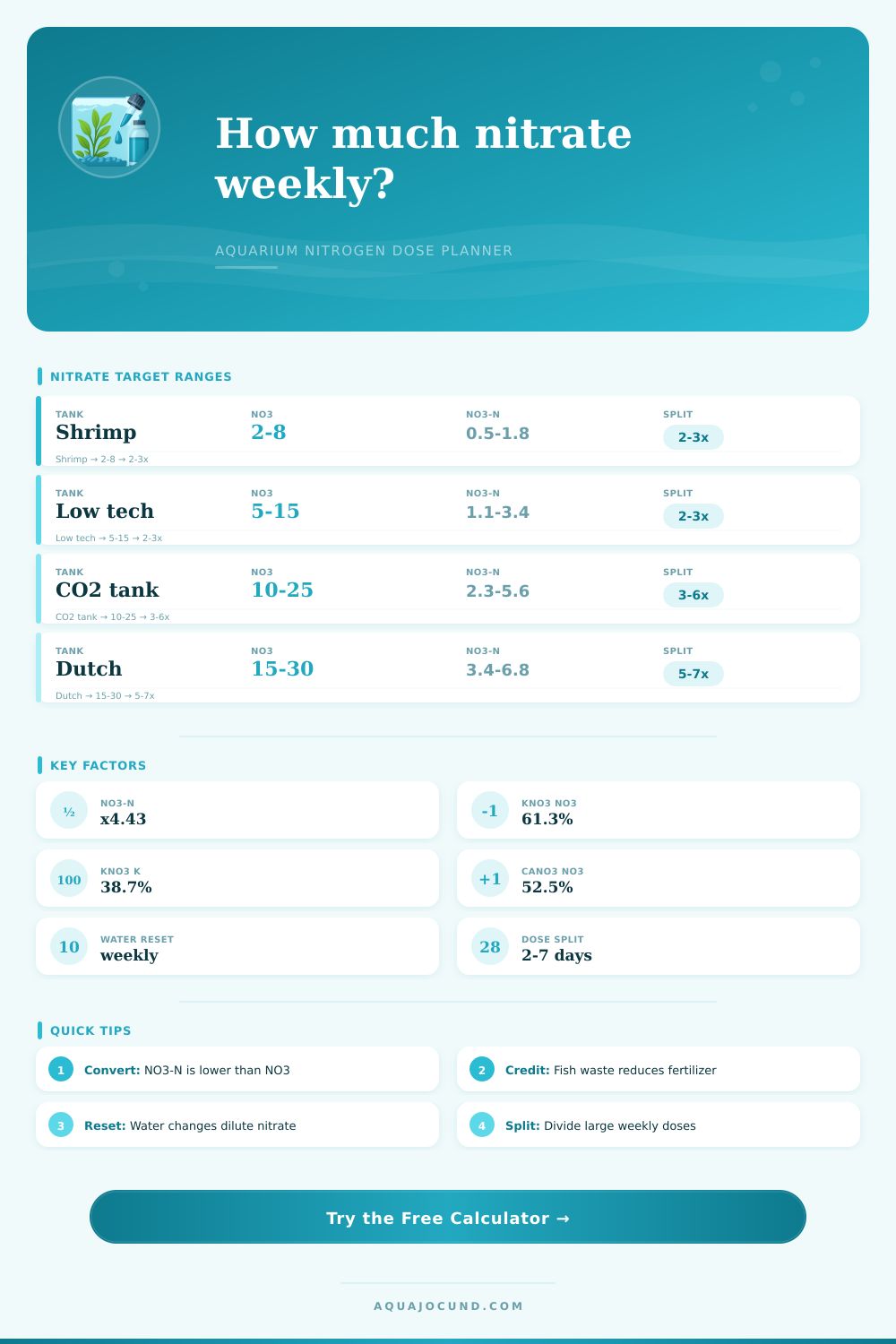
| Potassium nitrate KNO3 | 61.3% as NO3 | 38.7% potassium | Planted tanks that also need potassium. |
| Calcium nitrate tetrahydrate | 52.5% as NO3 | About 17.0% calcium | Soft water systems where extra calcium is acceptable. |
| Liquid nitrate supplement | Uses label strength | Depends on brand formula | Nano tanks or keepers who prefer milliliter dosing. |
| Fish load credit | Biological nitrate input | Varies with feeding | Subtract from fertilizer need before dosing. |
| Reported value | Multiply by | Equivalent | Common use |
|---|---|---|---|
| 1 ppm NO3-N | 4.4266 | 4.43 ppm NO3 | Lab reports and some water utilities. |
| 5 ppm NO3-N | 4.4266 | 22.13 ppm NO3 | High enough to matter in planted tanks. |
| 10 ppm NO3 | 0.2259 | 2.26 ppm NO3-N | Most aquarium test kit comparison. |
| 20 ppm NO3 | 0.2259 | 4.52 ppm NO3-N | Common high-growth planted target. |
| Tank style | Typical NO3 target | Uptake estimate | Split schedule |
|---|---|---|---|
| Shrimp Moss and epiphytes | 2 to 8 ppm NO3 | 1 to 5 ppm per week | 2 to 3 smaller doses. |
| Low tech Crypts, ferns, floaters | 5 to 15 ppm NO3 | 3 to 10 ppm per week | 2 to 3 weekly doses. |
| CO2 Stem and carpet tank | 10 to 25 ppm NO3 | 8 to 20 ppm per week | 3 to 6 weekly doses. |
| Dutch High demand display | 15 to 30 ppm NO3 | 15 to 30 ppm per week | 5 to 7 weekly doses. |
| Weekly dose | 2 days | 3 days | Daily |
|---|---|---|---|
| 6 ppm NO3/week | 3.0 ppm each | 2.0 ppm each | 0.9 ppm each |
| 12 ppm NO3/week | 6.0 ppm each | 4.0 ppm each | 1.7 ppm each |
| 21 ppm NO3/week | 10.5 ppm each | 7.0 ppm each | 3.0 ppm each |
| 30 ppm NO3/week | 15.0 ppm each | 10.0 ppm each | 4.3 ppm each |
Why aren’t my plants growing even though I’m using fertilizers? You might find yourself staring at green water in your planted tank. The reason is usualy a nitrogen imbalance, which means there is either too much to promote algae or too little to promote plant growth. Because most hobbyists’ experience with nitrate dosing comes from reading vague “rules of thumb” on the internet, they’re left guessing. This mean room for error. Using a precise nitrate dose calculator eliminates that guesswork by taking into account factors like tank volume, plant uptake, and fish population.
That’s the first step: to know what you’re looking at. The test kits will say “nitrate” (abbreviated NO3) or “nitrogen” (which is realy called NO3-N). They look the same on report, but they are actualy different. You’ll see a value like 5 ppm for NO3-N in your town water report, which appears innocent enough…until you translate it. Actually, you have more than 20 ppm of actual nitrate! How do I know? Multiply by about 4.4. Most beginners gets tripped up right here, so the calculator does this translation for you.
How to Use a Nitrate Calculator for Your Plants
Many dosing guides fail to mention one major source of nitrogen: fish waste. Every gram of protein you feed convert into ammonia, then nitrite, and finally nitrate. Depending on how heavily stocked your community tank is, fish may provides half or more of total nitrogen needed by plants. Unless you subtract that “biological credit” from your fertilizer dosing, you’ll over-dose with something and risk an algae bloom.
Subtract first, add later. Weekly water changes is like hitting the reset button on your balance sheet. The dilution effect of replacing 50% of the water will cut current amount of nitrate in half (assuming no other sources), but it adds fresh nitrate to replace what was removed. Municipal supply may have substantial nitrates, meaning that a big water change each week add as much or more nitrogen than you’re removing. Many hobbyists never realize this until its too late. The calculator does take into account this dilution and provides an exact picture of how each parameter will be affected before you toss in any extra fertilizer.
Depending on your aquascape style, uptake by the plants vary widely. If you have a shrimp tank with crypts and moss, it will require very little nitrogen and can happily live at a few parts per million of nitrate. In contrast, if you have a Dutch high-tech tank with carpeting and lots of stem plant, that thing is eating nitrogen for breakfast, lunch, and dinner. You’ll want to estimate what’s being consumed to avoid nutrient deficiencies (e.g., growth halts, yellowing leaves) versus having nutrients accumulate.
The other thing that people overlook is splitting doses. Pouring a week’s worth of nitrates into your tank all at once means you’ll have a huge spike and then a crash afterwards. At best plants will absorbs what they can which isn’t a lot all at once. Spreading it out over 3-6 days keeps things stable instead of volatile, the calculator splits out total weekly need into easy daily or semi-daily chunks.
Last, think about where that food came from. If your plants need both potassium and nitrogen, potassium nitrate is a good choice. If you have plants that are low in calcium (perhaps due to a lot of calcerous substrate?), calcium nitrate will feed them calcium too, but be aware that this will somewhat soften your water parameters (as will most of the nitrates). Liquid supplements are convenient but must be used with care (read the label strength carefully!). Be sure to select the appropriate compound based off the additional nutrients your tank may lack.
Dosing nitrogen involves a little bit of chemistry but much more balance. Remember this is a dynamic system with inputs and biological consumption. The key here should of not to guess but rather measure. If you do, then your algae battles tend to recede into background. Colorful plants indicates your efforts have been precise and will bring long-term rewards.