
Neon tetras are common freshwater fish for aquarium owners. Most people know what they look like with their colorful appearance. What most do not know, however, is how to keep them healthy.
In order for your fish to stay colorful you need to make sure it’s living in conditions it likes chemically and socialy. To achieve this, you have to provide a space that makes the fish feel secure. But first of all, begin with the water chemistry. Everything else hinges upon it.
How to Keep Neon Tetras Healthy
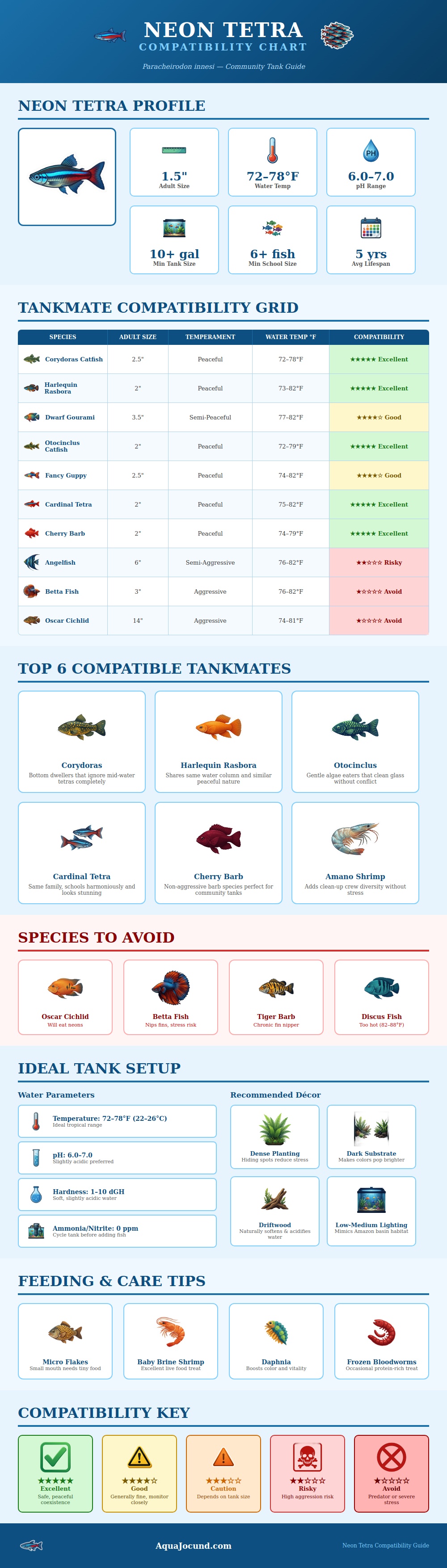
Because these fish inhabit soft, acidic waters in the Amazon basin, they’re adapted to conditions very different than what is considered “normal” for aquarium water. Ideally, you’ll want your water to be in the range of six to seven pH and soft instead of hard. That’s important because neon tetras is surprisingly sensitive to spikes in ammonia or sudden shifts in mineral content. By mimicking their natural habitat, you eliminate low-level stressors which can contribute to disease down the road. As chart indicates above, the combination of acidity and temperature keeps them stable.
Then what other fish do you want to have? For instance, neon tetras are little fish and can be intimidated. They’re a middle-of-the-water fish that won’t bother anybody but stay out of the way. In fact, one common suggestion is to add Corydoras catfish because they’re bottom dwelling scavengers who leave the mid-water alone so the two types don’t get up each others’ craws.
Likewise, if you have a algae eater (Otocinclus) or some other relatively peaceful schooling fish like Harlequin Rasboras, you know their temperament is similar. You also know their environmental requirements is similar. So you can keep those with no fear of conflict.
But not all community fish will work in a neon tetra tank. It’s obvious that large predators are a no-no. Even semi-aggressive species such as dwarf gouramis can be problematic. Yes, the gourami may leave the little tetras alone most of the time, but it will add up over time and become stressful to them. Anything larger than a neon or exhibiting aggression toward other species will harm the health of your neons. I’ve used the compatibility grid to mark those combinations as risky. This is so you don’t assume all tropical fish goes well together just because they are warm water species.
The other factor in this is decor. If your neon tetras is hiding, it’s because they feel they are in danger. In nature, they live on dark shaded forest floors. Therefore, darker substrate highlights the coloration of these fish while providing something that resembles what they’re used to seeing. Furthermore, dense planting gives them cover during feeding time, preventing larger tank mates from bullying them for food. They don’t have to contend with bigger tankmates trying to bully them away from food. It’s about looks, but it matters greatly to their survival and behavior.
Food is something to be careful about too. Bigger pellets won’t fit in their tiny mouth and will also dirty your tank water. Stick with finely crushed food or micro flake. A few times a week try feeding some baby daphnia or brine shrimp. This gives them much needed protein. It also helps them show more of their natural hunting behavior, which is good for their health. Different things keeps their system functioning properly while maintaining the beautiful colors that make them well known.
The key to building a successful tank isn’t just about getting certain species together. It’s also about finding balanced companionship. Provide ample cover, make sure your neighboring species are compatible, get the water correct, and watch how the fish becomes more confident and colorful. This means the ecosystem is functioning properly. Seeing the group move as one unit against the dark substrate tells you everything is working exactly as it should of.
