
There’s none of that biting, so maybe you think your tank is peaceful. The thing is, beneath the calm surface of the water lies a complex social drama. Instinct and hormones drive male fish. They acts, look, and move around differently. They behave different than other creatures. Knowing this transforms the hobby from passively observing to actively managing. It takes you from merely keeping your pets alive to keeping them happy.
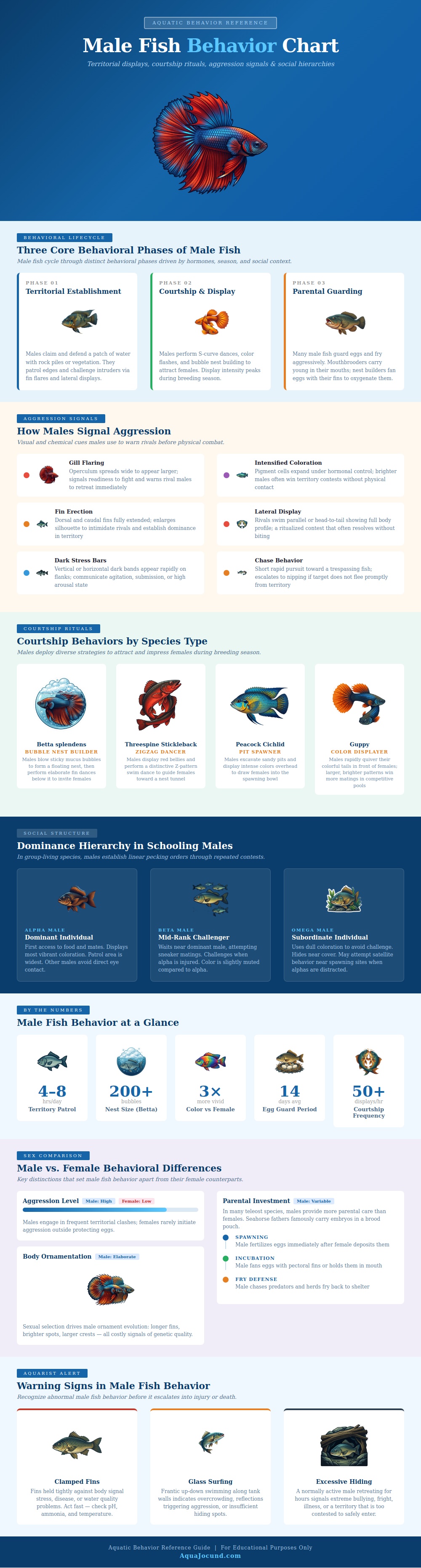
Generally speaking, there are three life phases that a male will go through. First, he establishes his territory by claiming piece of water defined by things like plants or rocks. From here, he’ll patrol the perimeter incessently. If you notice him flitting about tank, dashing at perceived intruders, chances is good he’s maintaining his territory.
What Male Fish Do and Why
Second, there are display and courtship. Aggression give way to attraction here. To impress females, males will do elaborate courting rituals. They may also show off their colors with flashing displays.
Third, most species become parental guardians. This can include building nests, fanning the eggs with their fins, or carrying offspring in their mouth. In all cases, it requires a lot of attention. Energy is now directed toward protection. It’s a significant shift from the idle swimming you might see on other days.
It’s mostly a visual communication system that has many rituals. Threats are not always violent; they’re more often a progression of warnings intended to prevent expensive physical combat. By erecting fins, you can make a fish look bigger then it is while expending minimal energy. Gill flaring works the same way. It makes the fish look larger to scare off competitors. You may see dark stress bars form quickly on his side as well. These are those vertical/horizontal bands that signal high arousal/agitation. A male exhibiting this behavior plus lateral displays (swimming parallel to an opponent) is involved in a ritualized contest. It’s a battle of wills that is more psychological than a fight to the death.
As you can see from the infographic above, each species has a wildly different courtship strategy. Bettas blow sticky mucus bubbles to create floating nests before dancing below them. Threespines stickleback dance in a zigzag pattern with red bellies on display. Peacock cichlids dig sand pits, hovering over them to attract females. Guppies just vibrate their flashy tails back and forth.
There is a common theme here. They’re all working for it… I.e., each strategy is a developed answer to the mating pressures in its local environment. These displays take a lot of energy; in other words, a male who’s pulling out all the stops is saying “Hey, I’m genetically good.” Because it’s a signal of fitness, females across many species has learned to read this amount of effort extremely well.
Dominance hierarchies form rapidly in groups. The alpha male (typically the one with the brightest colors and the largest range) gets the first pick of all mates and has first access to food. He also usually have beta males lurking near him, looking for chances to challenge his leadership if he falter a bit or trying to sneak a mating here and there. The omega males are usually pretty well concealed, using dull colors so as not to attract notice. It’s a stable arrangement. Left unchecked, there’d be no end of fighting and the whole lot of them would wear themselves out. Knowing the place of every fish on that hierarchy enable you to spot issues.
The behaviors make sense based off obvious physical characteristics distinguishing the sexes. For example, males tend to have more ornate bodies and show more aggression overall compared to females. Parental duties is also largely handled by males in most species, with some species even providing egg protection for more than a week.
But watch out for any abnormalities. Fins clamped closely to the body are typically a sign of poor water quality, disease, or stress. Fish swimming around frantically against the sides of tank (called glass surfing) shows overcrowding or lack of hiding places. Lots of hiding can also mean they’re ill or being bullied severely. These are red flags. Double-check your water parameters ASAP, water quality matter.
Rather than just knowing the characteristics of each species, observing male behavior is more about understanding their motivation (what makes a fish dance), hide, or flare? If you know why a fish does those things, then the aquarium stops being a decoration, but instead turns into a readable landscape. The next time your male fish displays his color or patrols his territory, keep in mind he’s doing so for a reason, it’s like they are speaking a language of light and movement. It’s listening to that language that will make the difference between simply keeping fish vs understanding fish. Behavior tells us intent.
