
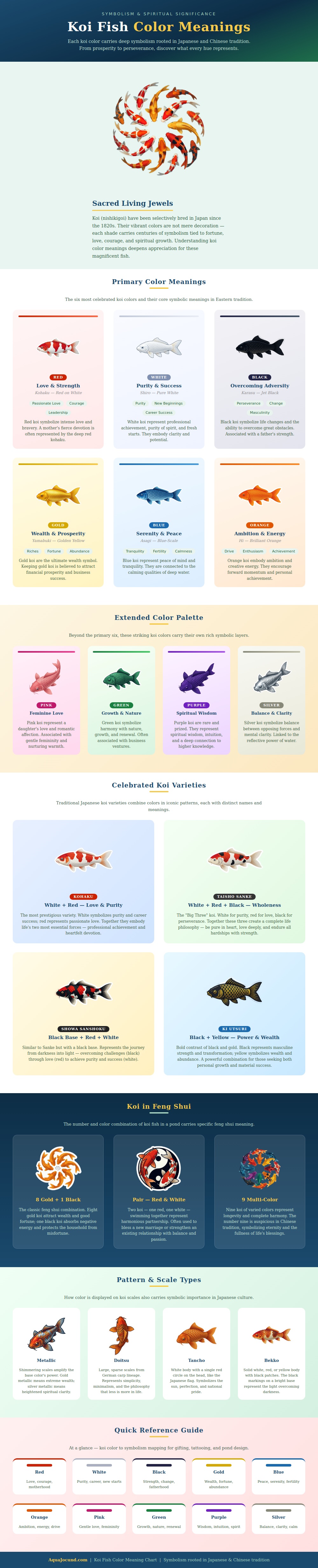
Koi are beautiful, colorful fish. To most eyes, it’s just decoration. But there is more to koi than just looks, Koi have meaning. And the colors on their bodies don’t happen by chance. In fact, koi colors represents Chinese and Japanese cultural traditions. The meaning of those color transforms the pond. A bunch of fish becomes a set of symbols with intentions.
In Kohaku koi (which is red on white), the white skin are often spotted with patches of red. Kohaku symbolizes courage and love, but it can also be a sign of leadership and devotion. It is thought to represent the protective strength of a mother. In some traditions, the white represents new beginnings and purity. For example, a white koi (like the Shiro) may signal a time for new beginnings. It may also represent seeking clarity in your career, such as when starting a new business. Sometimes this red and white combo work well together since it blends professional success and passion.
What Do Koi Colors Mean?
Karasu, Karasu refers to the black koi, which symbolizes conquering adversity and tenacity. In traditional western culture, black is associated with grief and death. However, when it comes to koi colors, black represent power and guidance. It’s a color that aids you through tough times while staying on track.
Yamabuki are the gold koi. They’re deeply related to abundance and prosperity. The idea behind keeping them is that their rich appearance match monetary success. This comes from tradition, not just superstition.
Blue Asagi koi is suitable for meditation garden. It brings serenity and calmness into a space and is associated with fertility. Orange Hi koi add ambition and energy, which is helpful for those who need motivation or creative drive. A traditional pond setup use gold and black koi. One black koi is paired with eight gold koi because the black absorbs negative energy and the gold attract wealth.
Other colors like the Taisho Sanke (white, red, black) embody the meaning of wholeness (that we need love), purity, and endurance working in concert with one another; while the Showa Sanshoko features a black base which mean that love, success, and moving from darkness into light are needed for personal growth and resilence. The base color is intensified by metallic scales. Silver metallic scales indicates high levels of spiritual clarity; gold metallic scales indicate extreme wealth.
The type of pattern also matter. It adds another layer of meaning. Sparsely scaled doitsu koi demonstrate a minimalist look, less is more when it comes to design. With their dark patches on bright bodies, bekko varieties shows how light overcomes darkness. Each detail; color placement, scale pattern… Contribute to the larger message.
When selecting your koi, consider what energy you’d like to invite into your life: Choose gold for abundance, blue for peace, and black for protection. Because these fish has been selectively bred since the 1820s, their colors mirror our cultural values and desires. They’re not simply animals, they are living symbols. When viewing a koi pond, pay attention to which colors draw your eye, as it might of tell you something about what your subconscious is looking for.
