Kelvin Temperature Plant Calculator
Balance aquarium plant lighting from white Kelvin mix, RGB channel strength, water depth, plant color goals, and viewing preference.
💡Spectrum Presets
🌿Fixture, Plant, and Aesthetic Inputs
Kelvin Spectrum Recommendation
🌈Spectrum and Plant Comparison Grid
📊Kelvin Ranges for Planted Aquariums
| Range | Visual effect | Plant response | Best use |
|---|---|---|---|
| 2700-3500K | Warm amber | Useful red support | Wood-heavy displays and red highlight blends |
| 4000-5000K | Neutral warm | Good broad growth support | Natural community tanks and low-tech layouts |
| 6000-7000K | Daylight white | Strong planted baseline | Most planted aquariums and balanced viewing |
| 8000-10000K | Cool crisp | Better depth reach, less warmth | Deep tanks, clean aquascapes, and blue-biased viewing |
🌿Plant Style Spectrum Targets
| Plant style | Kelvin aim | Channel bias | Watch point |
|---|---|---|---|
| Low-tech mixed plants | 5200-7000K | White-led balance | Keep photoperiod moderate if intensity is high |
| Carpet plants | 6000-7600K | Daylight with some blue | Depth and shading reduce foreground reach |
| Red stem plants | 5000-7000K | Add red without losing white | Color pop also needs nutrition and CO2 |
| Moss and epiphytes | 4500-6800K | Soft neutral white | Avoid harsh long photoperiods on slow leaves |
💧Depth and Water Clarity Adjustments
| Condition | Kelvin shift | Channel note | Reason |
|---|---|---|---|
| Under 12 in | 0 to -300K | Warm channels stay visible | Short path length keeps color balanced |
| 12-20 in | +200 to +700K | Keep 6500K as anchor | Moderate depth softens red and warm white |
| Over 20 in | +700 to +1500K | Add cool white or blue carefully | Deep water benefits from crisper output |
| Tannin or haze | +400 to +1200K | Raise daylight before blue | Tint absorbs and warms the perceived mix |
📝Fixture Channel Balance Reference
| Channel | Typical role | Useful range | Overuse sign |
|---|---|---|---|
| Warm white | Natural warmth and red tones | 5-35% | Yellow cast or dull greens |
| Daylight white | Main growth and neutral viewing | 45-90% | Flat look if used alone |
| Red | Enhances red leaves and fish color | 5-25% | Pink cast or muddy shadows |
| Blue | Crispness and depth penetration | 5-35% | Cold tank and weak wood tones |
Plants require special light to grow well so lighting a planted tank is tricky. You’ve got the plants, the substrate, and the water…but nothing look good if it’s not lit right. Using the kelvin temperature plant calculator (above), we can figure out how to strike this balance based off water depth, color accents and white channels. This translates theoretical color temps into real-world advice for your tank.
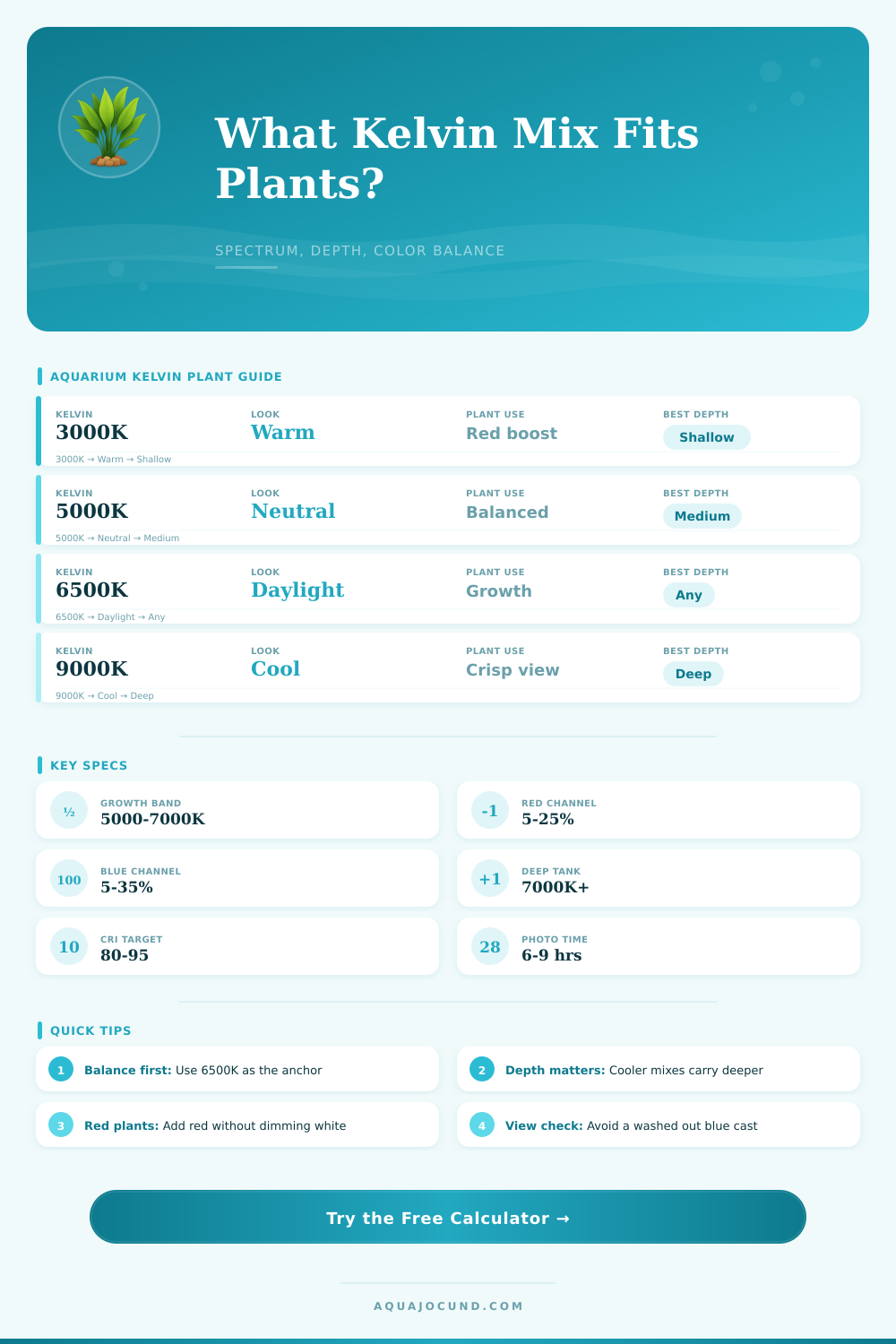
Lighting is an on/off switch for many aquarists. That’s wrong. Not only does light intensity matter so do its qualities. Different wavelength drive biological processes and create the “scene” that we see. A cool 9000K light penetrates deeper into deep water (e.g., the bottom of a tall tank) but makes everything appear sterile and blue in color. On the other hand, a warm 3000K mix doesn’t penetrate well into deep water but make red stems pop out and makes driftwood look rich. You want something in between, something that grows plant while pleasing your eyes at the same time.
How to Choose the Right Light for Your Plants
It does this by allowing you to specify what percentage of each channel strength that your fixture puts out. In most moddern led fixtures, you can set the percentage for warm white, neutral white, cool white, daylight, blue and red. So, for example, many people assume that adding more red will make the plant appear redder. That’s not exactly true. Red light enhances the colors already present. However, if there isn’t enough neutral base light paired with the red, result is a pinkish or muddy scene.
The calculator will help you determine the balance point between your desired output and how much water absorbs. This is the physics of water. Because water filters out warm (red) colors before it allows other wavelengths into view, water depth matter. If you have a shallow nano tank where light has to travel only inches to reach your plants, you can get away with warm tones. But if you’re setting up a deep display tank, all those warm lights gets filtered out by the water column above substrate. This is why depth is such an important variable in the calculation, the page’s reference table clearly shows which warmer or cooler kelvin ranges is better suited to penetrating farther down.
Remember: The plants determine what you require as well. Broad spectrum daylight is typically 6000K, 7000K. This works best for carpeting plant such as dwarf hairgrass, as they want to cover the bottom. More forgiving plant such as air-growing and mossy plants are content with less intense light (softer neutral mixes at about 5000K). Plants with red stems requires certain energy bands to make their coloring pigments (anthocyanins). Don’t expect to boost your red channel with any success if your fish aren’t growing well due to low CO2.
People often overlook the subjective factor of viewing preference until it is too late. Do you desire a natural daylight appearance for a community tank? Or do you like a crisp, bright planted style where each leaf tip stand out? The calculator includes your desired viewing goal with these technical specs (CRI, surface shading, etc.). It considers light lost from shadowed hardscapes, floating plant cover, and even the tint of any blackwater tea in your aquarium.
Numbers are only beginning points. After a few weeks you will see what realy works for you with any given spectrum by observing how your plants react. Take the calculator’s suggestion as your base and adjust each channel by what you see with your eyes. Too much blue? Back that down. Reds seems flat? Increase the dedicated red (or maybe even the warm white) channel a hair. It’s trial and error: adjusting and observing.
Achieving that delicate balance takes patience, but when done correctly it turns your hodge-podge selection of plants into a connected ecosystem. To avoid blindly guessing at the numbers, let the previous calculator do it for you after inputting your parameters. You should of use those numbers as a starting point, pay close attention to what’s happening in your tank, and adjust accordingly until you’ve got a light level that matches the inhabitants of your tank.