🐟 Inbreeding Coefficient Fish Calculator
Estimate planned fry relationship coefficient, linebreeding pressure, common ancestor contribution, and outcross dilution for aquarium fish breeding records.
| Fish Breeding Plan | Default Path | Common Ancestors | Approx F | Typical Use |
|---|---|---|---|---|
| Unrelated outcross | No close shared record | 0 | 0% | Refreshes a line and adds new traits. |
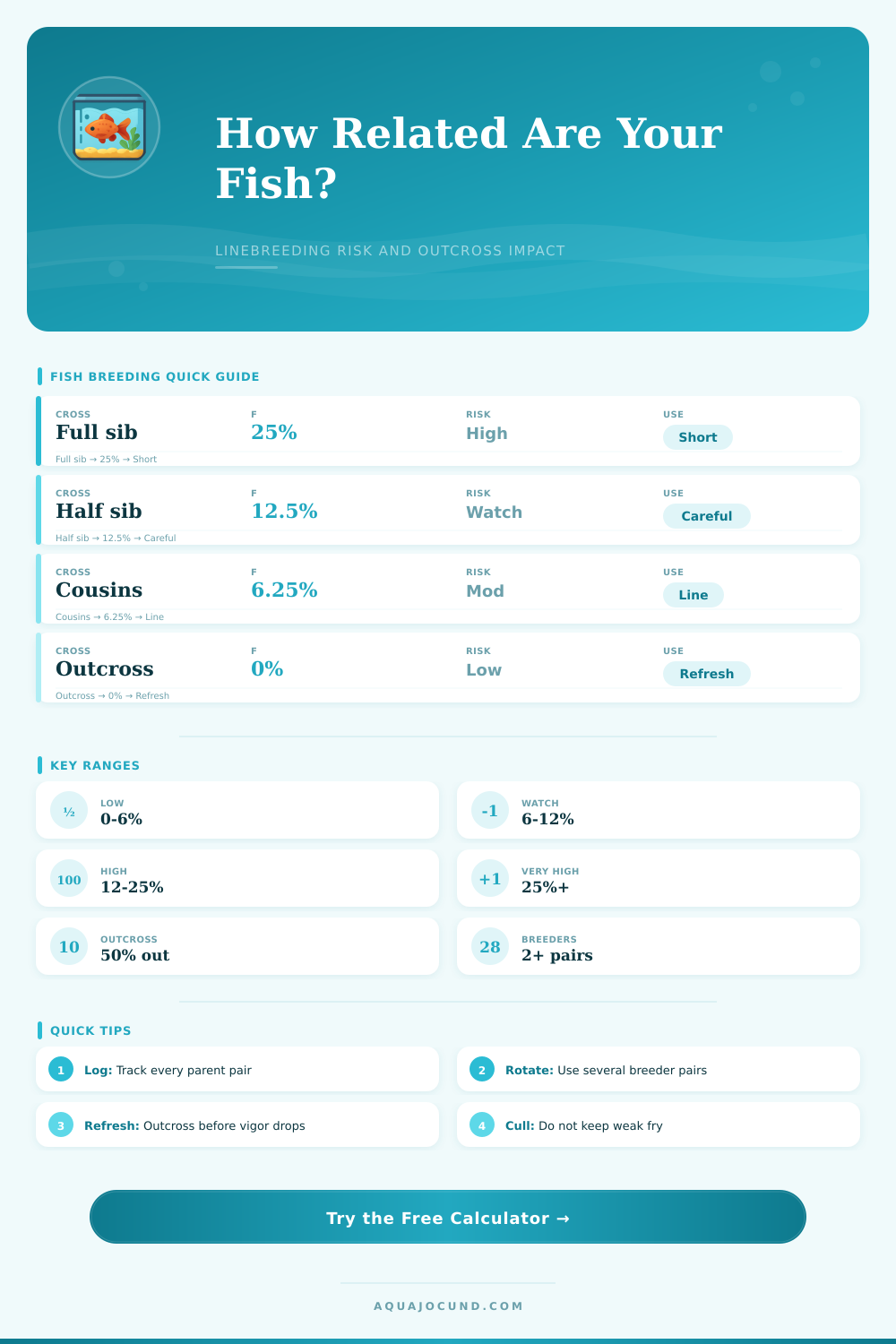
| First cousins | 2 and 2 generations | 2 | 6.25% | Light linebreeding when notes are good. |
| Half siblings | 1 and 1 generations | 1 | 12.5% | Common strain fixing method with caution. |
| Full siblings | 1 and 1 generations | 2 | 25% | Tight strain work; usually short-term only. |
| Parent backcross | 0 and 1 generations | 1 | 25% | Fixes a trait quickly but raises risk fast. |
| Coefficient Range | Band | Breeding Meaning | Record Action |
|---|---|---|---|
| 0% to 6% | Low | Little close pedigree pressure. | Track traits and keep multiple backups. |
| 6% to 12% | Line | Useful for mild linebreeding plans. | Compare sibling groups and avoid weak fry. |
| 12% to 25% | Watch | Close line work; vigor checks matter. | Plan an outcross or rotate breeder pairs. |
| 25% and above | High | Tight breeding with higher defect risk. | Use only with strong culling and records. |
| Outcross Share | Line Blood Kept | Coefficient Effect | Practical Aquarium Use |
|---|---|---|---|
| 0% | 100% | No dilution | Use when the line is vigorous and well recorded. |
| 25% | 75% | Moderate reduction | Bring in a related but separate colony branch. |
| 50% | 50% | Strong reduction | Use an unrelated fish, then select back to type. |
| 75% to 100% | 25% to 0% | Major refresh | Best for saving vigor or rebuilding a weak strain. |
| Record Item | Why It Matters | Good Aquarium Practice | Warning Sign |
|---|---|---|---|
| Parent ID | Prevents accidental close repeat crosses. | Label tanks, jars, tubs, and photo folders. | Unknown sire or mixed juvenile grow-out. |
| Hatch and fry count | Shows fertility and early survival changes. | Compare each spawn to the same line average. | Sudden smaller spawns or many early losses. |
| Deformity notes | Flags linebreeding stress before adults mature. | Log spine, fin, jaw, swim, and size issues. | Repeated defects across sibling spawns. |
| Outcross source | Shows whether vigor came from new stock. | Quarantine, observe, and record source traits. | Unknown background with hidden relatedness. |
It begins with guppies. Or perhaps bettas. Fish with fins flowing and colors that is perfect. When you strive to create a family of these beautiful fish for the local fish-keeping community, it’s an understandable desire. Yet breeding fish isn’t simply selecting the most attractive adults. You must be aware of your genetics, as knowing how closely related your breeders are are important. Before setting up the spawning tank, use this fish calculator to estimate the risk of inbreeding between them.
It’s not terribly complicated (which I think is the appeal), though we hobbyists tend to overcomplicate things and base our decisions off gut instinct instead of hard data. When you breed closely related fish together, their offspring can inherits recessive genes from both parents. This may result in reduced fitness, poor survivability, or other health problems for those fry. For instance, perhaps you’ve experienced a mass “hatch failure” where all of a sudden no fry survive. The tool provide an estimate of how much inbreeding is occurring, giving you something real with which to make an informed decision about whether or not your line has become too inbred.
How to Breed Healthy Fish Using a Calculator and Records
The tricky part is recognizing that you know more then you think you do when it comes to understanding what goes into your fish. Pedigree refers to following the path from each generation of ancestor to parent and so on until you get to your own male and female breeder. For instance, if you’re mating full siblings, the coefficient increases rapidy and frequently exceeds 25 percent (meaning there’s high risk). In aquarist terms, that’s a lot because it means that any genetic defects in their ancestors will be doubled up on.
The calculator does the math for you. It turns the number of generations into a risk percentage and places it in a risk band. This lets you know whether it’s time to tread lightly or not even bother. Yet, raw numbers don’t necessarily represent the complete picture of a good breeding program. In addition to considering your coefficients, evaluate how well your fry perform. Even if your coefficient is low, that doesn’t mean all your offspring will be perfect if the parents were stressed out or fed poorly. On the other hand, even some moderately inbred lines can be sustained by experienced breeders who pay close attention to their vigor and cull aggressively.
Remember, it’s all about balance, you’re trying to fix something like color while not compromising overall health. That’s where outcrossing is critical in the long term. By bringing in some fish that are not related, you’re thinning out the built-up genetic load and resetting the clock for potential issues. You can see from the tables on the page just how far the coefficient reduces with each addition of new blood. If your line is already heavily linebred, a single 50% outcross will reduce the current linebreeding pressure by half; enough to breathe life back into a struggling strain while not completely abandoning everything you’ve achieved along the way. Think of it as a strategic refresh instead of an entire overhaul of your efforts.
The trap I’ve seen many hobbyists fall into is breeding “what’s pretty” and not documenting their origins. Not having a record means you can’t avoid accidentally getting close cousins crossed down the road. Two fish you thought were unrelated actualy have a forgotten common grandparent. This makes the likelihood go way up. Documenting hatch date, parents ID, which ones make it, etc will help you identify trends earlier. Having more deformed fish in one sibling grouping vs. This is also just as useful a data point as the coefficient calculation.
Being a good breeder is a matter of patience and observation. Plan using the calculator as a guideline, but rely on your eyes to assess health of your fish. Don’t be afraid to outcross should vigor decline, and don’t let yourself get bottlenecked by only one or two breeder pairs. Rotate your breeder pairs regularly to prevent bottlenecks. Ultimately, it’s about having a healthy, strong line that not only thrives now but for years to come. It’s about keeping records and understanding genetics (making breeding more than a gamble).
So where do you start? Make notes on every spawn regardless of how casual they may appear. When you begin experiencing more deaths or trouble getting a certain trait to take hold, those notes becomes invaluable. While the calculator provides a framework for you, paying close attention to details will be your foundation. Also remember that growing a good line isn’t so much about pushing genetics as it is about coaxing genetics along carefully with time. Maintain accurate records, observe your fry, and restock when necessary. This ensures that keeping aquarium fish stays rewarding and is not filled with avoidable loss.