
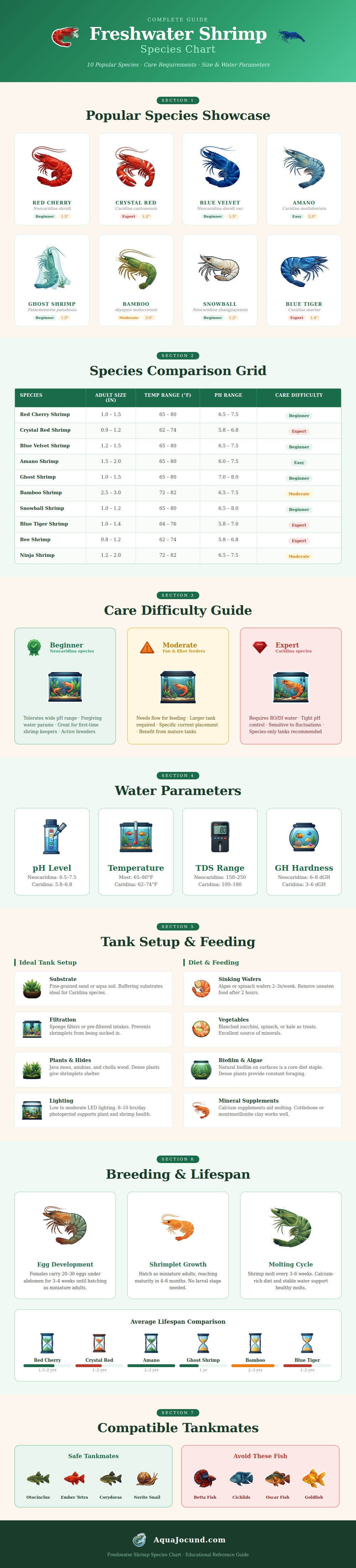
For those new to the hobby, you may think that neon red cherry shrimp are the simplest starting point… but these small critters aren’t simply a bowl-and-hope proposition. This visual guide covers 10 species… From Neocaridina (which are generaly easier) to Caridina (which tend to be more finicky and closer to laboratory conditions).
Knowing which end of that spectrum your shrimp fall into will help them thrive or wither away despite small water changes over time. Those who begin with the flashy colors end up here in the middle (for good reasons), but the care difficulty tags tells a better story then price tags. Most of the time, there is no difference in keeping an advanced or beginner level shrimp based off tank size, but rather on water chemistry.
How to Care for Shrimp
Shrimp like Blue Velvet and Red Cherry can survives most standard tap water conditions (pH range where a sensitive cousin would die). They’re tough little guys made for variety. This rule does not apply as much to species like Blue Tiger or Crystal Red shrimp. For these animals, the rules changes entirely. You must mix reverse osmosis water with specific remineralizers to reach certain target levels. Untreated tap water is not going to do anything but stop their hearts instantly from things like chlorine and/or copper. It is a small detail but very important if you want to keep rare color morphs.
Water temperature is just as important, if not more so, with any species. Neocaridina can handles a broader thermal range, while Caridina prefer cooler water that mimics their mountain stream origins. On the other hand, Neocaridina can tolerate a wider range of temperatures. Because of this, the system undergoes stress when temperatures gets too high. Metabolism speeds up causing them to molt more quickly and die off at greater numbers. Something as minor as a few degree bump on your heaters can cause major problems. It may not kill your tetras, but it could be deadly to those popular shrimps. If you have a tank specifically for shrimps, its common practice to keep it a bit cooler than the rest of your home in the winter.
Aquatic plants are another important element besides water parameters. How you set up your tank determines its suitability for breeding and foraging by these animals. Although they can eat suspended food (floating around), shrimp is basically grazers of algae and biofilm that grow on surfaces. For this reason, dense planting is crucial as it creates a place for newborns to hide. Newborns are tiny versions of adults, so they are not yet safe from filter intakes. Dense planting also provides a lot of surfaces for grazing. A sponge filter is almost mandatory, it produces a gentle flow and at the same time generates a surface rich in good bacteria for grazing. Even the hardiest ones wouldn’t of be able to reproduce well if they are not protected properly from filters and do not have enough places to hide.
The chart also shows how different species has dramatically different dietary requirements. Amano (and similar generalists such as Ghost Shrimp) will pretty much consume whatever you offer them, which makes them great algae eaters for cleaning up that glass. Species-specific (especially Caridina species) require high quality sinking wafer foods and extra blanched vegetables so they recieve enough calcium for proper molting. In other words, if one of your shrimps is having trouble coming out of its exoskeleton, there’s a good chance something is wrong with the food/water hardness. This is an easy fix and can be corrected relatively fast by adding some type of calcium supplement (e.g., mineral supplements, cuttlebone).
Another common cause of stress among new keepers is compatibility with tankmates. Slow moving species such as Otocinclus catfish or Ember Tetras is peaceful community fish that won’t threaten small invertebrates while sharing their water space. On the opposite end of the range, you should avoid anything that considers motion as food. Larger cichlids and betta fish will not hesitate to snack on shrimps, making any attempts to establish a colony useless. Apparently innocent goldfish can wipe out an entire population overnight because of their size alone combined with sloppy feeding behaviors. Just like selecting proper shrimp, selecting appropriate neighbors is equally critical.
In conclusion, if you want to successfully keep shrimps, then choose a species that matches your commitment level. If you’re new to the hobby, start with hardy Neocaridina. They won’t stress you out with super specific water parameters and they will teach you the essential knowledge on plant maintenance and testing water. After you gain some experience with these basics, it’s only natural to move forward to Caridina… Which is neither a giant leap nor the dark side (haha).
Keep in mind that the whole point isn’t keeping them alive but making their environment so good that they thrive and reproduce naturaly in it. And when that happens, seeing a bunch of tiny transparent babies crawling around among the moss will feel like observing a mini-ecosystem coming back to life.
