
“Shrimp is a snack for bettas.” We all know the ubiquitous advice. Soon after you set up your tank, it’s going to be a one-species bowl. There’s some truth to that, sure. But there’s also a lot of reductionism here. Not all bettas eats small animals. Nor are all shrimp species meek. A lot goes into maintaining an aquarium besides predation, water chemistry, tank layout, temperament, etc. Taken as a whole, these things can mean the difference between stocking losses and a flourishing colony.
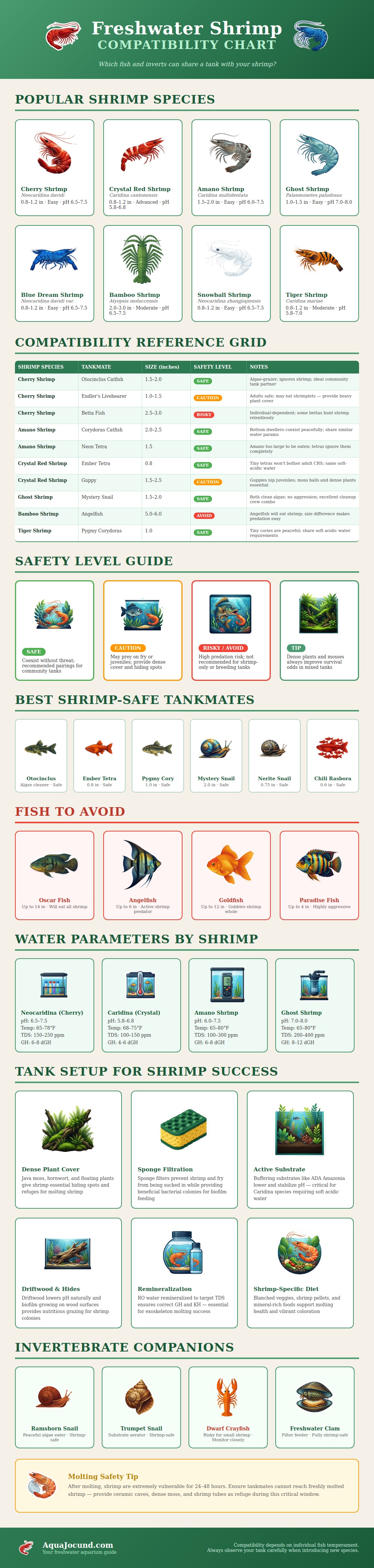
To help illustrate the point visually, following matching chart for shrimp and compatible fish breaks this down. This chart goes beyond just identifying what’s okay or not okay for your tank. Instead it shows you exactly where on the scale each relationship falls (ranging from safe to risky). So, for example, pairing an otocinclus catfish with cherry shrimp is rated as “safe”, whereas pairing them with a betta are rated as “dangerous”. That doesn’t mean that every single cherry shrimp won’t get along with a betta. There are always exceptions. Some individuals are more passive or hunters based off their nature, even if they belong to a certain species. But this chart will at least help prevent you from putting animals together that clearly wouldn’t work well.
How to Keep Shrimp Safe in Your Tank
Don’t expect bamboo shrimp to be a good match for angelfish. Angelfish is just too big and opportunistic to live peaceably with small invertebrates. It’s more of a recipe for disappointment than it is for biodiversity.
Keep in mind, however, what’s unseen… The factors necessary for keeping shrimp alive long enough to think about tankmates. Most novice shrimp beginners falls into this trap without even knowing they’re doing it: The chemistry of the water. To survive, caridina (e.g., crystal red) shrimps require low conductivity, soft, acidic water. Neocaridina (e.g., cherry, blue dream) shrimps can tolerates typical tap water conditions much more easier. These two categories cannot coexist in a single tank because trying to meet the needs of both types would satisfy neither. If you want those shrimps to live in hard water and a high pH suitable for ghost shrimps, you’ll end up stressing your fragile crystal reds and probably causes them to stop molting correctly. Choose your lane and stay in it.
The other half of the story involves the physical aspects of tank security. The more planted your tank is, the better it fare when it comes to survival rates. Not only does a densely planted tank look nice (which is why many people do it), but those plants serves as protective “armor” for your shrimps. For example, hornwort, java moss, and heavy carpets of various types of carpeting plants all create shelter for your shrimps whenever they’re molting. During this period, shrimp are at their most vulnerable state, which lasts about forty-eight hours after they’ve shed their shell. They is now soft and cannot move as quickly than before. This makes them easy to harm, even by gentle tankmates that might bump into, crush, or eat them while feeding.
Sponge filters also comes in handy. Not only do they provide gentle water flow that doesn’t suck small fry into mechanical filtration components, but they also grows biofilm as a source of free food for your shrimp colony.
For selecting compatible tank mates with shrimps, avoid the popular big and flashy fishes, and go with smaller, docile ones. Chili rasbora, pygmy corydoras, and ember tetra is all good examples. These species won’t hurt the adult shrimps because they don’t have enough room in their mouths, and they also swims at different levels in the water. Be careful of guppies though. While colorful and lively, they nips on young fish constantly and prevent the population from being established. Nerite and mystery snails fits well in this community. Without competition for food/resources and no harm done, these snails will clear out algae for you.
The bottom line? A well-stocked shrimp tank isn’t necessarily one with the most amount of inhabitants. It’s a tank in which each member has enough space to retreat, eat, and live. Provide plenty of hiding spots such as plants. Do not leave too many open areas, as this might force shrimp to swim too much and increase stress. Understand the parameters of the water and accommodate such differences. In short: make sure there is enough cover for your shrimp to do well.
As they reproduce, your initial worry of losing all your livestock to some predator subsides. Most of this is preparedness; setting up a tank that sustains life before you put anything inside. After that, it’s just a matter of sitting back and enjoying the moment when a timid shrimp ventures out from under a piece of moss into his new home. All that effort pay off quietly.
