
A Goldfish’s life usually begin in a tight bowl or bag, but it becomes a big animal eventually. Many people buy them because they seem cute and harmless for a desk corner, but then they end up keeping them without knowing how big they get. They set up the fish in what looks like a perfectly fine round bowl initially. After three months, the fish will be either sick-looking or stunted. Half a year down the road, you’ll find yourself wondering what happened to formerly unhappy companion.
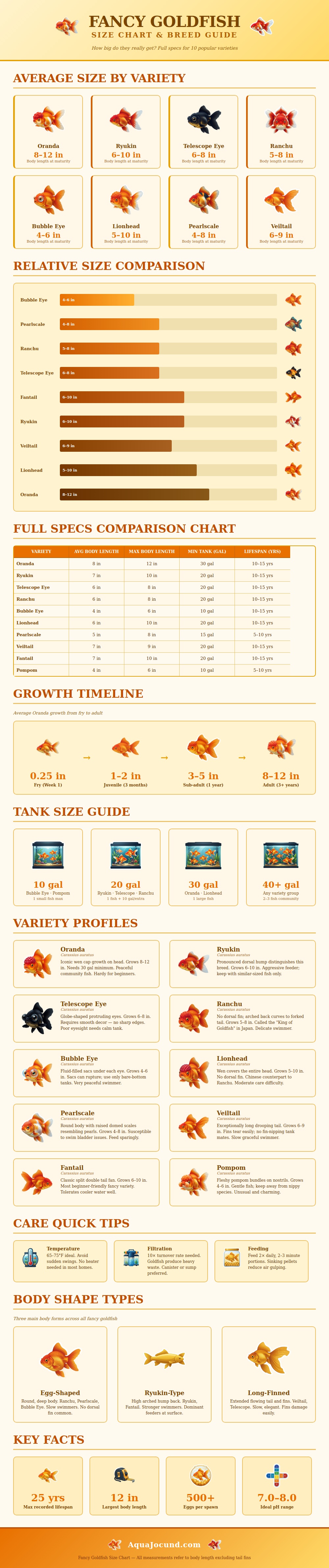
Most of the time, it isn’t bad luck. It’s size. Fancy goldfish becomes fairly sizable creatures, and planning ahead for their adult size is the largest misstep new keepers can take. You don’t have to guess at size: see infographic (above) for just how large those fish grow! Yes, most folks think of their goldfish as remaining forever a palm-sized fish. Nope.
Why Goldfish Need Big Tanks
The Oranda grows typical head growth and reaches up to a foot in length. The Ryukin rounds out to form that signature dorsal arch and will top ten inches with ease. Rounder species like Pearlscale or Ranchu packs on pounds while retaining that rounded profile. Why does this matter? It determine swimming style and the amount of space each person needs to move around without risking injury.
Consider this: you’re purchasing shoes for a toddler who will eventually be an adult. Cute, little onesies now, but useless in two years. It’s the same way with goldfish. They grow fast during their first year of life; only then do they slow down as adults. Once your fish reaches its maximum size, it will generate much more waste. And this brings us straight back to the tank size suggestions I’ve listed above.
For example, a Veiltail, particularly one with long finnage that gets caught up in everything (doesn’t belong in a ten gallon bowl), much less a Bubble Eye. Volume matter and volume equals stability. Because amount of water is small, ammonia spikes rapidly while temperatures drops rapidly, the water parameters fluctuate widely. That’s why a thirty or forty-gallon tank can hold the same amount of waste, but the larger volume give the bacteria more time to dilute and process the waste before it affects anything.
The minimums are on the chart, but more is always better. Add ten gallons for each additional adult fish (assuming multiple fish). It may sound like a lot of water to lug around, but payoff of heavy filtration is well-worth it. Goldfish graze all the time; they’re messy eaters that stir up substrate. This kind of load are handled much better with a sump system or canister filter versus a small hang-on-back unit.
However, you should consider what each species requires as well. The telescope eye varieties has very dramatic protruding eyes that are prone to being torn up on hard decor. Fish with bubble eyes will have fluid filled sacs in their eyes which can be easily ruptured by hard substrate or other aggressive fishs in the tank. To protect these fragile eyes you want a bare bottom tank or something like smooth slate for your substrate.
If you put veiltails in with fast swimming species they’ll get harassed and those long fins will get torn to shreds. Provide these guys with roommates of similar shape and nature that won’t harass them. Also on the food side of things, don’t overfeed as that will lead to poor water quality faster then anything else. To reduce air gulping (which leads to swim bladder problems in round-bodied species such as Pearlscales), use sinking pellets.
Offer only enough for your fish to consume within two minutes. Feed them no more than twice per day. Remove uneaten food after two minutes. Keeping it simple makes for a clean tank with healthy fish. The math work.
Goldfish are cold water fish; temperature isn’t as important as most believe. The best temperature range is 65-75 degrees Fahrenheit, which doesn’t require a heater if it’s not freezing inside at night. Remember, stability is always better then warm water. Maintain pH from neutral to slightly alkaline (7-8). Always test your pH and make adjustments slowly. A major change will stress the system far more than any slight imperfection in water parameters ever would of.
Goldfish aren’t decor. They’re living creatures with complex needs. And I know it seems intuitive to think of that little bowl (at least it does to me), but planning for their size ahead of time equals less crisis down the line. You will enjoy seeing an Oranda swim gracefully through clear water rather than shrink into a cramped space. That’s the difference between having a pet and having a neglected pet. Go big, maintain consistency, and let them livig.
