
Do you recall having a goldfish tank as a child? Perhaps it was just a bowl with a little orange goldfish inside? Remember, your fish didn’t get big because it didn’t have room to do so. That image sticks and makes us think goldfish is low maintenance, fit-for-purpose pets which will happily survive in small bowls. Wrong! Goldfish are strong omnivores capable of growing large given sufficient space. How we treat our goldfish becomes different once we realize what they’re capable of reaching. From surviving to thriving.
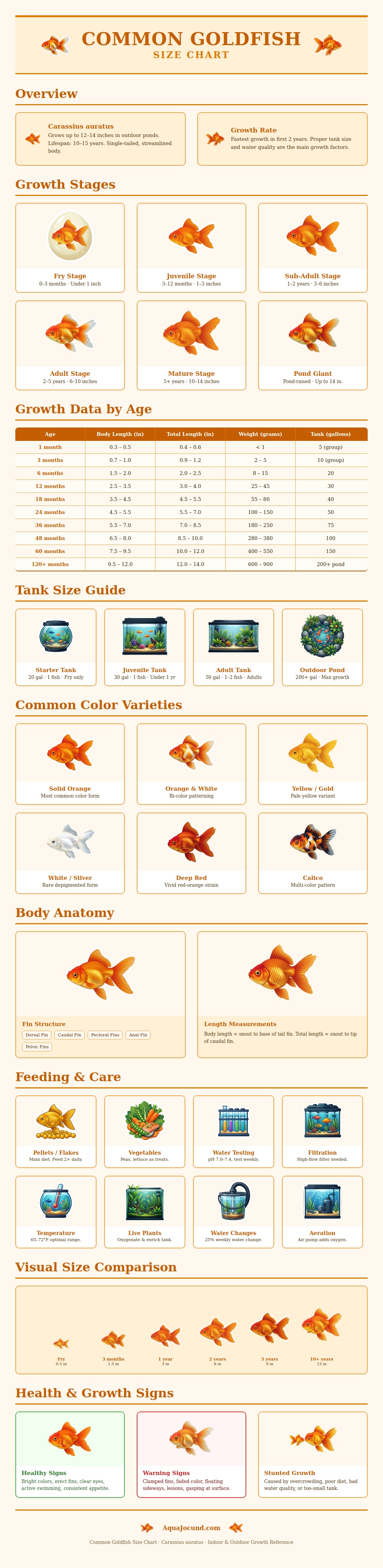
A typical goldfish (that’s Carassius auratus in case you didn’t know) follows a path like this chart below: This chart breaks down the physical progression of a common goldfish. The chart represents the physical progression of a goldfish from its fry stage into a mature adult that can exceed twelve inches. The chart represents the physical evolution of a goldfish, from fragile fry to a grown, 12-inch-plus adult. That growth include size in terms of length, but also mass/volume.
Why Goldfish Need Big Tanks
Sure, a baby may only take up five gallons of space for a month or two. Once that baby becomes a juvenile, however, that waste output increase very quickly. That’s precisely why so many novice tanks become duds during their initial year. Water quality becomes too much for the new keeper to handle leading to either ill health or stunted growth. Regular partial water changes and proper filtration aren’t niceties, they’re keys to healthy goldfish growth.
Fingerlings grow the quickest for the first couple of years. These are baby-fish, and during the first two years, they transition from fingerlings into substantial sub-adults. It is time to upgrade to bigger tank. Many people upgrade because fish gets too big for the tank. Because it’s starting to get uncomfortable in there. But the fish was already stressed well before it reached this point. Stress weaken the immune system.
One day your common goldfish will need at least 50 gallons of open swimming room. If you want more than one (which is often advised since goldies are social animals), multiply that figure to match. There’s no limit once you move them outdoors to a pond. Then the fish can achieve its genetic potential… often reaching double-digits inches.
To manage this growth curve, diet (feeding) is a big factor. Muscle develops from protein in good quality pellets and variety is important too. Leafy greens and/or blanched peas are great supplements to mixed meals because they help digest food, avoid bloating typical of bottom feeding omnivores. Pay close attention to water temps (ideally 65; 72 degree F), and know that warmer water accelerate metabolism; consequently, your fish will eat more, generate more waste, and grow faster. Acceleration promotes size; however, accelerated growth will negatively impact water stability if your filtration capacity isn’t sufficient.
There are visual clues that will tell you if you’re on the right track with your set up. Active swimming, upright fins, and bright white and orange colors is all good signs of a happy goldfish. Awkward floating above the surface, fin clamping and dull coloration are red flags that something isn’t right in their living environment. These aren’t necessarily disease indicators but more likely signs of poor water parameters. This can be avoided if you test regularly for ammonia and nitrites every week. This little routine makes a huge difference down the road.
Goldfish are more than just something to look at; they are living creatures. While they might be viewed as a novelty pet, they aren’t static. If nothing else change, the fish do; they grow. What happens next depends on your planning. Whether they outgrow the capacity of whatever container holds them or not, they will. Do this: make plans to accommodate their growth, and you’ll have a very different fish then if you don’t.
Their behavior shifts dramatically when you think of them as permanent residents rather than temporary visitors. They’ll get bigger, braver, and brighter…and more interesting to observe. A small bowl wasn’t ever right…but a large, appropriately-sized pond/tank makes all the difference. The result is a hardy companion that pays off big-time if you are patient enough to look past the early awkwardness and see what I think are truly beautiful and unique personalities.
