
No, I am told by the clerk,” pointing to the comets in the blue water, “they won’t get big enough for a bowl.” Actualy, that’s wrong. Comet goldfish aren’t dwarves. They’re powerful swimmers. They need room, they want distance from everything else.
How large do they gets? What does that mean for planning your tank? Planning your tank means planning for them. Plan on some patience with it too; this is going to be a project, one that rewards careful thought of your available space.
How to Care for Comet Goldfish
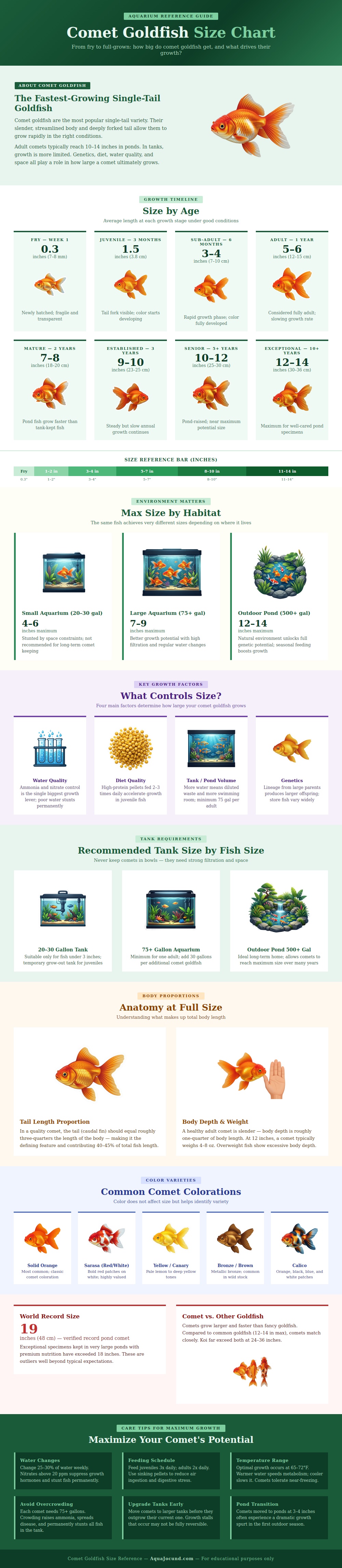
What this chart illustrates are how a pond gives the fish their freedom while a tank confines them. That same fish will never reach more than four or five inches if kept in a small bowl, but they’ll appear unhealthy doing it. That same fish will be twelve to fourteen inches in a well filtered outdoor pond. The only thing that’s changed is the environment. Genetics are unchanged.
You’re not purchasing a little guy, and you shouldn’t expect him to remain one. He’s a big producer of waste. But they don’t grow linearly. They grow in spurts, like waves. In their early lives, as they is forming color and especially their tail, they grow very fast. Then at 1 year old, you’ll have a nice adult body, but then slow down. Owners often think it’s getting sick because the growth slows down, but it’s just reaching adulthood. You can see in the graph how fast they go from wimpy fry to hardy swimmers. That helps you understand what to expect which means less panicking when your fish suddenly doesn’t grow as fast anymore.
Physical development are a function of water quality. High nitrate levels and/or ammonia spikes will shut down growth hormone production and, in some cases, stop fish from growing altogether. Even when you correct your filtration system, the damage may be permanent. To keep the water clear, you should of change a large amount of water weekly, even if it looks clean. Don’t assume that because the water is clear, it’s good. It might not have a proper chemical balance even if it looks clear. Inexpensive test kits are like an insurance policy for keeping your fish healthy and growing as they should.
Tank size aside, diet also plays an important role. Feed your juveniles protein-rich foods multiple times per day as they grow fast. As they age, you can feed less frequently, say twice a day, providing more variety in their diet. Use sinking pellets instead of flake since this reduces digestion stress/inhalation of air. This will help prevent future swim bladder problems. Many people overfeed to accelerate growth rate; however, too much food causes water fouling. It’s about quality not quantity.
Tank size depends on how big your fish will get as an adult. For one adult comet, I would start with a 75-gallon tank. If you want more than one fish you’ll need even larger capacity since they’re both active and social. Crowding causes increased stress and weakened immune function leading to disease. Comets do well outdoors in a large pond. Outdoor temperatures change seasonally… Just like nature. Which helps them stay healthy, whereas a typical home aquarium struggle to do the same.
The concerns are color changes and fish getting out of shape. Healthy adults will stay deep orange (bronze/calico options) and thin. They have a long, flowy tail fin that adds considerably to their length. If it starts to get too rounded in the body you may want to double-check your water parameters & feeding routine. An overweight goldie isn’t going to live as long and is more prone to infection.
A pond-raised specimen has been known to grow to nearly nineteen inches; I know this sounds crazy but have you ever seen pictures? There are some pond-raised specimens out there, including comets, that can reach much larger sizes different than people assume. Given the right circumstances (clean water, ample space) it’s clear the size ceiling is far greater than most imagine.
So while you won’t get championship size, you will create conditions where your fish can attain its best. Begin with a big tank, use pristine water, and feed accordingly. What you’ll end up with is a lively companion, not a stunted pet… That matures into a striking adult. This is the distinction between merely owning a fish and taking care of a fish.
