
Why did you purchase your clownfish? Because it’s bright orange and cheerfull looking. Three weeks later, your fish are hiding in the corner of the tank. Its fins is clamped and it is not eating. This is a nightmare scenario familiar to every marine keeper.
Panic doesn’t help. Spotting those signs of distress in fish well before they die can keeps these otherwise hardy creatures alive and thriving. Knowing what to look for visually can differentiates a real health crisis from harmless stress in a flash.
How to Help Your Sick Clownfish
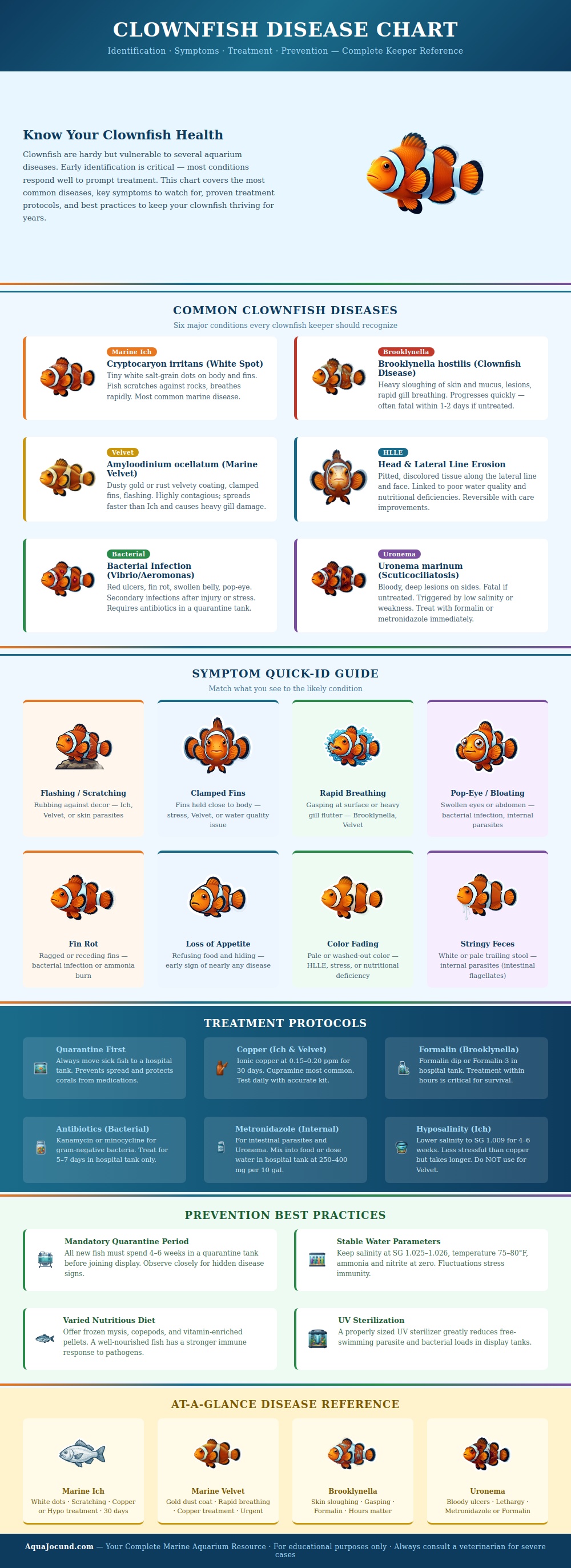
In the reef tank, one of the toughest ailments to treat is marine Ich. The symptoms is small, white dots on the fish’s body, which makes it hard to identify. It is also common because its life cycle are hard to break with treatments. The spots can go away for several days, then come back. If you quit treatment prematurely, those unseen cysts will burst open again and re-infect your show tank. Treating marine Ich take time and persistence. For example, you might use copper meds or reduce salinity in a QT tank for 30 days. It’s boring and laborious, but it preserves your livestock.
Brooklynella attacks quickly, hitting both the skin and the gills. Breathing is rapid and look like gasping for air. There are also patches of sloughed off mucus. It doesn’t give you days, but hours to diagnose what’s wrong. Formalin treatments will typicaly be required in a hospital tank if you see your fish flash at rock walls or start shedding patches of skin. Weakness is exploited by the pathogen so don’t wait on treating any respiratory signs of trouble.
Lateral Line & Head Erosion occurs more slowly and causes pitting on face tissue. It is not typically caused by an infectious disease. Rather it is normally a sign that something else are wrong either nutritionally or in the environment. What appears to be an infection is often simply a tired immune system from stressors building up over time. Providing different types of food and stabilizing pH will help reverse this type of erosion. Tissue would of healed back up over time.
Pop-eye, fin rot, or other red ulcers indicate bacterial infection. These may be a species invading secondarily following a primary stressor that compromised defenses. To treat, they requires an antibiotic (e.g., kanamycin) administered in a quarantine environment. Medication dumped into a reef tank kills beneficial bacteria and corals.
Long term success demand separating sick fish to a hospital tank. It allows you to give the patient intensive care and protect the ecosystem. Nature rewards the prudent.
It’s better to prevent a problem then to cure it. Disease that gets into your primary system will get caught during quarantine. Good food diversity fuels the immune system to defend against pathogens. Strong immune systems results from stable environmental conditions. Free floating parasites can also be reduced by UV sterilization devices. We aim to establish a healthy balance in which there is more health then disease.
When you tend to a sick fish, seeing it move actively and have bright colors feels like a reward for your care. Catching the warning symptoms, you act specifically to address them. Bright and undisturbed, the clownfish returns to anemone.
