
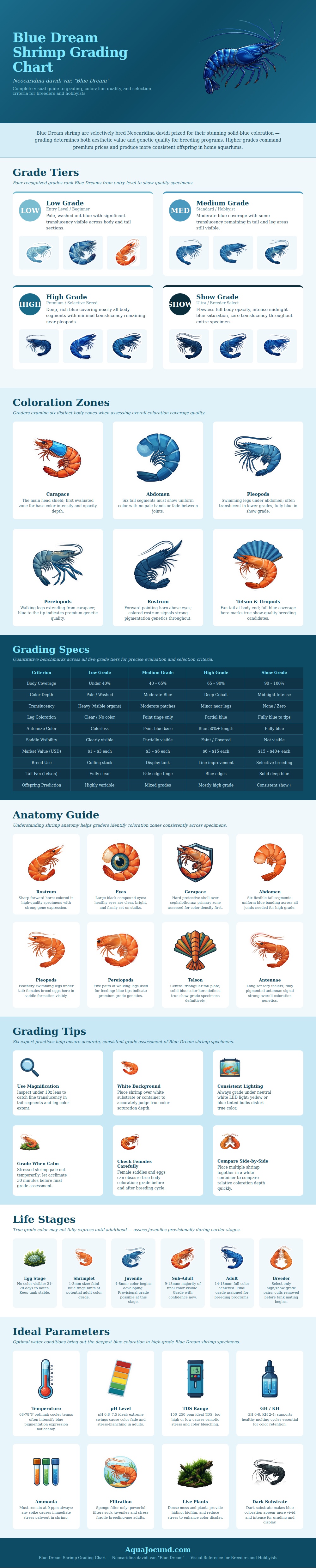
There are standards for breeding Blue Dream shrimp, which is why they looks good (and bad) in your tank. Knowing standard allows you to pick better shrimp. High-grade vs. Low-grade is all about genetic potential and how well the color will come through later. Grading them will help you save some money and not be disappointed by what your tank produce.
There’s also a four-part grading system used to categorize shrimps by their opacity and color coverage. Low-grade shrimps are low quality; they’re pale and transparent, even showing off the insides. While they work well in novice tanks, they won’t make an impact when breeding shrimp.
How to Grade Blue Dream Shrimp
Medium-grade shrimps features moderate blue coloring with some clear patches remaining in the tail or legs. A lot of hobbyists settle for this grade since shrimps seem decent at first while many of offspring fail to meet expectations. Grade 3 shrimps show high levels of deep blue color on almost every part of their bodies except maybe their swimming leg. They’ll help improve your line.
Finally, grade 4 shrimps is show quality, very dark, opaque shrimps without any transparency whatsoever. You can see what each grade look like from this grading chart so you can properly assess your incoming shrimps.
There are several areas you need to be looking at when grading your shrimp. While the overall color of the shell is graded by base intensity, it’s the finer points that make up a final grade. First, observe the swimming legs (pleopods) located below the abdomen. If they’re completely blue and not translucent, the shrimp are show quality; otherwise, they’re in lower grades.
The color stop at the other set of legs used for walking, known as pereiopods. Do the colors extend all the way out to the ends of the claws? Another tip-off to good pigmentation genetics is a rostrum, the hard spike found on top of the head between their eyes, with some coloring. With six individual zones highlighted in the chart, just one missed point will drop a shrimps grade from high to medium.
Take your time, don’t just skim across the tank. Color is graded differently depending on lighting. Blue light increases saturation artificially while yellow light warms everything up (hiding paler areas). To get a proper idea of color depth, always grade under neutral white LED light.
Also, let your shrimp settle down first. They will lose color when stressed, giving you a false reading off their genetic potential. Wait at least half an hour to allow them to adjust before you make any judgment calls. Doing so ensures that you don’t keep bad shrimp and remove good ones.
The expression of colors is also dependent on water parameters. Blue pigments are intensified by cooler temperatures (sixty-eight to seventy-eight degrees Fahrenheit). Stable pH values around seven prevent stress blanching, and enough general hardness help with a healthy molting cycle. Even with good genetics, color maintenance depends on consistent water chemistry.
Do not let ammonia go up to anything but zero! Protect juveniles from getting sucked into sponge filters. Provide sufficient hiding spots in dense moss to reduce stress and encourage naturally behavior. Visually the blue color shows up more clearly against a dark background, which allows for better identification of true quality of the shrimp.
Potential isn’t necessarily present at first glance. Juveniles are usually graded by slight blue tinges, but these won’t show true color until they are older (about sixteen millimeters). To grade confidently you need to get them to sub-adults. That’s why it pays off to select your breeding pair early so that you have consistent genetics throughout.
And patience is required. The more you can provide stable conditions, the sooner you’ll see the shrimp’s best colors emerge. You should of waited for the colors to develop.
