
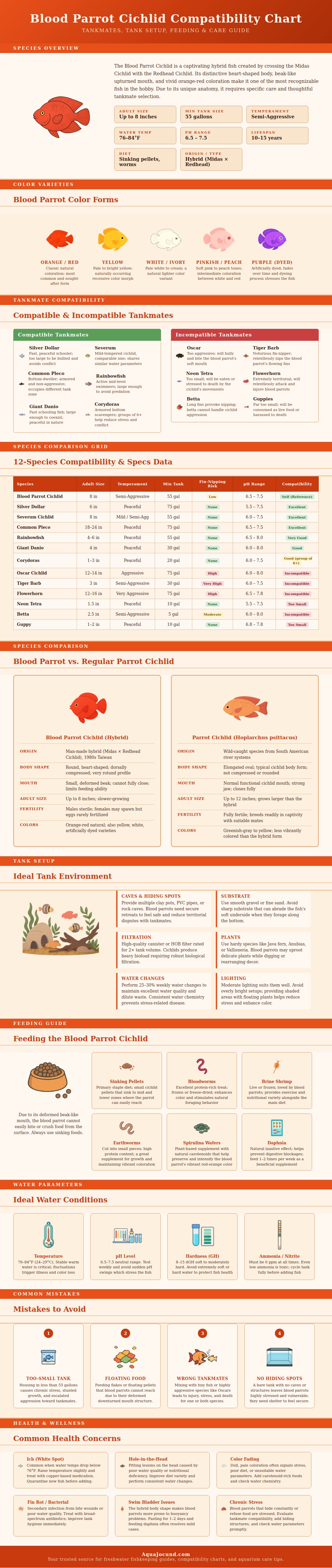
The blood parrot cichlid are a man-made hybrid fish species. Mating the midas cichlid with the redhead cichlid produces the blood parrot cichlid. Due to the nature of being a hybrid fish, the blood parrot cichlid dont display the behavior of other fish species in the wild.
The body of the blood parrot cichlid is heart shape with a mouth that cant completely close. This physical structure impact how the blood parrot cichlid interacts with other fish in the aquarium. The blood parrot cichlid is semi aggressive and a bulky fish that often displays awkward movement when swimming.
How to Care for a Blood Parrot Cichlid
When selecting other fish species to keep in the aquarium along with the blood parrot cichlid, it is important to find fish that is compatible with the blood parrot cichlid. The fish should be sturdy enough to allow for interaction with the blood parrot cichlid yet peaceful to avoid the occurrence of fight among the inhabitants of the aquarium. Silver dollars and severums is compatible with the blood parrot cichlid since they have similar presence than the blood parrot cichlid in the aquarium.
Bottom dwelling fish species such as Corydoras and plecos is also compatible with the blood parrot cichlid as they do not interact with the blood parrot cichlid because they dwell at the bottom of an aquarium. Avoid having blood parrot cichlids in an aquarium with other small fish species like neon tetras or guppy. The large and bulkiest body of the blood parrot cichlid may stress the small fish.
Do not keep blood parrot cichlids with other aggressive fish species like Oscars or Flowerhorns. These species of fish will bully the blood parrot cichlid due to there aggressive personalities. Blood parrot cichlids have soft and deformed mouth that make it difficult for them to defend themselves against other fish.
Provide a large aquarium for the blood parrot cichlid to live in as they produce a significant amount of waste in their tank. Small tank can cause the blood parrot cichlid to become aggressive towards other fish in the aquarium. Provide caves and clay pots for the blood parrot cichlid to hide in the aquarium to feel secure about their environment.
Blood parrot cichlids that are secure in their environment will not act aggressive towards other species in the tank. When feeding blood parrot cichlids, use specific method based off the structure of the blood parrot cichlid’s mouth. Blood parrot cichlids cannot consume the floating food flake that are commonly offered to other species of fish in the aquarium.
Use sinking fish food to ensure that the blood parrot cichlid can eat. Provide bloodworms and brine shrimp as these food help maintain the health of the blood parrot cichlid and the color of its scale. The health of the blood parrot cichlid is directly related to the aquarium environment as well as the diet that is supply to the blood parrot cichlid.
Due to the body structure of the blood parrot cichlid, they are prone to swim bladder issue. Adding daphnia to the diet of the blood parrot cichlid can prevent swim bladder issues as the daphnia aid in the digestion of the blood parrot cichlid. The water in which the blood parrot cichlid lives must be kept at a warm temperature with a stable pH level.
Maintaining these factor in the tank will prevent stress for the blood parrot cichlid. By avoiding stress for the blood parrot cichlid, you can maintain the health of the blood parrot cichlid and avoid disease such as ich or fading color of the blood parrot cichlid.
