
Look into a tank filled with glimmering silver discs and what do you see? Angelfish, right? They’re striking and look beautiful on live plants.
But not all the silver plates is the same critter. In fact, there’s confusion galore among aquarium keepers about two major species most commonly referred to as angelfish. One are an Amazonian freshwater fish from the Amazon basin.
The other is a marine Pacific reef resident. Get ’em mixed up and it’ll be a disaster. Before you get yours, know who they are.
It’s not just a matter of taste either. Each of these two species have its own temperament, diet, and water chemistry requirement. A freshwater fish will die in saltwater.
There’s also some confusion with freshwater species as well… For instance the common Scalare versus the rare Altum. If you want to keep one or the other then knowing what you’re dealing with are important.
Telling Altum And Scalare Angelfish Apart
Freshwater vs Marine Angelfish Differences
Thankfullly there is some subtle but distinct visual cues that point the way when you know where to look. The first, and perhaps most obvious difference is body shape. The typical freshwater angelfish, Pterophyllum scalare, is much more full-bodied and rounded.
Identifying Body Shape and Profile
A healthy fish look full with a deep belly and a high, arched back. This overall strong body shape provide the Scalare with the distinctive profile it is known for. Not only is it a hearty fish for a beginning cichlid keeper but also it are designed for stability in slower currents.
Contrary to this, the Altum (Pterophyllum altum) are more disc-like, taller, and slimmer. The Altum’s profile are sleeker. This shape enable it to move through faster flowing waters in its native habitat.
Comparing Striping Patterns
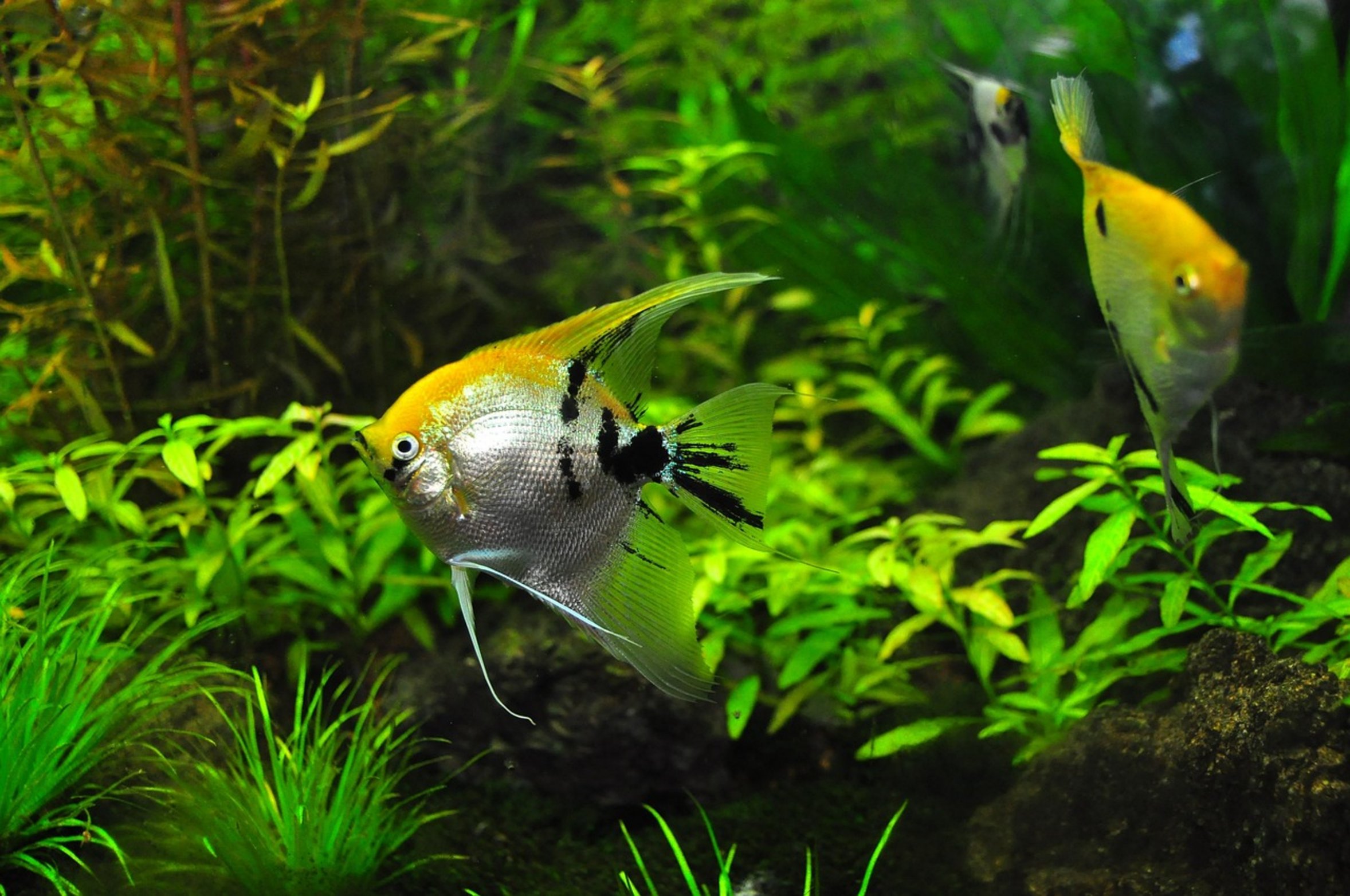
The second way to identify the fish is by their striping pattern. The two has vertical black markings on their side, but it’s the finer points that separate them. The Scalare typically will have 3-4 distinct and relatively thick bands.
Because the background color is often light, these bands may look a bit blurry or broken up. The Altum will have more bars, frequently 5-7; which are generally sharper with fewer breaks. The stripes are also more consistent and straighter down the length of the fish.
In terms of contrast, they are stronger, thus creating a more striking overall appearance to the Altum. There is also white strains created by some breeders which do not show any bars. But as always, wild type is what we compare everything against.
Fin Structure and Tail Tips
The fin and tail shapes offers another clue. Look at the dorsal and anal fins (the long ones on top and bottom). More often than not, the Scalare will have fins that is a bit shorter and have more rounded ends.
It make the overall profile softer. The Altum will have longer extensions that are more pointed. Not only do they look cool but they assists with very accurate turns in tight spaces like heavy plantings.
In fact, in an aggressive tank, you’ll notice those fins gets pinched a little easier by the Altum. So space is even more important for them. The other difference lie with size and behavior.
Size Behavior and Care Requirements
Both species has about the same max length but the Altum is bigger than its taller stature. An adult Altum will be almost as tall as it is wide. A full grown Scalare are wider than it is tall.
The Altum is typically more shy, sensitive to water changes, and prefers stable conditions with calm tank mate. The Scalare is more adaptable and tough. It tolerates slight temperature/pH fluctuations better.
That’s what makes the Scalare such a dominant force in the pet trade. For those of us who want a more natural set up, the Altum could of been a test. Mismatched expectations are saved by knowing the difference.
Choosing the Right Species for Your Tank
For an interactive, strong pet, go with the Scalare. For something rare, beautiful and rewarding when the water is perfect, go with the Altum. Count the bars.
Look at the body depth. Check the fin tips. These little things shows what kind of fish it realy is.
When you get good enough to tell them apart, you’ll be in awe of all the diversity within this gorgeous group. There’s one out there just right for your tank. Know how to see it.
