
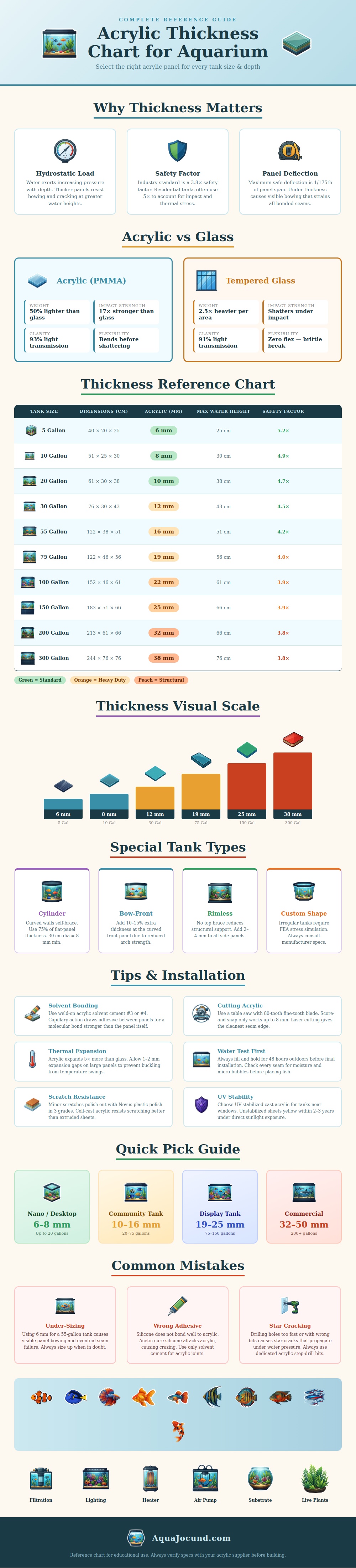
For acrylic panels, you need to pick the right thickness or else risk having the structure fail. Water is very heavy and the deeper your water is, the heavier it becomes. The bottom of your tank also weigh more than the top. Using too thin of an acrylic means that your sides will start to bow outwards. That outward bowing put stress on the seams. Acrylic bonds is strong only when there’s no stretch in material. When it starts to stretch, it breaks. It develops tiny cracks, which then leads to leaks. So you want to pick something that deflects as little as possible.
Because acrylic is pliable, most hobbyists assume that means you can make it thin. That’s not true. While acrylic is more resistant to impact and lighter than glass, its also more prone to sagging without sufficient thickness. Acrylic’s ease of transport makes it popular for larger tanks. But a lack of mass lead to flexibility. Water weighs something and it pulls the walls down. For a five-gallon tank, a six-millimeter panel work nicely. In a fifty-five gallon tank, that same material will want to bulge out. Thickness must increase along with the volume.
Important Tips for Building an Acrylic Fish Tank
Panel thickness matters but so does adhesive choice. Acrylic doesn’t like silicone. Over time it will damage your acrylic. Standard silicone contain acid that eats into the acrylic and leaves cloudy lines on its surface. Instead you want solvent cement made specifically for polymethyl methacrylate. Solvent cement melts the plastic and the two surfaces melds together. They don’t simply bond to each other… they form a molecular weld. The result is a very strong and almost invisible joint. Bonding failure account for most tank failures, not thin panels.
And don’t neglect proper cutting and finish. Regular sandpaper will scratch acrylic. While you may polish out minor scratches, deep gouges will remain visible and can weaken the panel under pressure. Gouges are obvious and diminish strength of the panel under pressure. When drilling holes for equipment use step drill bits. Standard metal bits grabs the soft acrylic causing cracks. Go slow and let the tool work. Always check for stress marks before filling the tank.
Creating an acrylic fish tank is a balancing act. You want something sturdy yet light. You should of factor in extra room for error. Curved walls are good on cylinder tanks, where they help hold up against water pressure compared to flat sided ones. Rectangulars requires some beefiness too. The heavier the better to keep it stable. Heavier material means a higher cost initially but no leaks down the road. If you do it right, this thing will last decades. You won’t notice it all but it holds up everything else.
