
You put the empty glass box on your stand and it seems so harmless. It is a piece of aquatic paradise in your livig room; all you need to do is fill it with water and some fish. But that transparency can be a dangerous illusion.
Novices gets seduced by new tank syndrome. They add fish right away and figure if the water’s clear then everything must be ok. Nope, wrong, dead wrong.
What makes the water look clean is lack of any microbes that break down waste. Within just a few hours, there will be spikes in ammonia. Your beautiful set up turn into a toxic trap.
Avoid the temptation to toss in a betta or goldfish immediatly. This will be the greatest challenge: patience. It’s the most valuable currency of the hobby!
How to Cycle Your First Aquarium Tank
Understanding New Tank Syndrome
Creating the cycle won’t happen in days, but rather weeks. If done properly, it’s a biological base upon which your future inhabitant depend for their success (or failure). Once you understand how the cycle works, then the hobby becomes less of a game of chance, more of a controllable science.
When you put fish food or even pure ammonia in your tank, that’s when the nitrogen cycle starts. Toxically high level of ammonia will damage the nervous system and gills of your fish. Nitrogenous waste products needs to be eliminated from the tank because they will kill your fish.
The Nitrogen Cycle Process
That’s why there’s a need for beneficial bacteria called Nitrosomonas to take up residence on those surfaces and do what they do best; turn the toxic ammonia into nitrite. In effect, you’re creating a living filter BEFORE you bring home a single animal. However, don’t panic when you see nitrite levels.
The next set of bacteria (Nitrospira) will consumes nitrite and convert it to nitrate. This is much more harmless than can be dealt with by plants and routine water changes. That’s why it’s a two-step process that maintains safety of the water.
At this stage, no ifs, ands or buts about it, you must have test kits. Knowing when the conversion cycle is finished require watching its ups and downs. Guessing won’t work.
Monitoring Water Parameters
In order for the cycle to occur, heating and filtration needs to remain on at all times. Because they are aerobic organisms (oxygen loving), they need warmth, too. A good filter provides both flow and surface area for colonization.
Canister filters from brands such as Fluval contains a lot of media volume, which allows for faster cycling due to their ability to house more bacteria. For smaller tanks, the Eheim hang-on-backs are good choices. The bottom line is that consistency is key; if you turn your equipment off, the bacterial colony gets reset and you have to begin again.
Essential Equipment for Cycling
After four to six weeks (longer if in a cooler room), your water parameters will of reached zero ammonia and zero nitrite; there may be a bit of nitrate. Congratulations, your tank has cycled! Don’t rush this process as a stable tank is a forgiving tank.
At this point, you can stock but do so slowly. Overstocking your tank up front overwhelm the new bacterial population and results in another spike in waste product levels. Get some hardy fish as your first occupants.
Stocking Your Cycled Tank
Bettas are an easy choice because they can lives in low-oxygen environments as air breathers, but they is sensitive to water parameters. Platys or guppies is also hardy and will breed a lot, giving you immediate gratification. Stay away from difficult species such as fancy goldfish or discus until you’ve had at least a year’s worth of experience under your belt.
The initial fish aren’t just pets. They’re the test subjects for your tank! The last hurdle between the store bag and your tank is acclimating them.
Acclimating New Fish
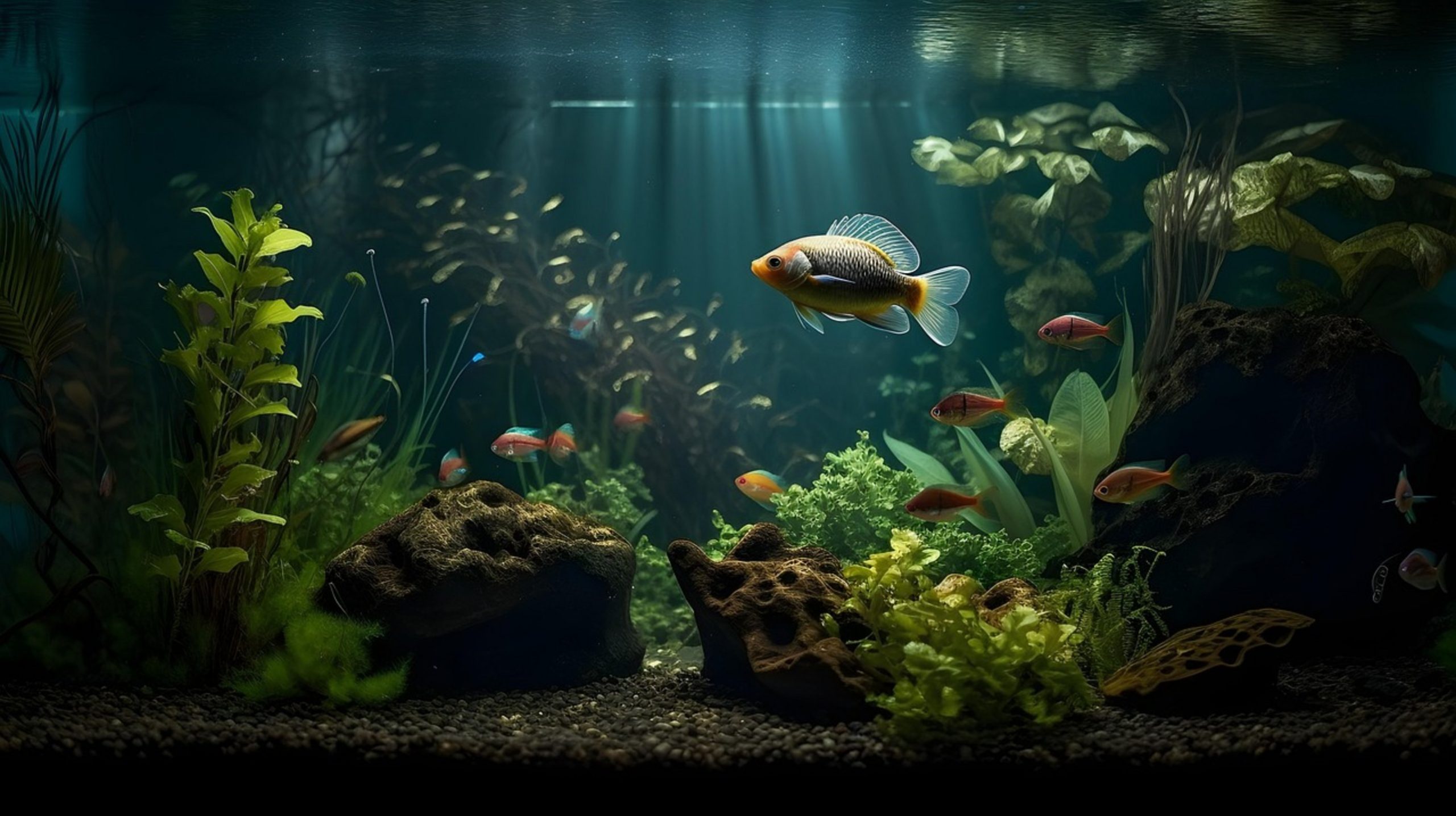
To avoid osmotic shock, which will kill or stress them immediately, float the sealed bag in the tank for 20 minutes to equalize the temperature. Then, drip tank water into the bag for another hour. Release them when you’re ready, but leave the lights off for at least a day.
That is less stressful for them. It also lets them hide wherever they like without having lights on them. You’re done.
The tank is filled and running. A functioning biological system beat with life. Your patience has paid off.
Your first fish are test subjects for your system. Your reverence for the biology was respected. And now you sit quietly watching your first fish swim around and investigate their new home.
What was once an empty tank of glass is now alive. What you couldn’t see but could feel when it was dark is what’s keeping this tank alive.
