
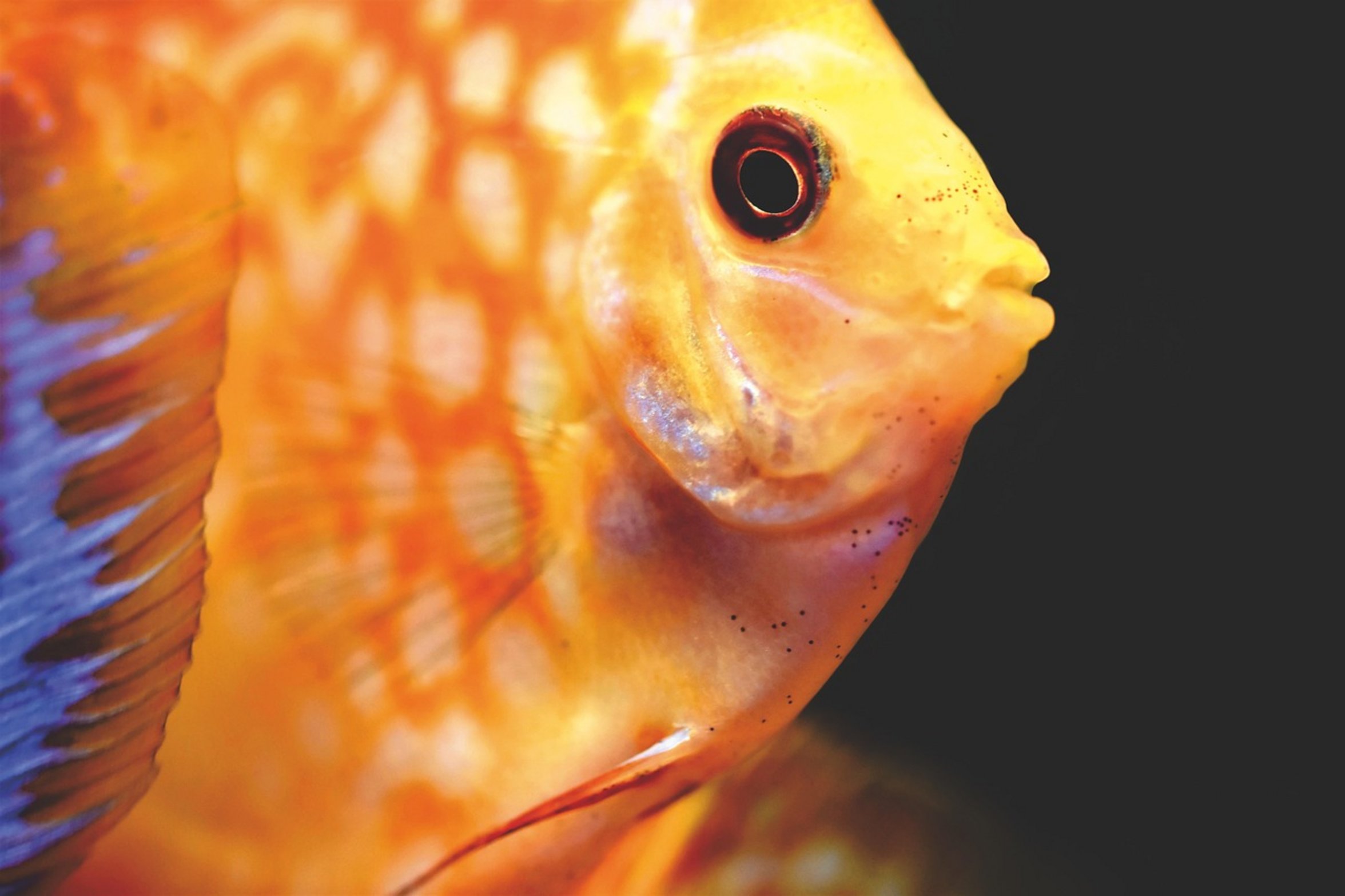
There’s the familiar look. The wide-eyed stare, the person looking into tank at the pet store. This time it is a discus fish that has them mesmerized.
There it is floating, a saucer-shaped living thing that is so perfectly formed with such vibrant colors. Before long most of us leave the store thinking we have to have one right now. An hour later, however, there they is again with a printed guide.
It’s written like a tropical expert medical textbook. You must has the correct temperature and clean water. Sounds less like a hobby then a part-time job in water chemistry.
It’s intimidating. But it’s man-made too. Discus are notorious as the last boss of all freshwater aquariums.
Discus are particular, but they aren’t impossible. In the right conditions, they’re pretty darn hardy. They are like that friend who demands silence while working and needs the thermostat set to exactly seventy-two degrees.
There’s no magic. It’s all about keeping them alive, which is why we want to take away the fear and focus on what makes them tick. What is necessary?
Not a lab. Just a plan. Discus keepers know, hands down, that water stability is the number one concern.
Essential Tips For Keeping Discus Fish Healthy
Understanding Discus Care Challenges
They are natives to the slow moving blackwaters of the Amazon where water conditions does not vary much on a daily basis. Their gill tissue is delicate and they cannot tolerate any spikes in nitrites or ammonia. So what does this mean?
Essential Water Stability and Filtration
Your filter isn’t just about clarity, it’s about biological consistency. You want something that has good flow (a canister filter or large sponge filter). You don’t want anything that sucks them into the filter.
Flow is more important than brand. Five to ten turnovers of tank size per hour should of be your goal. This will ensure any waste that enters the tank gets removed before it becomes toxic.
Stability is key. Slightly soft water and a stable tank are better then a perfect tank that swings wildly in pH with each water change. Then there’s the issue of temperature control.
Temperature Requirements for Health
Discus are tropical fish. So, they has very specific temperature requirements. Specifically, they like to live in water between eighty-two and eighty-six degrees Fahrenheit.
Why so hot? Because warmer water speeds up their metabolism. Their metabolism help them fight parasites and aid digestion.
This means you can’t use some cheap plastic heater. Use a good glass or titanium heater that can handle the full amount of water in your tank. When the power fails, the water cools.
That stresses the fish. Stress make them sick. Maintain a consistent temperature with your heater.
Don’t allow it to fluctuate. More than any other factor, this is where newbies go wrong. They obsess over the pH strip while forgetting about the thermostat.
The fun part of the hobby is feeding. Discus are omnivorous, but love their protein. For the most part, it is best to feed them high-quality flakes along with live or frozen foods.
Feeding Tips and Diet Variety
Staple items includes bloodworms, brine shrimp, and daphnia. Frozen options available on the market, such as those produced by brands like Omega Sea or Hikari, are great and nutritious. Variety is the key.
Don’t just feed them one thing, they will get picky. Mix it up. Offer small quantities twice daily instead of one large quantity at once.
That way you don’t foul the water because they aren’t gobbling down everything you gave them. Plus, this mimics natural behavior in the wild. They graze.
They don’t binge. Observe them when eating. Are they active?
Are they chasing the food? You’re doing it right. Careful with tank mates.
Choosing Compatible Tank Mates
Although Discus are normally peaceful, they’re also slow. Tetras, barbs, etc., is fast and can nip at their fins or outcompete them for food. Slow moving, docile community fish are what you want.
Great bottom dwellers that scavenge any uneaten food are Corydoras catfish. Angelfish make good tank mates if they’re of similar size and are distant cousins. Often they do just fine together.
No cichlids. Too aggressive. Bottom line: Pick tank mates that leave others’ personal space alone.
Reducing anyone’s stress in the tank results in a more peaceful environment. Are your Discus hiding all the time? Blame your tank mates.
Acclimation and Patience Strategies
Begin with patience: Don’t rush into buying five Discus all at once. Begin with a pair or a few. Allow time for them to acclimate to the tank.
See how they behave. What do they eat? Feed accordingly.
Provide care according to what you see, not what you read on the internet. As you learn their patterns, they’re no longer intimidating. They aren’t “fish,” they’re your companions.
That’s why we keep fish, that is the point of the hobby.
