
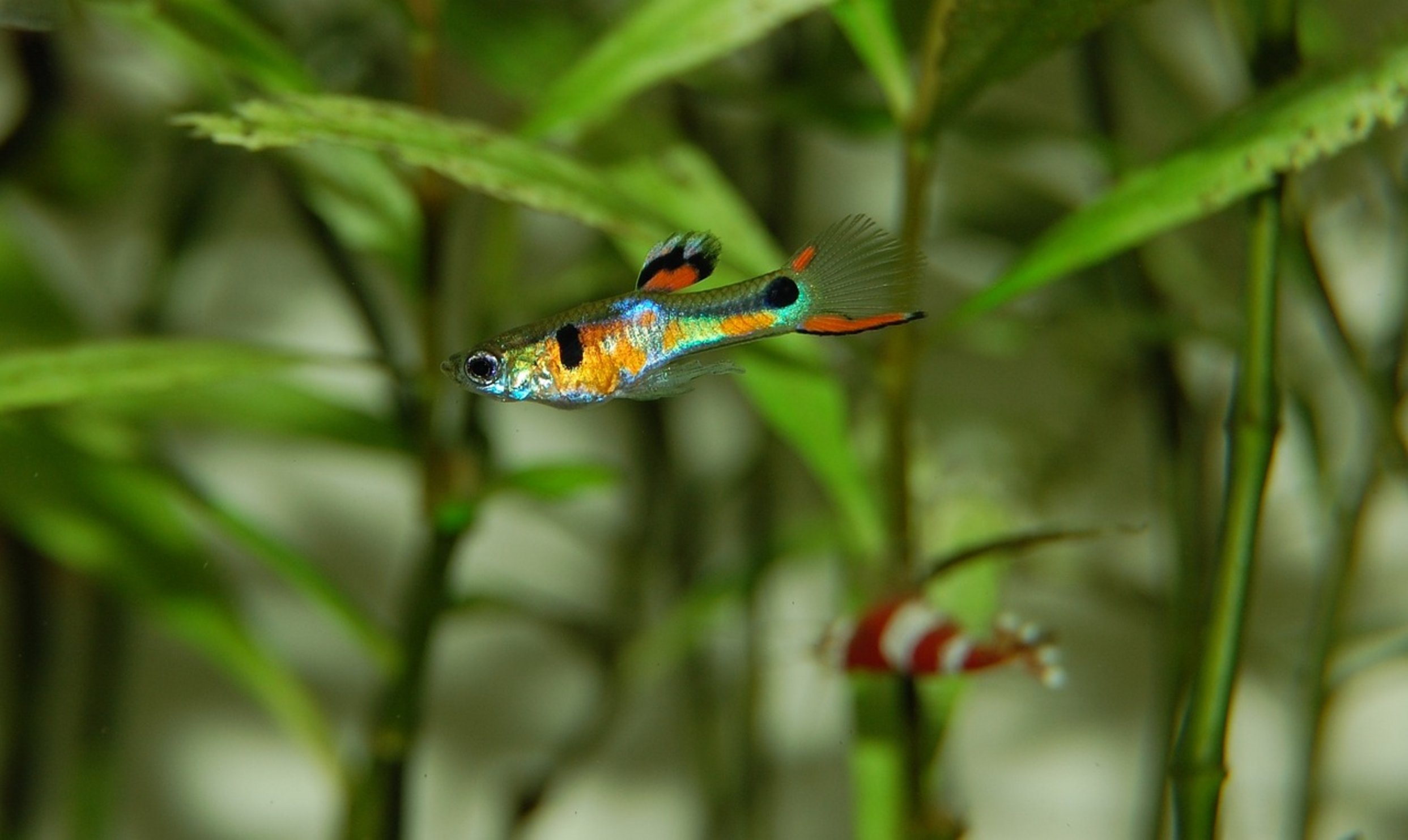
Guppy fry is fun to watch. Most of them gets eaten, though. They’re those little specks darting around in the plants.
Then you blink and adult guppies are there, cleaning up the leftovers. So cruel! But that’s just how nature works.
Because guppies is livebearers, they gives birth to swimming, full-formed babies. Unlike other egg layers who hides their eggs, guppies present their offspring as an open buffet to be snacked on. That naturaly need for some protein will kill off most of your fry before the end of its first week.
But you don’t have to spend a bunch of money on fancy equipment. You don’t even have to turn into a marine biologist. Just know how your fish behave and how they perceive their surroundings, such as shape of your tank.
Without stressing the adults, you can change sightlines as well as space to keep little guys safe. It is more like outsmarting than battling nature. From behavioral modification that cools entire tank down to a simple barrier, there are ways to protect fry.
Simple Ways To Save Guppy Fry
Physical Separation with Breeding Boxes
The best way is physical separation. A hang-on-the-back fry guard or a breeding box provide a safe space from momma’s wrath. Both device typically has small holes/mesh allowing water passage but preventing larger adult entry.
The former hangs on the back of the tank. Either is a simple fix that always work. But it separates the fry.
They don’t experience any of main tank’s natural food. You’ll need to feed them inside box, too. Forgot?
Fry starve. Leave ’em in too long? Fry outgrow holes and escape, or worst case, gets stunted.
Not a permanent home; a temporary holding pen.
Using Live Plants for Protection
Nature’s own solution are plants. Mesh can’t replace the hiding space created by dense plant (e.g. Hornwort, Anacharis, Java fern).
Adult guppies don’t fit in between their fronds; fry do. Besides, it reduce stress for everyone and mimics a wild environment. Not bad!
Furthermore, plants help improve water quality (nitrate adsorption). However, they also grows. To maintain density of the plant coverage, regular trimming is necessary.
Otherwise, the tank becomes too messy, water quality suffer, and eventually your fry succumb to the toxin. More work compared to a box? Yes.
But you get healthier, hardier fish.
Managing Water Flow and Filtration
Less talked about are water flow. Remember, guppies aren’t strong swimmers.
The fry swim even less. Stronger output from a filter will pushes those little babies toward the intake tube or glass wall. They will get stuck, which mean game over.
Modify your filter to produce gentle current instead. Sponge pre-filters on top of intake tubes eliminates any suction mishaps. It is an easy change that preserves life while not altering tank design at all.
Gentle current also ensures water gets oxygenated. This is essential when you’re breeding in numbers.
Feeding Strategies and Tank Mates
The behavior change depending off feeding strategy.
Aggressive guppies are hungry guppies. They are less likely to hunt if the adults is well fed. Provide regular (small) meals of good quality flake or micro-pellets.
Supplement with live or frozen brine shrimp for the fry. Adults do not need to hunt the babies to ensure everyone get a share, which feeds everyone and ensures the babies gets proper nutrition too. It is a matter of supply and demand.
An abundant menu mean an ignored fry. Discipline yourself to feed on time, it’s worth it in terms of survival rate. Be careful with other tank mates, as some species naturaly eat fry.
Everything from cichlids, tetras, and even big barbs will snatch up a baby guppy in a heartbeat. Are you keeping your breeding pair with other fish? Consider setting up another tank just for them if you want to keep the fry.
Otherwise, remove the fry after they’re born. It’s work but that’s how you’ll save them in a mixed community tank. You can’t train a predatory fish to be nice.
Eliminate the temptation.
Long Term Care and Stability
That’s where patience enters the picture. Fry don’t grows fast.
You must provide them constant care for several weeks before they reach a size that’s safe from predators. Maintain good water quality. Change a little water frequently rather than change lots of water infrequently.
You don’t want to shock the system by changing parameters too much at once. Stability is what you’re aiming for. A stable tank equate to calm fish.
Calm fish don’t goes hunting. It’s a quiet victory, but it’s well worth it. Next time you spot those tiny specks, you’ll know they stand a fighting chance.
