
A breeding trap is one way to ensure guppy fry safety. Typicaly you’re told to remove the mom into a cage or box so that she doesn’t eat her fry. Set up your plastic cage and let the fry floats inside.
How To Breed Guppies Naturally
Why Breeding Cages Are Stressful
While using a cage preserves life of the fry, it’s stressful on the mother. Maintaining the cage get tedious fast and soon enough the little enclosure is filthy with waste. It also mean spending more time cleaning the cage instead of watching fish.
If you plan the habitat properaly, you don’t need a cage. Habitat design provide the answer. Knowing how guppies behave in a planted tank help you transform an ordinary set-up into a baby-proof nursery.
How? Hide babies from adults. In other words, use camouflage different than containment.
Using Live Plants for Fry Safety
To begin, you want to heavily plant your aquarium. Plants offers the best defense. Because they’re small, guppy fry can slips through narrow openings unavailable to adult mouths.
Good coverage come from live plants such as Hornwort, Anubias, or Java fern. By establishing a maze of plants, the fry remains hidden amidst foliage. Adult fish rely on vision to hunt, which means they won’t swim around searching for food inside a tangle of vines.
Seeing nothing, the adult isn’t going to feed on a fry. And then there’s part about floating plants, which serve to further protect environment. A layer of water lettuce or frogbit will shade it and reduce light on surface.
Fry aren’t quite full-blown floaters yet. You’ll often see them up at the surface where the foliage provide protection overhead. Together with the roots, they form a three dimensional blanket of security.
Adding Hardscape for Micro-Habitats
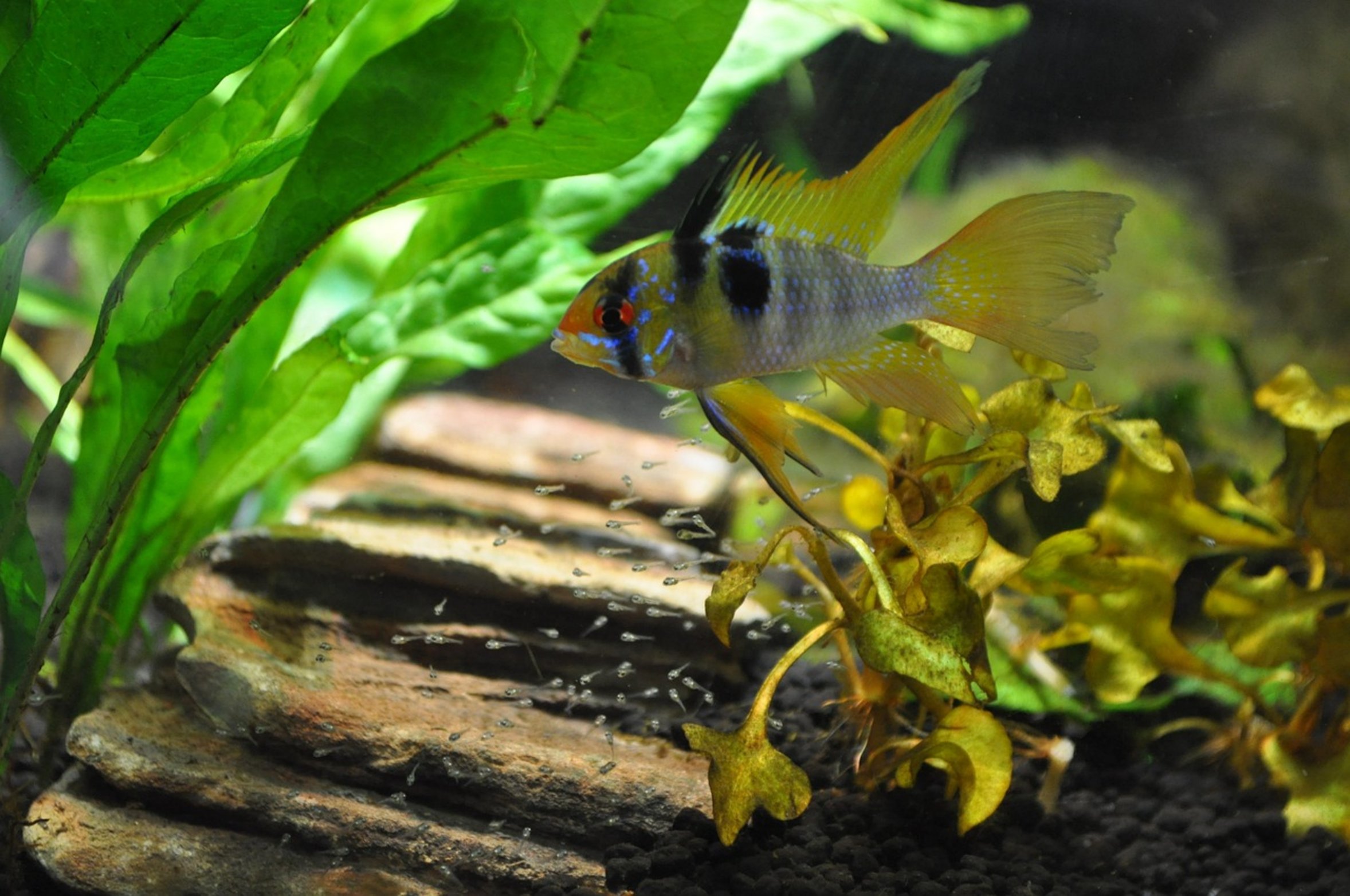
This mimics where they would naturaly occur in South American rivers with slow flow and abundant vegetation. Rugosity also matter just as much than plant life. This is what ecologists would call rugosity.
Add some PVC pipe, maybe some driftwood or smooth rocks on floor of your tank. By doing this, you have create micro-habitats in which a fry can hide behind a piece of PVC, tuck itself into a crack formed by two rock, etc. It’s possible that the filter current could blow a baby toward a plant, but it can also blows it into a tight corner where it find safety. The more places you give them to hide, the better their survival rate will be.
How Plants Improve Water Quality
More debris and plants mean you may be concerned about water quality. In fact, living plants will improve it. They’ll release oxygen and consume nitrates.
Better water means better fry. A planted tank is self regulating to some extent. Plants also competes with algae for food, keeping the water cleaner.
That means less filtration sucking in small fry. Poor water parameters can harms fry. The healthier your tank is, the better it can regulates its own water.
Benefits of Natural Selection in Tanks
There’s also the issue of visibility. You won’t be able to see all of your fry. Many will vanish into depths of the tank, which isn’t a bug, it’s a feature.
Guppies aren’t raised in sterile isolation chambers in the wild. They exist within a complicated environment. Letting the tank do its thing, therefore, mean selecting for hardiest individuals.
Survivors is those who know how to thrive and hide. Why pay for specialized breeding stuff? Why upgrade your tanks?
If you’re looking at your tank and think it’s empty, put in a few stems (fast growers) or hide some wood in one corner. Nature do the rest. It’s less stressful on offspring and parents alike.
You get to see the cycle of life play out. You would of not have to worry about a cage, and those fry will figure it out for themselves in a much more moddern environment.
