Transport Ammonia Binder Dose Calculator
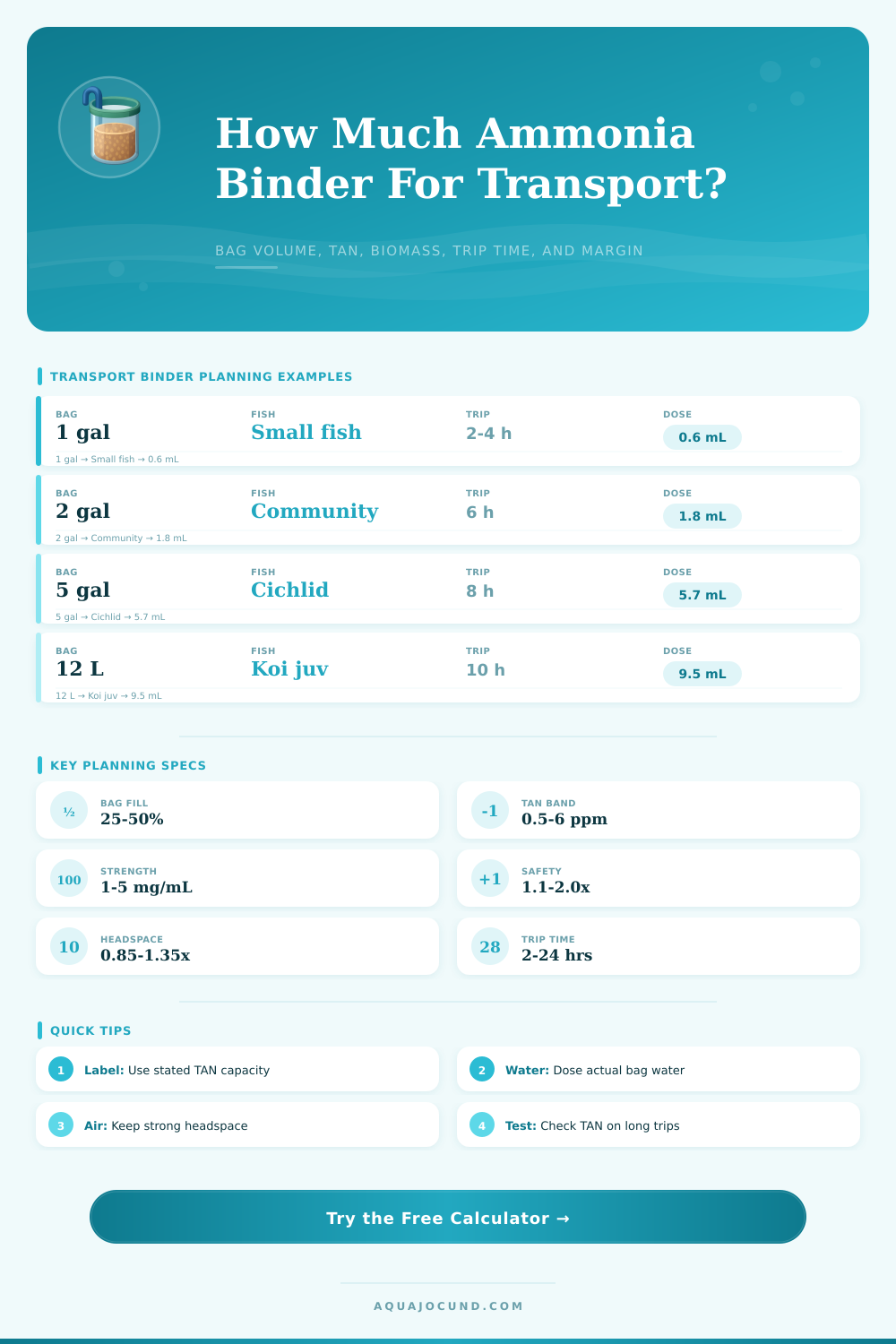
Estimate aquarium transport binder dose from bag water volume, fish biomass, travel time, expected TAN, binder strength, safety margin, and oxygen or headspace planning factor.
Calculation breakdown
| Binder profile | Planning capacity | Typical max dose | Best transport use | Calculator note |
|---|
| Transport setup | Water volume | Typical biomass | Planning time | Headspace cue |
|---|---|---|---|---|
| Single nano fish bag | 0.25-0.5 gal / 1-2 L | 2-15 g fish | 1-4 hours | More air than water by volume. |
| Small community fish bag | 0.5-1.5 gal / 2-6 L | 25-120 g fish | 3-8 hours | Avoid filling the whole bag with water. |
| Cichlid or goldfish bucket | 2-5 gal / 8-19 L | 150-900 g fish | 2-10 hours | Use an aerated lid or oxygen headspace. |
| Warm overnight shipment | 0.5-2 gal / 2-8 L | 15-250 g fish | 12-24 hours | Temperature and headspace drive margin. |
| Koi juvenile transport tub | 8-20 gal / 30-76 L | 1-5 kg fish | 3-12 hours | Strong aeration and testing matter. |
| Auction day holding bag | 0.5-1 gal / 2-4 L | 10-80 g fish | 6-14 hours | Multiple small bags are easier to manage. |
| Transport condition | Planning rate | Use when | Margin note |
|---|
| Result pattern | Dose vs label cap | TAN source | Transport cue | Planning response |
|---|---|---|---|---|
| Comfortable margin | Under 50% | Low start TAN | Good headspace | Use label capacity and keep trip short. |
| Binder limited | 50-90% | Generated TAN | Moderate biomass | Split bags or add water volume. |
| At cap | 90-100% | Starting plus generated | Crowded bag | Reduce biomass per bag before adding more binder. |
| Over cap | Over 100% | High TAN load | Long or warm trip | Rework the transport plan and follow label limits. |
| Headspace driven | Any | TAN may be moderate | Poor air space | Improve oxygen and water-to-air ratio. |
Standing at the end of an aisle in the pet store clutching your anxious fish in one hand and a bottle of water in another can be stressful. Will I do everything right so my fish makes it home alive? What will happen if he doesn’t make it all the way? The dose calculator for transport ammonia binders remove some of the stress by replacing guesswork with planning. It’s not simply instructing you on how much to pour; it forces you to think about what’s going on in that closed plastic bag along the way.
What’s wrong with moving fish? In a word: they’re alive. They have a digestive tract, they breathe through their gills and both processes result in waste production. Since these wastes is produced continuously in a closed environment, the longer they sit in transport, the higher the ammonia levels rise; which causes even more stress. A half hour drive across town might not seem like much, but a six-hour trip generates significantly more toxic load different than that short dash.
Why Use a Dose Calculator for Transporting Fish
So the calculator allow you to enter length of your journey (estimate) and the amount of fish you’ll be carrying. It understands if you carry three big cichlids, that’s going to create way more waste than a single betta in a cup do. That makes a difference because underestimating how much to treat will lead to trouble and overdoing it just costs money… No good could of come from it.
Where most folks get tripped up is thinking in terms of bag size instead of amount of water they’re dosing into. Following conventional wisdom about leaving “headspace” in the bag may result in a gallon bag containing only half a gallon of water. If you dose by the size of the bag but not the volume of water inside the bag then you’ve got a problem with the concentration. The tool account for all of this math when you choose your fill method and makes sure the dose corresponds to the water that will be in contact with the fish.
It also takes into account the existing condition of that water. If you pull it from a nitrate-loaded tank or some other water with elevated contaminants, you have more immediate ammonia exposure risk because of that initial condition. Products differ greatly in their binder strengths. This is why you must always check the capacity of what you’re using. Some binders are too strong and only need a few drops, others are too weak and needs a large dose.
That’s where the metric we ask you to use for binder concentration comes into play (you aren’t comparing apples to oranges). If your binder is five times stronger than another, that makes a huge difference in the outcome. Is it 2mg/mL? Or is it 5? Knowing that will determine everything. That’s where the binder profile table found on the page comes into play. It shows how different profiles behave at pressures.
Headspace is the other quiet assassin in transport bags. Oxygen and air in the headspace of a bag are also critical to reducing fish stress. Fish will begin to gasp when there is not enough oxygen or air, and that means more ammonia is produced. So it becomes a vicious circle and that’s why the calculator add this into the mix, adjusting its recommendations based on how crowded your setup is and how much air space you have. Because remember, no amount of chemistry can rescue a fish from drowning in stagnant, warm water. Warmer water has less oxygen and metabolites builds up faster, too.
The idea is basicly one of margin-of-safety. This tool calculates a dose which accounts for anticipated load + some extra buffer on top of it. The latter being your protection in case of delay to the flight/traffic jam etc. Don’t consider the output here as a commandment handed down from Mount Sinai; think of it instead as a place to start your intelligent transport plan. Test the waters where you can and check local guidance.
There’s an element of logistics, there’s an element of science, but more than anything else, there’s an aspect of treating fish with respect for their limitations in the confines of a small bag. Plan your dose in advance and eliminate the variable that does the greatest damage. No longer do you wonder whether or not you applied conditioner; now you can just get them home ASAP. There’s no need to worry because the bag never opened, the stress remained low and the fish crossed town without any drama whatsoever. Actualy, there is no more worry since the bag never opened, the stress remained low, and the fish crossed town without any drama whatsoever.