
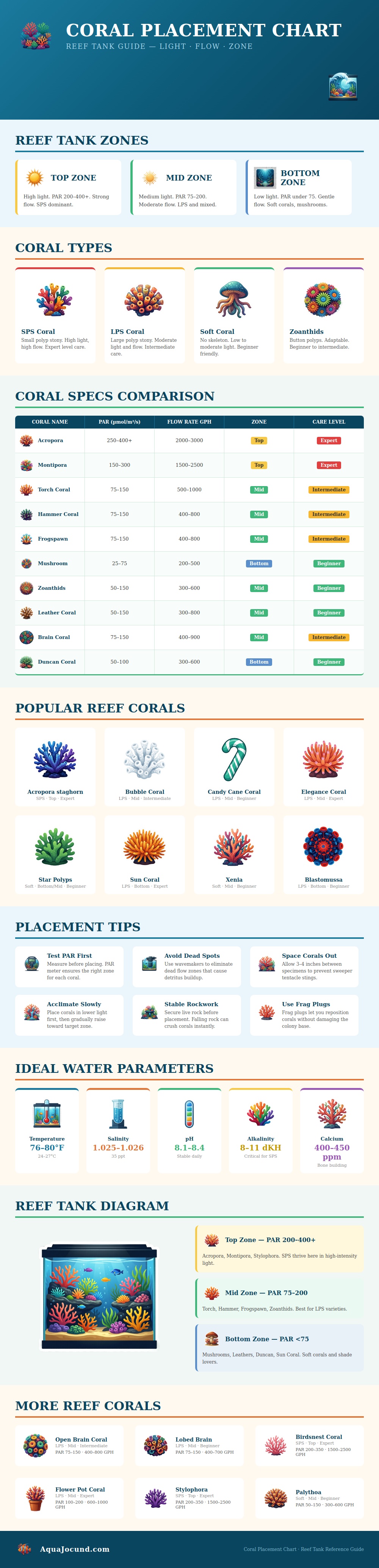
Why does a new coral last three days looking great, then start shrinking or fading? Because you put the wrong creature in the wrong zone. Most of the time, this isn’t because water is bad or the livestock got infected. It’s an error in environmental engineering. Water flow and light intensity are invisible builders. They determines if your collection will thrive; or dissolve. Location matters more then you may initially think.
Your aquarium can be viewed as a layered ecosystem. It go from top to bottom. Immediately below the lamps (top), it’s rough. Harsh levels of photosynthetically active radiation; high-intensity water flow from overheard powerheads. Only the hardiest corals can tolerate it. Small polyp stony corals such as Montipora and Acropora develops in the surf zone. That means they’re used to living in well-lit, exposed shallow environments where they experience relentless surge and sun. Placing softer species in this location will result in their boiling off in short order.
Understanding Aquarium Zones
Start conservative rather than ambitious. Now move down a few inches into the middle ground. That’s typically where most enthusiasts keeps their large polyp stony corals. Light levels are moderate, not so bright that it burns your corals but sufficient for their internal algae to feed. Flow strength is high enough to remove waste but gentle enough to avoid tearing delicate tentacle. In this band, we have Frogspawn, Hammer corals and torch corals. These corals depends on both photosynthesis and catching drifting plankton. A consistent current brings the food right to their mouth. They do not have hard skeletons that can resists violent turbulence near the top of the tank.
Slow down a lot further back where you might find rocks, or even closer to sandy bottom of your tank. Here’s where you’ll find button polyps such as Zoanthids along with other softies like mushrooms and perhaps some soft corals. These guys are the ultimate survivors, requiring little energy output. There is no need for blindingly bright lighting. They aren’t demanding massive water speeds either to survive. Too much water movement will make them close up and rarely ever open again. They are forgiving. In fact, this is a great place for novices to try their hand at corals. They can get instant gratification without having to play with all those equipment settings.
The next key is to understand those zones and prevent most newbie mistakes such as clustering unsuitable tankmate. Certain types of corals sends out long tentacle sweepers at night that rob other corals of their food. This stresses the host coral, which will eventually die if it cannot move away. Providing each colony with some breathing room (a few inches apart) meets everyone’s needs while minimizing hostile chemical warfare in the water column. Always place your frag plugs on solid rockwork before adding new livestock. Why? So they don’t fall over when water surges happen or during routine maintenance.
There are other considerations for this placement strategy such as water chemistry. Sure, you can get that light loving coral positioned perfectly beneath your LEDs but without stable water parameters, it’s going to have problems regardless. Alkalinity and calcium should be stable so it can grows its skeleton. A pH of about eight point two also helps because it minimizes any shock experienced by corals moved from one zone to another. Consistent salinity is just as critical. Nothing causes a bleaching event quicker then temperature fluctuation, much more so than most things we do here in the hobby.
Begin with hardy stuff in lower light spots initially. Add fussy things as you get a few months under your belt on a smoothly operating system. You should of dont dump it all in at one time. Change gradually and acclimate slowly. Abrupt change is always worse than slow change. Patience is the most important thing you can give your reef.
Mother nature isn’t perfect overnight. She doesn’t rush things. Respect her naturaly flow and light gradients. The true reward is watching those polyps stretch out contentedly once you get every detail just right.
