
Remember when you bought your first goldfish? Yep, you put ’em in a tiny bowl and believed they’d always be little. Sadly, this isn’t due to environmental limits; it’s biology.
One of the fanciest fancy goldfish varieties are the fantail. This fancy breed features a rounded body form and a double tail fin, very pretty indeed! Before you make the decision to bring them home, it’s good to know exactly how large they will grow. Knowing their true size help you understand them better. It also helps you plan ahead for what they require.
How Big Do Fantail Goldfish Grow?
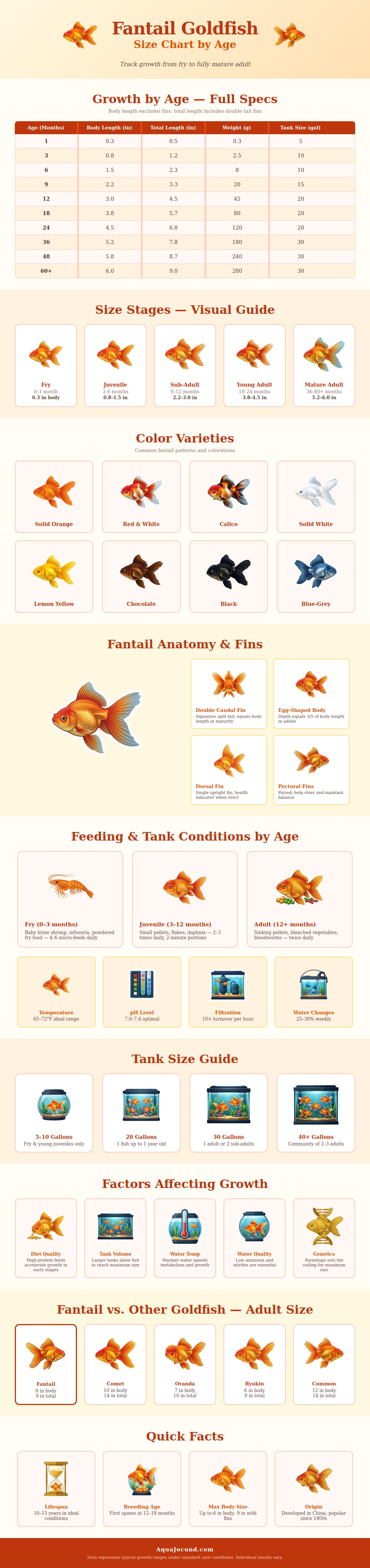
The growth rate is much more dramatic then most hobbyists expect. If you examine the size chart above, even though initial stages look reasonable, a one month old fry isn’t even noticeable and doesn’t exceeds a fraction of an inch in body length. Three months later, they’re twice that size… maybe three times that size, but they’ll still look very small compared to the background of a typical ten gallon tank. That’s part of the danger with these fish. They grows up quickly in the first year. What fits nicely inside a five gallon container at one month will not fit inside it at all by twelve months.
It’s worth understanding the difference between total length and body length, as tail fin on a fantail creates a large appearance without adding much weight. It can spread out so it approaches or even equals the length of your body. So while you may have a six inch long fish, when it swims around, it presents more like a nine inch span. That wider profile make a huge difference in how much water it can move and where it can fit. You’re not just keeping something that fits inside a tight ball. You’re dealing with something that reaches much farther than its body.
As they physically grow, their feeding strategies changes too. Early on, fry need constant micro feeds of something special (baby brine shrimp or infusoria). Their early growth rate is rapid, which demands regular meals. Once they move beyond fry stage, the feed change to flakes and/or pellets. Overfeeding is a common problem here; goldfish are notorious for eating everything you give them. Because excess food decays quickly in smaller volumes, it results in higher ammonia levels that stunt growth rather than promote it. Growth rates is stunted by high ammonia. In addition to the food, clean water helps them reach their genetic potential.
So, tank size also make sense when you consider how much an adult fantail weighs compared to a young one. An adult needs a lot more room than a juvenile. This is what I am referring to in my comments. It suggests upgrading from a 20g for a young one (a year old), then to something even bigger like a 30g+ for full grown adults. That’s not random. Increasing the tank volume allows you to dilute waste products better. This helps keep the water chemically stable on its own, so you do not have to constantly intervene manually. Lots of people miss this point, and their lack of doing this lead to lousy water conditions resulting in stunted growth or sickness of their fish.
Also important to understand are genetics. Some fish is just going to get bigger than others. Selective breeding has now set standards for fin shape and body depth. Your diet and tank size will impact their overall health but not necessarily the ceiling on how big they can gets. For example, you won’t have a fantail turn into a comet. The comet’s streamlined origin allows it to achieve much greater size. If you keep your expectations realistic you’ll avoid being frustrated if your fish maxes out at six inches rather than twelve.
To add to its attraction, there is also variety in color pattern. While they all have the same growth pattern, some are solid orange, others are calico mixtures, and even fewer are lemon yellow. Regardless of which one you select (be it a classic orange example or an eye-catching black form), they need the same care. They’re all different on the surface but not biologially.
A constant temperature of around sixty five to seventy two degrees Fahrenheit will support a healthy metabolism and not stress the fish. Faster growth may occur in warmer water. However, faster metabolisms produce more waste and require more oxygen. Striking the middle ground will ensure longevity. A well taken care of fantail live anywhere from ten to fifteen years. That’s a significant commitment.
In short, treating a goldfish as a temporary pet rather than a long term companion sets everyone up for failure. Goldfish are active animals; they’re smart and they crave good filtration and ample space. If you plan ahead and provide them with an environment that accommodates their adult form from the beginning, keeping goldfish becomes less of a burden and much more fun. Bright colors and graceful swimming awaits those who would of provided enough space for their small fish to fully grow.
