
Remember how you thought it was OK to keep a goldfish in a little glass bowl? That’s a myth. Decades of science have shown this to be false. It isn’t cruel; it’s biological.
Goldfish is very active fish with a strong metabolism. Because they are a cold-water species, they also produce a lot of waste for their size. A small bowl can not sustains the chemical makeup to keep it safe. It will become toxic rapidy due to lack of volume.
Why Goldfish Need Big Tanks
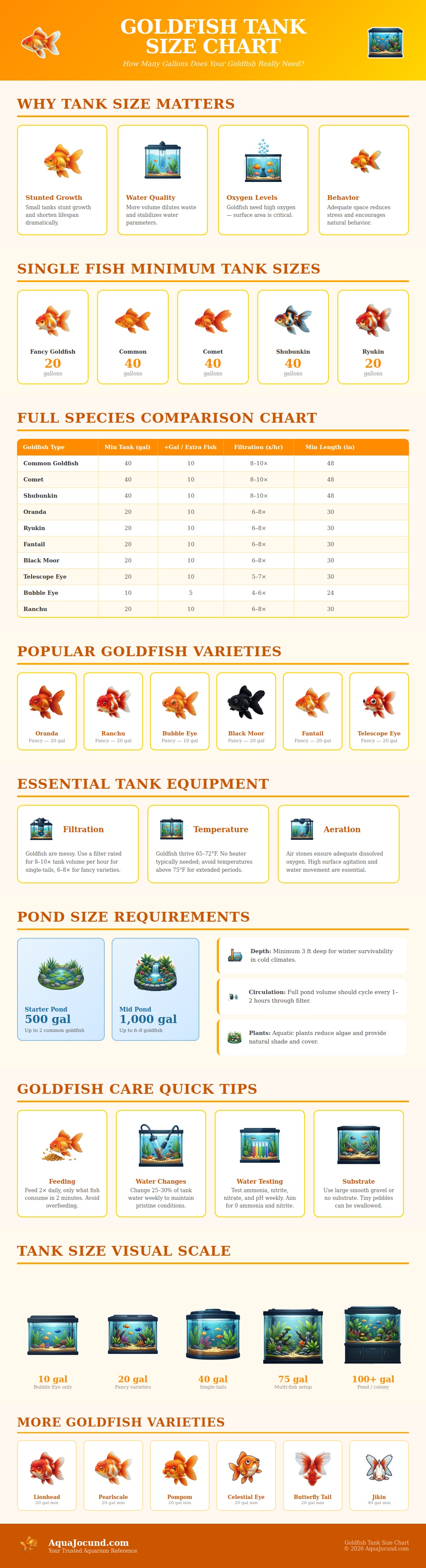
Compared to ornamental fish such as oranda (fancy) and comets (single tail), single-tail species swim well… They’re more athletic. They also requires longer tanks with plenty of horizontal room to accommodate their size. Fancies, on the other hand, have a compressed body shape and small fins prone to spinal problems; they do best in deeper tanks that allows them space for vertical swimming. Knowing this will help you determine which tank type is most appropriate for your fish.
In small tanks, it’s harder to dilute ammonia and nitrites effectively. Good bacteria need time to break down waste without it being too harmful. The size of the tank also make a difference (i.e., the more gallons of water, the better). While you want lots of volume for your goldfish, that’s only half the story. You must also consider surface area. Where does the water meet the air? That’s where gas exchange happens, which is important since goldfish need lots of oxygen. Even if you provide lots of volume, you still needs enough surface area for your fish to get enough oxygen.
New keepers sometimes trip on filtration capacity. They’ll purchase a twenty gallon tank, install a filter rated at twenty gallons and believe they’re good-to-go. Goldfish are messy grazers who stir-up all kinds of stuff constantly. To maintain clarity and biological stability without constant help, you require a filter that can turns over the water at a rate of six to eight times per hour. Active single-tails operate more efficiently at higher turnover rates.
Another usual error involve heaters. Sixty-five to seventy-two degrees Fahrenheit is the ideal temperature for goldfish. Putting a heater in there will jack up the price. It will also cause them to burn off calories at rates different than what they can sustain. This leads to death sooner then later and to greater amounts of waste as well. The best thing is to maintain the ambient air temperature so that it’s close to these temps anyway. That way, you’ll ensure long life and vibrant colors while supporting good health.
Safety depends on substrate. While tiny decorative gravel may look nice, it’s a choking risk when the goldfish go about their business of searching by sifting through it. Alternatives like larger and smoother stones, or even bare-bottom tanks with robust filtration allow them to root around naturaly without risking digestive blockage. Ultimately, you want something that balances aesthetics with biological safety, which means you tend towards the easier and safer options that keep your fish safe.
Be disciplined instead of gluttonous. I know it’s tempting to drop handfuls into the tank as your fish beg for every last pellet, but feeding too much clouds water fast and promotes bacterial blooms. Feed just enough for them to eat within a couple of minutes, twice a day. You’ll keep your fish healthier (overfeeding contributes to health problems) and your water clearer. Do a 25% or so water change once a week to complete the stable cycle requiring less constant upkeep.
Finally, some hobbyists graduate from tanks to outdoor ponds… Goldfishs true environment. In colder areas, a five hundred gallon or greater pond provides the necessary depth and space for overwintering success. Less stressful to the fish and the keeper, the bigger pond is also much more self regulating than any indoor tank can ever be.
Regardless of your size (a modest 20g starter tank or a large backyard addition), keep their requirements for space in mind and these hardy companions will remain healthy for many years. Properly maintained goldfish are long-lived, interesting animals. They’re not low maintenance. When you treat your fish right they will reward you with a lot of personality AND years of enjoyment. Getting the appropriate tank from the beginning avoids expensive upgrades down the road and also allows the fish to reach full size (not be stunted). Provide adequate space for swimming, maintain good water quality, and allow goldfish to express their natural behavior. This creates an active underwater environment instead of just a typical tank.
