🐟 Daily Feed Ration Calculator
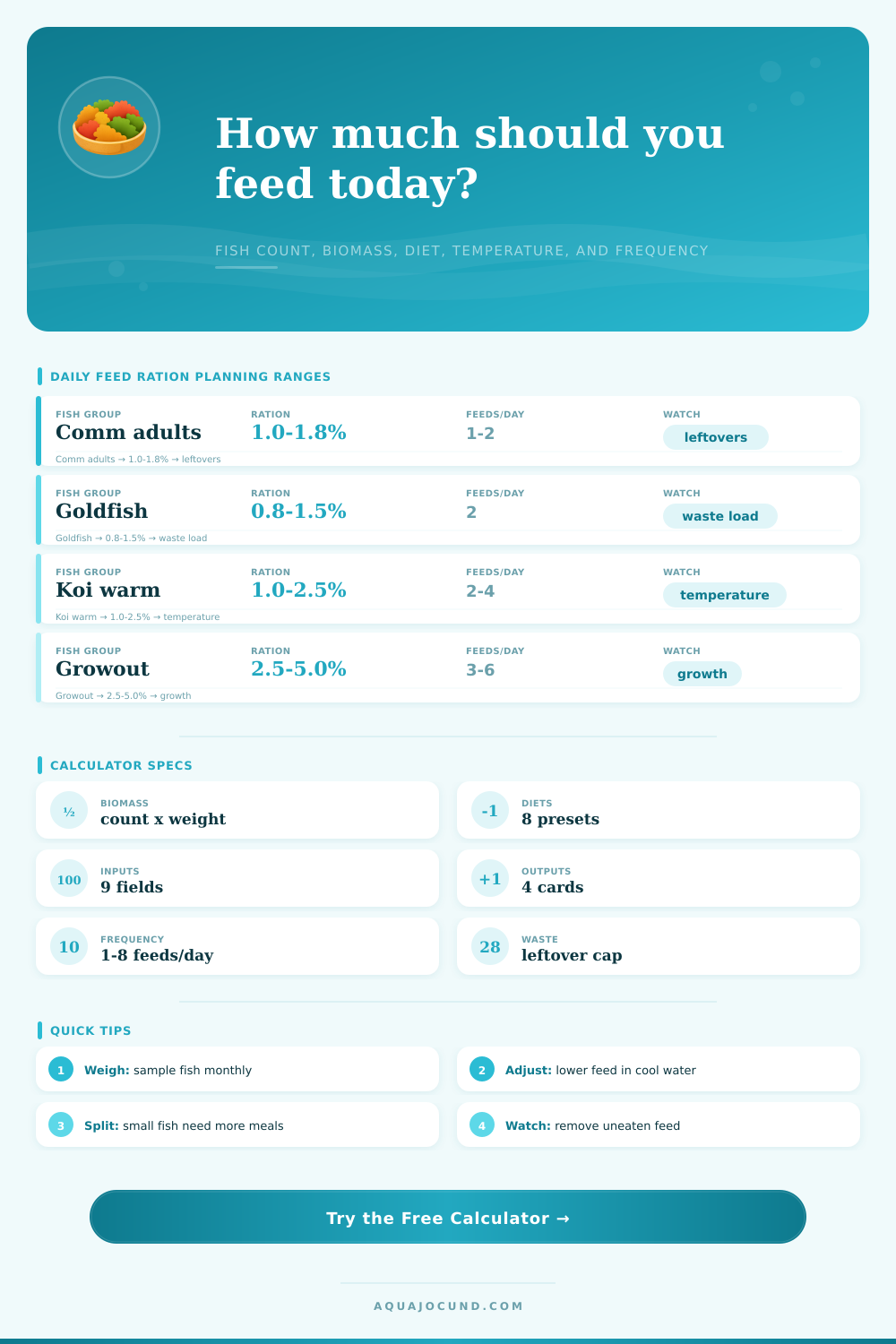
Size a daily fish feed ration from fish count, average weight, diet type, percent body weight, water temperature, feeding frequency, leftover cap, and weekly adjustment.
🎯Feed Ration Presets
⚙Calculator Inputs
Daily feed plan
Enter stock and feeding details, then calculate.
📊Diet and Ration Comparison Grid
📌Current Diet Specs
📘Diet Reference Table
| Diet type | Typical ration | Protein guide | Best use | Density used |
|---|---|---|---|---|
| Tropical flake | 1.0-2.0% | 38-45% | Small comm adults | 0.18 g/ml |
| Micro pellet / crumble | 1.5-3.5% | 42-50% | Small fish and juveniles | 0.55 g/ml |
| Cichlid pellet | 1.0-2.5% | 38-48% | Medium active fish | 0.62 g/ml |
| Goldfish pellet | 0.8-1.8% | 30-36% | Goldfish and fancy goldfish | 0.58 g/ml |
| Koi staple / grower | 0.5-3.0% | 32-42% | Pond koi by season | 0.50 g/ml |
| Carnivore pellet | 0.8-2.0% | 45-55% | Predators and marine carnivores | 0.66 g/ml |
| Algae wafer / herbivore | 0.5-1.5% | 28-38% | Plecos, grazers, herbivores | 0.72 g/ml |
| Fry powder / starter | 5.0-12.0% | 48-55% | Fry and very small juveniles | 0.35 g/ml |
🌡Temperature Modifier Table
| Water range | Auto modifier | Typical action | Calculation note |
|---|---|---|---|
| Below 50°F / 10°C | 0.20x | Minimal feeding for many warm-water fish | Very low metabolism |
| 50-60°F / 10-16°C | 0.45x | Small cool-season ration | Digest slowly |
| 61-68°F / 16-20°C | 0.75x | Reduced daily ration | Lower appetite |
| 69-79°F / 21-26°C | 1.00x | Normal tropical range | Base ration |
| 80-84°F / 27-29°C | 1.12x | Active warm range | Watch oxygen |
| Above 84°F / 29°C | 0.80x | Heat stress reduction | Oxygen risk rises |
⏱Feeding Frequency Guide
| Stock type | Feeds/day | Ration style | Use with calculator |
|---|---|---|---|
| Adult community fish | 1-2 | Small complete meals | Keep leftover cap near 0-5% |
| Goldfish and koi | 2-4 warm, less cool | Seasonal split ration | allow temperature modifier do the main reduction |
| Juveniles | 3-5 | Higher ration, smaller meals | Use weekly adjustment to follow growth |
| Fry and starters | 4-8 | Very small frequent meals | Watch waste from powder diets |
| Predators | 1 or alternate days | Dense meals | Use low ration percent for adults |
📅Weekly Adjustment Reference
| Adjustment | Meaning | Common use | Review signal |
|---|---|---|---|
| -10% to -5% | Step down ration | Cool water or leftovers | Food remains after a few minutes |
| -4% to 0% | Hold or trim | Adult maintenance | Stable weight and clean water |
| 1% to 4% | Gentle growth follow-up | Juveniles and active fish | Fish finish meals cleanly |
| 5% to 10% | Fast growth update | Growout batches | Reweigh weekly or biweekly |
Feeding your fish might be fun, especially when watching them consume those pellet food flakes, but that satisfaction is more likely masking a creeping decline in water quality and a slow leak in your wallet. Because most aquarists don’t know exactly how much “enough” food is (or even what “enough” means), we tend to feeds too much. Stop playing guessing games with unclear packaging instructions or advice from fellow hobbyists and neighbors. Just use this calculator; input your stock density and diet type, and let it do the math for you.
The key idea are biomass. In order for you to know how much fuel any aquatic creature consumes, you first have to knows how much living tissue they possess. Fish is not all alike; what good does counting do if one’s a neon tetra while another’s a giant koi? You’ll want to weigh out a representative sample of what you’ve got in the tank/pond, then average their weights. Now take total number and multiply that by the average. That will be the total mass requiring food.
How to Use the Fish Food Calculator
The calculator takes that number and applies a percentage based off the temperature and diet type. This converts abstract hunger into a concrete gram amount. Cold water dramatically reduces a fish’s metabolism, so temperature controls its appetite. You don’t feed full rations in cold weather as it doesn’t get digested (it just rots and spikes your ammonia levels). It isn’t metabolized by the fish as quicky as it would be if you fed the same amount to a fish in 25 degree water. This is why feeding full rations in cold water are inefficient… It wastes money and you aren’t getting any growth.
The calculator automatically accounts for this based on information you enter, using factors based on biological fact rather then hope. But it also matters what you’re feeding. An algae wafer is not as energy dense (or even protein rich) as a carnivore pellet. So if you were going to feed a fish that grazed like a herbivore, you wouldn’t feed them the same amount of algae wafer as the carnivore pellet you might feed an active predator. This is why the tool lays out those differences in the reference table. It gives you the range for rations based on which size food you are offering; fry powder, micro pellets, or flake. Low density foods can be offered more liberally without fouling the water as fast. Foods with higher protein content needs to be fed more frequently and in smaller amounts, or else they goes to waste. Knowing this about food density will help avoid common mistake of pouring in too much cheap food or not enough good food.
Efficiency: Efficiency is also a function of frequency. Because they are still developing, small fry and even small fish has very small bellies for their body size. As such, they require frequent meals of small quantities to do well. Overfeeding them with one big meal causes most of it to go uneaten. By breaking the day’s amount up into four or five smaller feedings instead, more is absorbed while less are wasted. The calculator divides the daily amount by however often per day you want to feed. It will tell you exactly how much to release at once. That way the fish grows consistently but the water stays clean.
Most folks trip up by trying to have no leftover food at the end of each and every day. This is unrealistic and results in being underfed some days or weeks and overfed others. By allowing for a small percent of leftover food (which will vary by your fishs activity level and appetite) you can adjust for both. Want less? Lower the ration. Begging for more? Bump it a little. Any feedback is better than rigid rules.
Because your fish will grow over time, it’s good to make weekly adjustments to your rations. What worked perfectly last month might not work at all today. By adding a little bit more each week, you can support the growth of your fish while not shocking their system. You’re not just maintaining, but also developing them to match their naturaly growth. It does take time to get it right. You have to pay attention and practice. But the fish are your guide, and the numbers is where you start. Monitor your water conditions, watch when they feed, and make changes to match.
Use food as a tool to get something done… Don’t just throw food out of habit. Your wallet (and water) will thank you.