
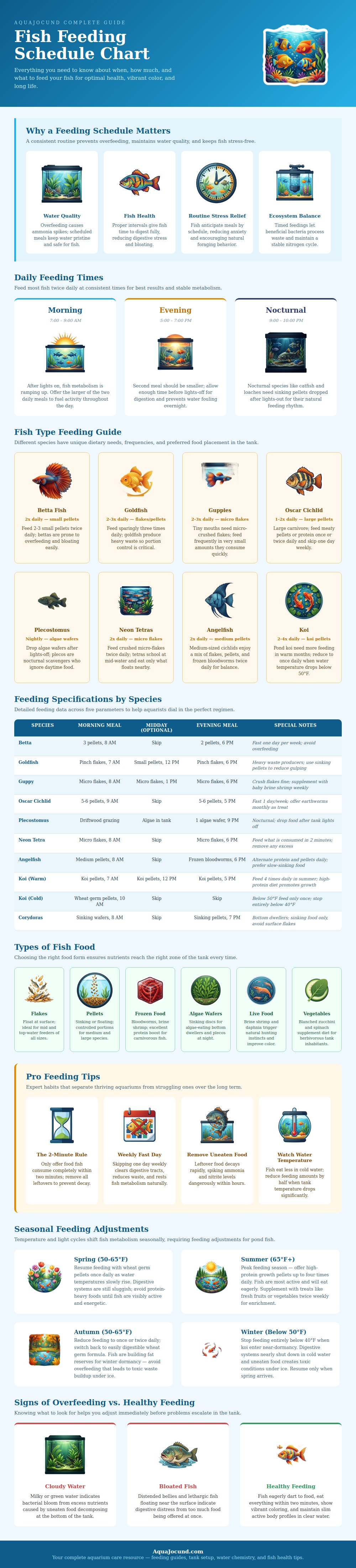
Establish a daily routine so you will know exactly when to feed your fish. This removes the chaotic aspect of unpredictable feeding times, and promotes the well being of all your aquarium residents. Regular feedings also makes maintaining good water quality easier since less uneaten food will reach the substrate where it can decompose and release ammonia into the water. Ammonia is stressful to your fish and inhibits growth of beneficial bacteria responsible for tank maintenance. If you only feed when your fish are out, then they are more likely to eat most of their food before it turns into waste.
Feed twice daily. Most tropical fish has a higher metabolism during the day when lights are on. Feed them a bit more in the morning and less at night just before turning off the lights. This gives them time to digest there food overnight without bloating, and will keep water cleaner while the lights are off. This small change can make big difference over time.
How to Feed Your Fish Correctly
This framework works different depending on species. For instance, bettas is notorious for begging for food. To prevent overeating and damage to their digestive system, feed them only a couple times daily with a small number of pellets. Goldfish produce alot of poop and require strict portions. Sinking pellets are great because they’ll help prevent gulping air at the water’s surface.
Bottom-dwelling nocturnal species (e.g., corydoras, plecos) don’t eat during daylight hours. Place some sinking wafers in tank following darkness. Otherwise, these bottom dwellers might end up starving while other fish gobble down all the grub.
Ponds change with seasons, and that includes feeding requirements. Because fish are cold blooded, lower temperatures slows down their digestion rate. High protein foods fed in cold water can be harmful to fish because they cannot digest them well when their bodies process food slowly. Below forty degrees Fahrenheit, consider stopping feed altogether, or going to a wheat germ formula. Base it off what their biology can tolerate at the current temperature, not on what they appear to desire.
The best way to know if your fish are getting enough food is to observe them, as well as the water. Do they have nice coloration? Are they not fat but gorging themselves when they should of been eating within seconds of being fed? Those are good signs that your feeding routine is spot-on. When you notice some uneaten food sitting on the substrate after several hours (or cloudier water), then you’re feeding too much. You don’t want a spike in ammonia from leftover food, so scoop it up ASAP.
Also consider letting your fishs digestive systems rest once a week by skipping a feed. This imitates how they naturaly feast or fast in the wild. Respect the ecosystem you’ve created; A consistent feeding regimen reflects that respect by not being impulsive but rather observing and waiting. Doing so will allow nature to take its course and align yourself with your fishs biological rhythms, creating an environment helpful to developing health.
Vibrant color and active swimming show it works. Consistency is the key. And when your fish are consistently fed they thrive in a tank.
