
Take a glance in your tank at the shrimp. There are a lot of them, and they’re all little crustacean with pink bodies that kinda look like miniature crabs. At a distance, they all seem to be the same. But when you get up close, you notice some have more or less color then others. Some are pale; others is an opaque, richly glowing red.
This is where grading comes into play. Grade helps you make sense of what you’re seeing. It takes something as seemingly subjective as “beauty” and measure it according to genetic makeup and market value.
How to Grade Shrimp Colors
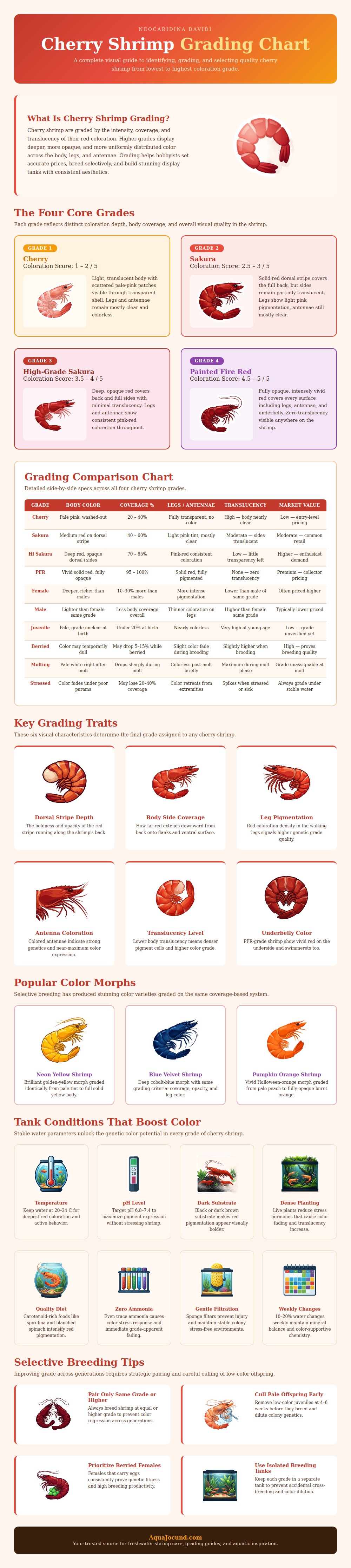
At the low end of the spectrum, Grade 1 Cherry shrimp have a washed-out, thin color that will work well in beginner tank. Because of this, their legs is still see-through and you can easily see through their bodies.
Grade 2 Sakura shrimp exhibit more red on their back stripe, though their sides frequentely retain translucency.
Grade 3 shrimp is where things realy change; they show red wrapping around their sides and even their legs display pink pigment.
Finally, Grade 4 Painted Fire Red shrimp are the best. No parts of their body (underbelly, antennae) is transparent; they’re completely covered in vibrant colors. This drastic contrast explains why collectors is willing to pay so much more for them.
What this does is make you look at shrimp different than when it comes to breeding. So many people keep high grade and low grade shrimp together and hope they gets something lucky. Genetics are not a matter of taking a chance on a lottery ticket. If you take a vibrant Grade 4 and pair him/her up with a paler Grade 1, you’ll probably end up diluting the color over time. Get your best shrimp together and leave them separated from other. Cull! Having some pale juvie shrimp in the tank will only lower overall average. That’s not nice, but it’s true if you want to improve the line.
Genes are expressed differently based off environmental factors. Poor conditions will shows even the best genes in a bad light. Color is also prone to fade under stress more then any other factor. To maintain good coloring, you want to have consistent tank parameters. This is why it’s important to have no ammonia and low nitrates. Water temperature is another consideration. Generally speaking, lower temperatures (between 20, 24 degrees Celsius) tend to show richer colors as opposed to warmer temperatures.
Additionally, your choice of substrate affects what you see. Dark substrates like gravel provide a nice contrast against the red shrimp which makes their color stand out from the background.
Color is also influenced by feeding. Red pigment is made up of carotenoids. Raw material for color production can be found in high quality pellets, blanched spinach and spirulina. A properly fed Grade 4 shrimp should not look dull or faded. They can’t make color out of thin air. It takes the correct fuel for them to fully show their genetic potential.
Another thing that throws off grades is temporary conditions. For example, a molting shrimp appear white/pale right out of its shell. Don’t downgrade it for that reason, its color will return once its new shell has hardened. Likewise, egg-filled females may be slightly dull-colored as their energy shift towards reproduction. Again, this is temporary and normal. Grade your shrimp in its stable prime condition (i.e., not during physiological transition).
At the end of the day though, this is just a clarity tool. It is a way to make informed buying decisions and have reasonable expectations when setting out to breed something. If you want to maintain a healthy school of Sakura shrimp or collect rare Painted Fire Reds, knowing what to look for will only enhance your enjoyment of the hobby. You can see the details instead of guessing at them. A slight transparency on the side or that paler pink spot on the leg suddenly becomes not “random variation” but data. What once was a simple aquarium becomes a curated display of biological artistry.
