Heat Pack Duration Calculator Aquarium
Estimate aquarium shipping heat pack duration from water mass, box insulation, ambient temperature, target minimum, and transit time.
📦Shipping Presets
📏Box and Water Mass
🌡Transit Temperature Plan
🔥Heat Pack Setup
Heat Pack Shipping Estimate
🔥Heat Pack Comparison Grid
📊Generic Heat Pack Output Reference
| Pack rating | Estimated useful window | Average output | Typical aquarium use |
|---|---|---|---|
| 20 hour | 12-18 hr | 5.5 W | Short overnight routes and mild cold |
| 30 hour | 18-25 hr | 4.8 W | Overnight boxes with small water mass |
| 40 hour | 24-34 hr | 4.0 W | Common fish and shrimp shipping |
| 60 hour | 36-50 hr | 3.2 W | Two-day transit or colder routes |
| 72 hour | 44-62 hr | 2.8 W | Delay buffer with gentler peak heat |
| 96 hour | 58-82 hr | 2.2 W | Long low-output protection |
🧊Insulation and Box Loss Factors
| Insulation | Loss factor | Best use | Calculation note |
|---|---|---|---|
| Thermal mailer only | High | Plants in mild weather | Fast heat loss through thin walls |
| 0.5 in foam liner | Medium high | Short local shipping | Needs more pack reserve in cold |
| 1 in foam box | Medium | Standard overnight livestock | Balanced protection and air space |
| 1.5 in foam box | Low | Cold-weather shipping | Extends duration with less pack count |
| Double insulated box | Very low | High delay risk | Slower temperature swing both ways |
| Premium liner | Very low | Sensitive shipments | Good reserve when venting is controlled |
🚚Common Aquarium Shipping Scenarios
| Scenario | Water mass | Transit window | Typical heat plan |
|---|---|---|---|
| Shrimp colony | 0.5-1 qt / 0.5-1 L | 18-30 hr | One 40 hr pack with foam box |
| Single betta | 0.5-0.8 qt / 0.5-0.8 L | 12-24 hr | One 20-40 hr pack in mild cold |
| Community fish pair | 1-2 qt / 1-2 L | 24-36 hr | One 40-60 hr pack |
| Marine frag bag set | 1.5-3 qt / 1.5-3 L | 18-36 hr | One or two packs, watch warm spikes |
| Large fish bag | 3-6 qt / 3-6 L | 30-60 hr | Long pack plus thick insulation |
| Plant-only box | Minimal water | 24-72 hr | Low heat, strong insulation |
🌡Temperature Reserve Targets
| Livestock group | Common minimum | Warm risk area | Planning note |
|---|---|---|---|
| Hardy fish / snails | 58-64°F / 14-18°C | 82°F+ / 28°C+ | Usually tolerate a wider cool range |
| Shrimp and inverts | 62-68°F / 17-20°C | 80°F+ / 27°C+ | Avoid sharp swings and hot packs |
| Tropical community fish | 64-70°F / 18-21°C | 84°F+ / 29°C+ | Use margin for delays |
| Marine livestock | 68-72°F / 20-22°C | 82°F+ / 28°C+ | Plan more conservatively |
| Aquatic plants | 40-55°F / 4-13°C | 85°F+ / 29°C+ | Insulation may matter more than heat |
When shipping living aquatic life, you’re dealing with temperature shifts while in transport. While you have no control over speed/stop times of the carrier (truck), you do have control of heat protection prior to shipment. Many hobbyists know heat packs as a solution, but most do not realize that volume is more important than heat pack strength.
Water hold heat longer than air does. An empty box containing 2 strong heat packs will stay warm for less time than a quart of water. First on the calculator is number of bags and their combined volume. Why? Because this indicates how much thermal inertia you need to overcome. You can’t just throw stuff into the box and assume it’s safe.
How to Ship Live Fish Safely
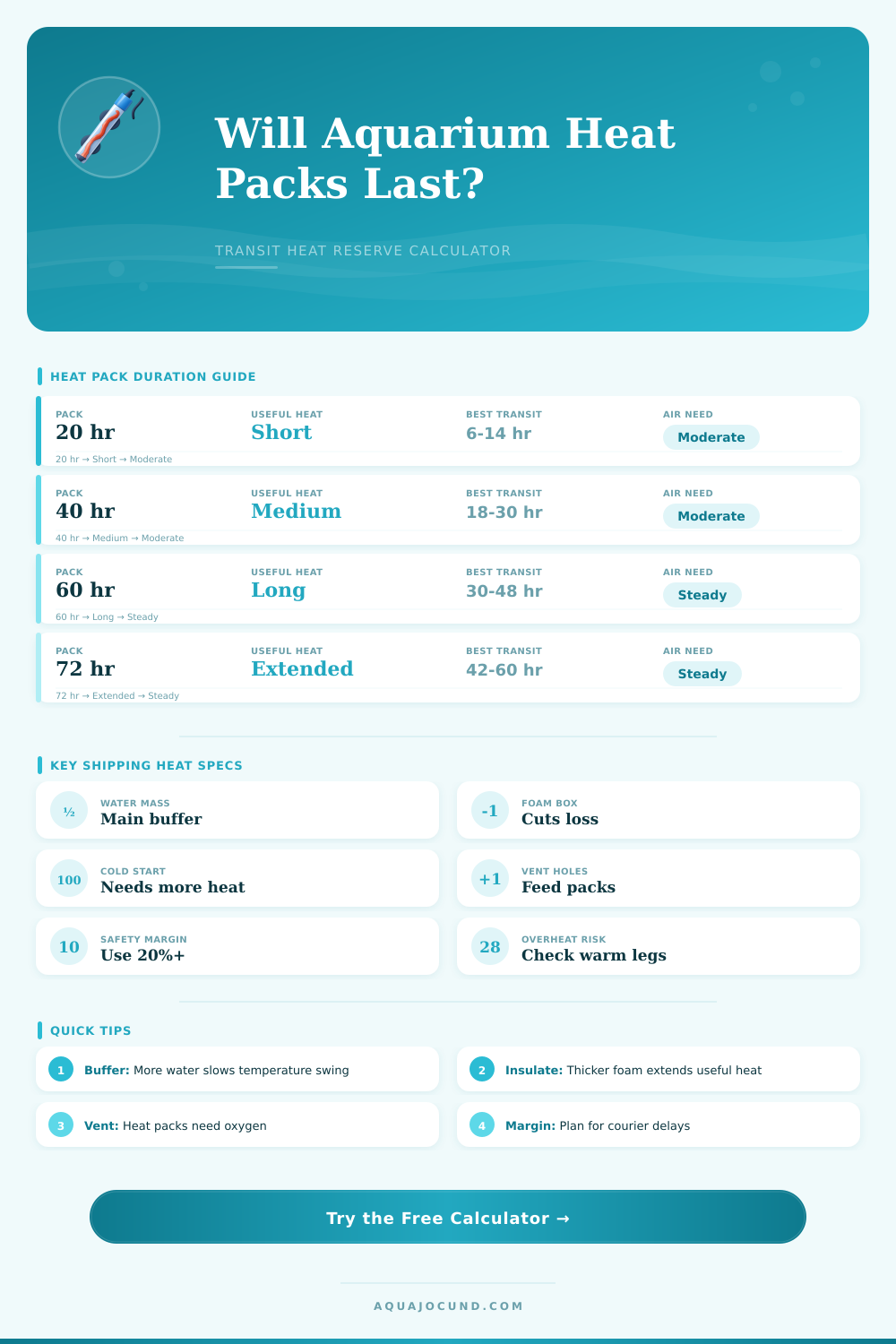
Insulation: Insulation is key if you plan on shipping live aquatic creatures in temperatures colder than freezing. Double walled construction or thicker foam insulates well and slow the rate of heat loss. Mild winter conditions may be fine with a regular foam box at an inch but the heavier the better. Notice that pack longevity vary by insulation level in the reference tables. A thin liner will reduce the lifespan of a seventy-two hour pack down to as low as forty hours in cold air.
Remember it is not about minutes but about stability. You should minimize temperature changes so the fish don’t suffer thermal shock while being sorted or stopped. Be careful with heat packs; don’t seal the box shut with tape as they require oxygen and will stop working early. Also, if you use thin insulation, a pack might lose its effectiveness before its rated duration. Air access matters when it comes to how long packs last, and the tool takes this into account.
Usually best to mount them on the lid where the rising hot air won’t touch the bags but provide some warmth. If you use a cardboard divider for side mounted packs they should be ok without touching the bags. Direct contact is bad news. It will cook the water and likely melt the seals on the packs. This creates hot spots that can kill small fish or shrimp, even if the overall temperature appears OK.
The difference between pros and beginners are the safety margin. Even the carrier’s “transit time” isn’t a promise; it’s an estimate of their best case scenario. During peak season, weather delays, holdups at warehouses, and missed scans is common. To account for those delays, add a 20-25% buffer. This ensures that no matter what happens, your worst case scenario still has enough packs to keep your livestock out of the danger zone.
Below its critical temperature). While some hardy tropicals may tolerate a momentary dip into the mid-sixties, anything lower will permanently damage sensitive marine coral or shrimp. Base it off proper water volume estimates and reasonable expectations of the ambient temperature during the destination season. Don’t count on maximum pack output to sustain heat. Design a strong insulation system in which the pack serves only to counter gradual loss.
Adequate venting plus careful timing along with foam thickness are the magic formula for delivering healthy livestock intact. You should of used a better system if you want success. It is naturaly harder than it looks, and you must be more carefull.