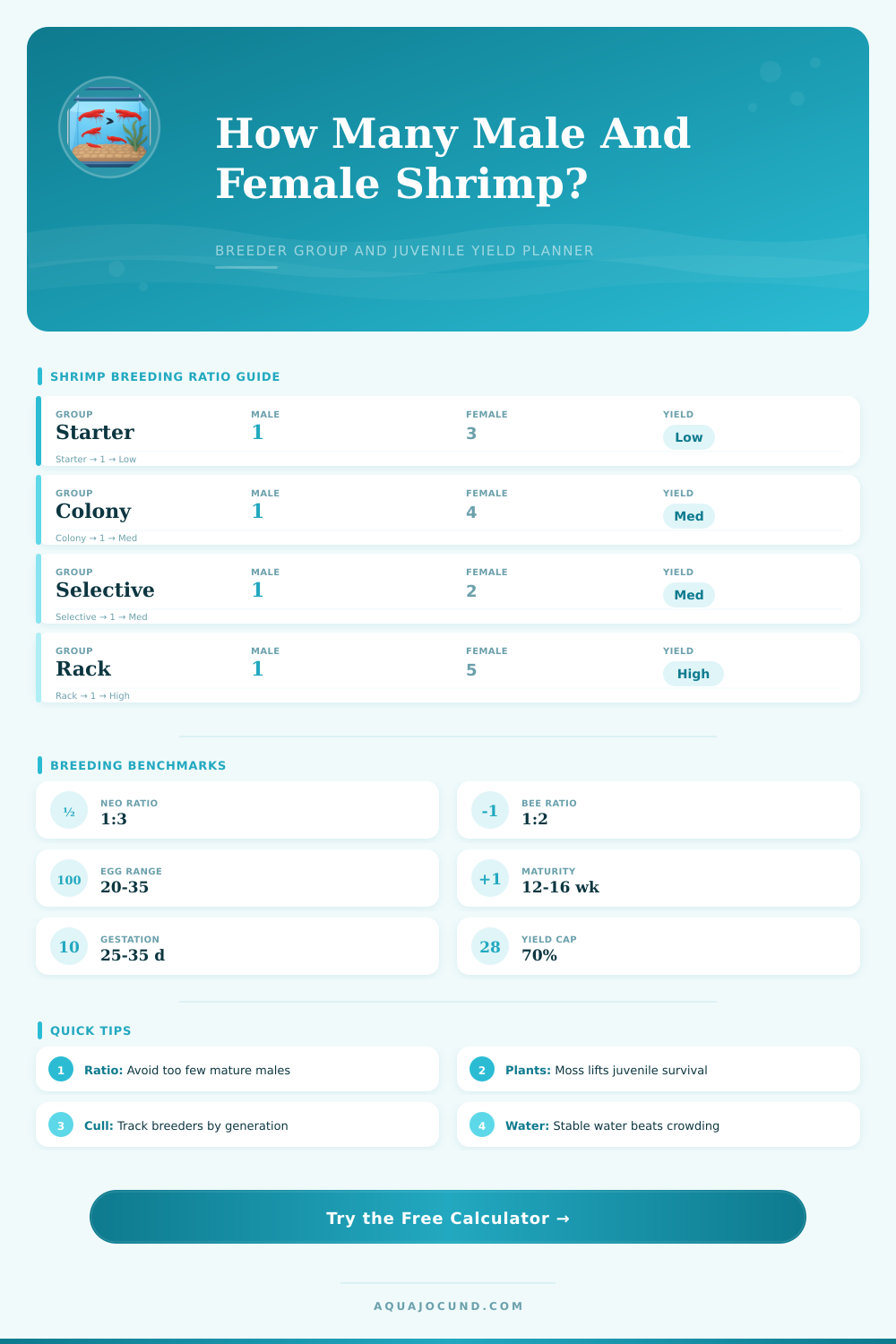
Shrimp Breeding Ratio Calculator
Estimate male/female breeder balance, mature group size, expected berried females, and juvenile yield for aquarium shrimp colonies.
| Shrimp Type | Suggested Ratio | Eggs Per Female | Gestation | Planning Note |
|---|
| Group Size | 1:2 Selective | 1:3 Balanced | 1:4 Female Heavy | Best Use |
|---|
| Tank Size | Typical Dimensions | Breeder Adults | Grow-Out Load | Ratio Note |
|---|
| Factor | Low Setting | Typical Setting | High Setting | Calculator Effect |
|---|
Shrimp breeding can become dificult for individuals who recognize that the shrimp tank may not be able to support a new batch of juvenile shrimp. The number of shrimp that are contained within a tank can impact the shrimp breeding processes for multiple reason; dwarf shrimp breed according to a schedule when the conditions are right for breeding, and the balance between the number of male and female shrimp can alter the number of berried females that an individual see within the tank each cycle. The calculator above will allow a person to perform the math necessary to determine the number of shrimp that will be need within the tank by entering variables like tank size, species of shrimp, and the number of breeder shrimp that live within the tank.
However, the shrimp calculator does not factor in the various water parameters for the tank, nor will it be able to calculate if the shrimp within the tank will remain healthily if the juvenile and adult shrimp both graze upon the same areas of the tank. The process of shrimp breeding typically begins with an establishment of shrimp within the tank, and then individuals observe the increase in the number of shrimp within the tank over time. Species like Neocaridina can tolerate a variety of water parameters, but species like Caridina require that the water parameters within the tank is strictly controlled.
How Many Shrimp Can My Tank Hold?
Because of these difference in species requirements, the ratios suggested by the shrimp calculator will differ according to the species of shrimp within the tank; those species with small broods of shrimp will have fewer males competing with the adult shrimp for grazing areas then those species with larger broods. Regardless of how many shrimp are added to the tank, the primary factor within shrimp breeding is the number of receptive female shrimp that are contained within the tank; if an individual is only certain that half of the shrimp within the tank are female shrimp, the shrimp calculator will reflect this with an adjustment to the output of the calculator. The volume of the tank is required when performing the calculation for shrimp breeding because the shrimp require grazing area within the tank.
Additionally, tanks with a wide footprint will allow for the growth of biofilm between tank water changes, and the growth of biofilm will provide food to the juvenile shrimp that are bred within the tank. The shrimp calculator calculates for the net gallons within the tank; the volume of the tank minus the volume of the hardscape and substrate within the tank. After determining the net number of gallons of water that the tank can hold, the shrimp calculator can calculate for the number of adult shrimp that will live within the tank in relation to the comfortable load of shrimp for that tank.
If the number of juvenile shrimp that are projected to emerge from the eggs of the female shrimp reaches a level that would result in stress for the shrimp that live within the tank, the shrimp calculator will provide a warning message for an individual. Overcrowding within shrimp tanks can lead to slow growth of the shrimp populations within those tanks, and too many shrimp can result in the death of shrimp within the tank. The cover level and the stability of the water within the tank are two factors that can impact the survival of shrimp within the tank.
Moss that is dense within the tank will provide more hiding space for juvenile shrimp during the initial few weeks after the shrimp have emerged from their eggs. Additionally, if the water within the tank is stable, the female shrimp will not drop their eggs early within the breeding cycle. Each of these factors will lead to the shrimp calculator providing an adjusted yield for the number of shrimp that will emerge from the eggs; the shrimp that have already survived the initial breeding and egg-hatching process.
The adjustment of the sliders for the cover level and the stability within the water are the equivalent of an individual purchasing insurance for the shrimp within the tank prior to adding more shrimp to the existing population. One of the uses of the shrimp calculator is to help an individual determine at what point an existing tank population should be split into a new tank. If the projected number of juvenile shrimp that will emerge from the breeding females reaches the maximum number of shrimp that can live within the current tank, the addition of more breeding shrimp will tip the balance within the tank.
Additionally, the tables that are provided within the calculator will allow an individual to determine whether the movement of the shrimp into a larger tank is an option versus the removal of the juvenile shrimp from the tank. These tables provides information regarding the number of shrimp of each species that live within tanks of each size, as well as provides an indication of how many juveniles will be produced in relation to the number of adult shrimp within the breeding tank. The shrimp calculator is not a guarantee as to the number of shrimp that will live within an aquarium.
Instead, the shrimp calculator creates an estimate based off the average number of eggs that each female shrimp sets, the average rate at which shrimp eggs will hatch, and the average survival rate of juvenile shrimp during the first month after they begin to emerge from their eggs. The actual number of shrimp that will live within an aquarium can vary from tank to tank based upon the specific type of shrimp that are purchased, the feeding schedule for those shrimp, and whether a sponge filter within the tank is trapping the juvenile shrimp from being able to survive in the water. Despite the information that the shrimp calculator can provide an individual, shrimp must be provided with appropriate water parameters and enough space within the tank to ensure their health.