Hydrogen Peroxide Aquarium Dosing Calculator
Estimate conservative H2O2 dosing from true water volume, 3% equivalent rate, livestock sensitivity, plants, organics, and product strength.
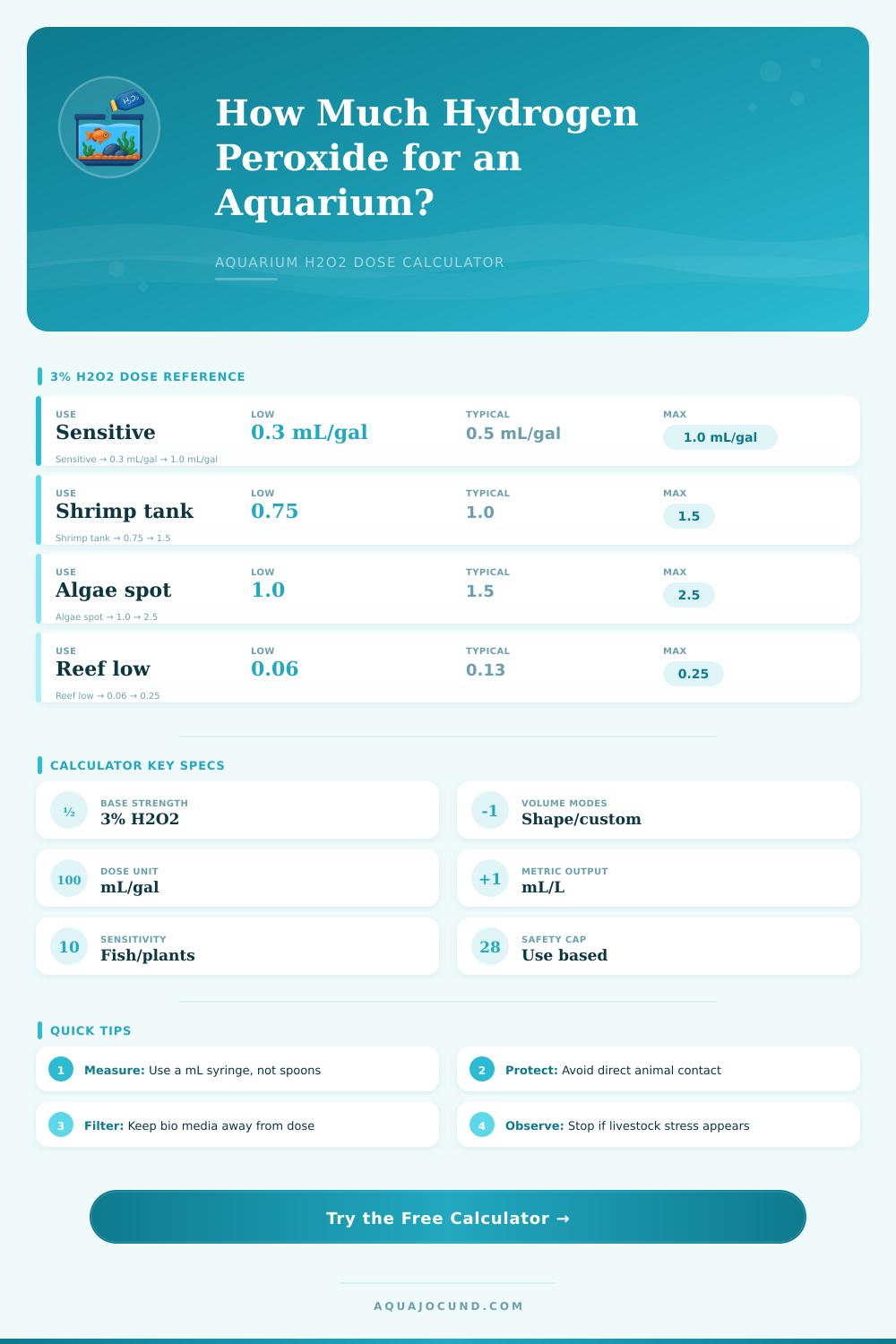
| Use Case | Base Rate | Calculator Cap | Best Fit |
|---|---|---|---|
| Sensitive whole-tank nudge | 0.50 mL/gal | 1.00 mL/gal | Fragile stock, first test dose |
| Low maintenance algae dose | 0.75 mL/gal | 1.25 mL/gal | Light film algae, mature tanks |
| Shrimp parasite/hydra dose | 1.50 mL/gal | 1.50 mL/gal | Dwarf shrimp tanks with caution |
| Planted tank algae treatment | 1.50 mL/gal | 2.00 mL/gal | BBA, hair algae, green algae |
| Direct spot treatment budget | 2.00 mL/gal | 2.50 mL/gal | Applied locally, not on animals |
| Reef parasite low pulse | 0.125 mL/gal | 0.25 mL/gal | Very low repeated marine pulses |
| Group | Factor | Cap Effect | Notes |
|---|---|---|---|
| Hardy adult fish | x1.00 | Normal cap | Tetras, livebearers, barbs, cichlids |
| Scaleless/sensitive fish | x0.65 | Lower cap | Corydoras, loaches, weak fish |
| Dwarf shrimp and snails | x0.75 | 1.5 mL/gal ceiling | Watch juveniles closely |
| Eggs, fry, weak livestock | x0.50 | Lowest freshwater cap | Use isolation when possible |
| Corals and reef inverts | x0.30 | Reef cap | Pods, coral tissue, microfauna |
| Moss, fern, buce, anubias | x0.75 | Reduced plant cap | Rhizomes and mosses can bleach |
| Tank | Dimensions | True Water | 1 mL/gal Dose |
|---|---|---|---|
| 5.5 gal | 16 x 8 x 10 in | 4.8 gal / 18 L | 4.8 mL 3% |
| 10 gal | 20 x 10 x 12 in | 9.1 gal / 34 L | 9.1 mL 3% |
| 20 long | 30 x 12 x 12 in | 18.7 gal / 71 L | 18.7 mL 3% |
| 29 gal | 30 x 12 x 18 in | 28.0 gal / 106 L | 28.0 mL 3% |
| 40 breeder | 36 x 18 x 16 in | 39.5 gal / 149 L | 39.5 mL 3% |
| 75 gal | 48 x 18 x 21 in | 69.0 gal / 261 L | 69.0 mL 3% |
| Formula Item | Value | Used For | Calculator Meaning |
|---|---|---|---|
| 3% peroxide strength | 30 mg/mL | Active H2O2 | Base dose equivalent |
| Product conversion | 3 / strength | mL from bottle | Adjusts 1%, 3%, 6%, 12% |
| Oxygen yield | x0.4706 | Possible O2 release | Mass from breakdown |
| True volume | Gross x remaining | Water actually dosed | Subtracts substrate/decor |
| Treated target | True x target % | Spot vs whole tank | Dose budget for area |
| Safety cap | Use x sensitivity | Upper guardrail | Limits final 3% amount |
Hydrogen peroxide can be used to treats many problems in the aquarium, such as algae, hydra, and cyanobacteria. Hydrogen peroxide is helpful in that it targets the problem in the aquarium without destroying the entire system. However, hydrogen peroxide must be used at a correct dose for the aquarium.
The dose of hydrogen peroxide that should be use depends on the volume of the aquarium’s water, the sensitivity of the livestock in the tank to hydrogen peroxide, and the amount of organic matter in the aquarium. The first step in using hydrogen peroxide to kill algae is to determine the true volume of the aquarium. Often, the water volume of the aquarium is less than the external size of the aquarium because the substrates, rocks, and other features in the aquarium take up some of the space for the water.
How to Use Hydrogen Peroxide Safely in Your Aquarium
Using a calculator to determine the true water volume of the aquarium will allow for more accurate calculation of the dose of hydrogen peroxide that should be used to treat the aquarium for algae. Furthermore, using the calculator allows for the choice between a whole-tank dose of hydrogen peroxide and spot-treatment doses of hydrogen peroxide. Using a whole-tank dose will treat the entire aquarium for algae, while spot-treatment doses can be used to treat specific area of the aquarium that have particularly problematic amounts of algae.
The sensitivity of the livestock to hydrogen peroxide will also determine how much hydrogen peroxide can be added to the aquarium. Animals such as shrimp and fish without scales are often more sensitive to hydrogen peroxide than more hardy fish species. Similarly, most corals and sea pods has low tolerance to hydrogen peroxide.
The sensitivity of every species in the aquarium must be taken into consideration because the most sensitive species will determine the maximum dose of hydrogen peroxide that may be added to the aquarium. In addition to fish and invertebrates, the plant in the aquarium may also be sensitive to hydrogen peroxide. For example, plants with fine stems and mosses may bleach if they are exposed to hydrogen peroxide, while hardy sword plants may not be affected by adding hydrogen peroxide to the aquarium.
Adjusting the settings for the plants in the hydrogen peroxide calculator will ensure that the dose of hydrogen peroxide will not negatively impact the aquarium’s plants. Finally, the amount of organic matter in the aquarium will impact how effective the hydrogen peroxide is in killing the algae. Any detritus or dying algae will react with the hydrogen peroxide.
If the aquarium is particularly dirty, more hydrogen peroxide will need to be added to kill the algae. However, splitting the total amount of hydrogen peroxide into smaller doses will reduce the risk of an excess amount of oxygen being introduced into the aquarium, which could stresses the fish. You should also use the contact-time field to indicate how long the filter will be turned off, since the filter may remove the hydrogen peroxide from the water prior to the hydrogen peroxide completing its algaeciding reaction.
Many people employ hydrogen peroxide according to a recipe that they know works for their aquarium, but using hydrogen peroxide according to a recipe is not recommended. People often use a dose of hydrogen peroxide that worked before, regardless of whether the size of the aquarium or the number of fish in the tank has changed. Using a previous dose of hydrogen peroxide without regard to the current conditions of the aquarium can be harmful to the fish in the aquarium.
The difference between successfully treating the aquarium and losing the fish in the tank can be the difference between taking the time to measure the volume of water in the aquarium accurately and guessing the volume of the aquarium. The reference tables can help you understand how hydrogen peroxide can act under different scenarios. For example, the reference tables show low pulses for aquariums that contain reefs and higher pulses of hydrogen peroxide that is safe for shrimp.
These rates do not have to be memorized, but reading the reference tables will help you to understand why the dose of hydrogen peroxide changes with the type of life in the aquarium. To add the hydrogen peroxide to the aquarium, follow the steps that is required to add the hydrogen peroxide. Use a syringe to measure the hydrogen peroxide, add the hydrogen peroxide to the aquarium water prior to adding it to the aquarium, and add the hydrogen peroxide to the tank away from the filter intake.
Add the hydrogen peroxide so that it does not land on or otherwise enter the biological filter media in the aquarium. Follow the addition of hydrogen peroxide by watching the fish in the aquarium for one hour. If the fish appear to be stressed by the addition of the hydrogen peroxide, you should not add more hydrogen peroxide to the aquarium.
The hydrogen peroxide will break down quickly in the aquarium water, and its effects will be short-lived. Therefore, using hydrogen peroxide in repeated, low doses is usually more effective than using one large dose of hydrogen peroxide. While the hydrogen peroxide calculator will mathematically calculate the amount of hydrogen peroxide to add to your aquarium water according to the dimensions of the aquarium, the number of fish, and other settings, the calculator does not remove the need for your attention.
You must decide whether or not the aquarium is clean enough to use hydrogen peroxide prior to using it. You must watch the fish in the aquarium to determine whether the hydrogen peroxide is causing them stress. Thus, while the calculator will assist you in finding the correct amount of hydrogen peroxide to use, you must pay attention to the aquarium to use hydrogen peroxide correctly and safe.
***
Hydrogen peroxide can be used to treats many problems in the aquarium, such as algae, hydra, and cyanobacteria. Hydrogen peroxide is helpful in that it targets the problem in the aquarium without destroying the entire system. However, hydrogen peroxide must be used at a correct dose for the aquarium.
The dose of hydrogen peroxide that should be use depends on the volume of the aquarium’s water, the sensitivity of the livestock in the tank to hydrogen peroxide, and the amount of organic matter in the aquarium. The first step in using hydrogen peroxide to kill algae is to determine the true volume of the aquarium. Often, the water volume of the aquarium is less than the external size of the aquarium because the substrates, rocks, and other features in the aquarium take up some of the space for the water.
Using a calculator to determine the true water volume of the aquarium will allow for more accurate calculation of the dose of hydrogen peroxide that should be used to treat the aquarium for algae. Furthermore, using the calculator allows for the choice between a whole-tank dose of hydrogen peroxide and spot-treatment doses of hydrogen peroxide. Using a whole-tank dose will treat the entire aquarium for algae, while spot-treatment doses can be used to treat specific area of the aquarium that have particularly problematic amounts of algae.
The sensitivity of the livestock to hydrogen peroxide will also determine how much hydrogen peroxide can be added to the aquarium. Animals such as shrimp and fish without scales are often more sensitive to hydrogen peroxide than more hardy fish species. Similarly, most corals and sea pods has low tolerance to hydrogen peroxide.
The sensitivity of every species in the aquarium must be taken into consideration because the most sensitive species will determine the maximum dose of hydrogen peroxide that may be added to the aquarium. In addition to fish and invertebrates, the plant in the aquarium may also be sensitive to hydrogen peroxide. For example, plants with fine stems and mosses may bleach if they are exposed to hydrogen peroxide, while hardy sword plants may not be affected by adding hydrogen peroxide to the aquarium.
Adjusting the settings for the plants in the hydrogen peroxide calculator will ensure that the dose of hydrogen peroxide will not negatively impact the aquarium’s plants. Finally, the amount of organic matter in the aquarium will impact how effective the hydrogen peroxide is in killing the algae. Any detritus or dying algae will react with the hydrogen peroxide.
If the aquarium is particularly dirty, more hydrogen peroxide will need to be added to kill the algae. However, splitting the total amount of hydrogen peroxide into smaller doses will reduce the risk of an excess amount of oxygen being introduced into the aquarium, which could stresses the fish. You should also use the contact-time field to indicate how long the filter will be turned off, since the filter may remove the hydrogen peroxide from the water prior to the hydrogen peroxide completing its algaeciding reaction.
Many people employ hydrogen peroxide according to a recipe that they know works for their aquarium, but using hydrogen peroxide according to a recipe is not recommended. People often use a dose of hydrogen peroxide that worked before, regardless of whether the size of the aquarium or the number of fish in the tank has changed. Using a previous dose of hydrogen peroxide without regard to the current conditions of the aquarium can be harmful to the fish in the aquarium.
The difference between successfully treating the aquarium and losing the fish in the tank can be the difference between taking the time to measure the volume of water in the aquarium accurately and guessing the volume of the aquarium. The reference tables can help you understand how hydrogen peroxide can act under different scenarios. For example, the reference tables show low pulses for aquariums that contain reefs and higher pulses of hydrogen peroxide that is safe for shrimp.
These rates do not have to be memorized, but reading the reference tables will help you to understand why the dose of hydrogen peroxide changes with the type of life in the aquarium. To add the hydrogen peroxide to the aquarium, follow the steps that is required to add the hydrogen peroxide. Use a syringe to measure the hydrogen peroxide, add the hydrogen peroxide to the aquarium water prior to adding it to the aquarium, and add the hydrogen peroxide to the tank away from the filter intake.
Add the hydrogen peroxide so that it does not land on or otherwise enter the biological filter media in the aquarium. Follow the addition of hydrogen peroxide by watching the fish in the aquarium for one hour. If the fish appear to be stressed by the addition of the hydrogen peroxide, you should not add more hydrogen peroxide to the aquarium.
The hydrogen peroxide will break down quickly in the aquarium water, and its effects will be short-lived. Therefore, using hydrogen peroxide in repeated, low doses is usually more effective than using one large dose of hydrogen peroxide. While the hydrogen peroxide calculator will mathematically calculate the amount of hydrogen peroxide to add to your aquarium water according to the dimensions of the aquarium, the number of fish, and other settings, the calculator does not remove the need for your attention.
You must decide whether or not the aquarium is clean enough to use hydrogen peroxide prior to using it. You must watch the fish in the aquarium to determine whether the hydrogen peroxide is causing them stress. Thus, while the calculator will assist you in finding the correct amount of hydrogen peroxide to use, you must pay attention to the aquarium to use hydrogen peroxide correctly and safe.
***
Hydrogen peroxide can be used to treats many problems in the aquarium, such as algae, hydra, and cyanobacteria. Hydrogen peroxide is helpful in that it targets the problem in the aquarium without destroying the entire system. However, hydrogen peroxide must be used at a correct dose for the aquarium.
The dose of hydrogen peroxide that should be use depends on the volume of the aquarium’s water, the sensitivity of the livestock in the tank to hydrogen peroxide, and the amount of organic matter in the aquarium. The first step in using hydrogen peroxide to kill algae is to determine the true volume of the aquarium. Often, the water volume of the aquarium is less than the external size of the aquarium because the substrates, rocks, and other features in the aquarium take up some of the space for the water.
Using a calculator to determine the true water volume of the aquarium will allow for more accurate calculation of the dose of hydrogen peroxide that should be used to treat the aquarium for algae. Furthermore, using the calculator allows for the choice between a whole-tank dose of hydrogen peroxide and spot-treatment doses of hydrogen peroxide. Using a whole-tank dose will treat the entire aquarium for algae, while spot-treatment doses can be used to treat specific area of the aquarium that have particularly problematic amounts of algae.
The sensitivity of the livestock to hydrogen peroxide will also determine how much hydrogen peroxide can be added to the aquarium. Animals such as shrimp and fish without scales are often more sensitive to hydrogen peroxide than more hardy fish species. Similarly, most corals and sea pods has low tolerance to hydrogen peroxide.
The sensitivity of every species in the aquarium must be taken into consideration because the most sensitive species will determine the maximum dose of hydrogen peroxide that may be added to the aquarium. In addition to fish and invertebrates, the plant in the aquarium may also be sensitive to hydrogen peroxide. For example, plants with fine stems and mosses may bleach if they are exposed to hydrogen peroxide, while hardy sword plants may not be affected by adding hydrogen peroxide to the aquarium.
Adjusting the settings for the plants in the hydrogen peroxide calculator will ensure that the dose of hydrogen peroxide will not negatively impact the aquarium’s plants. Finally, the amount of organic matter in the aquarium will impact how effective the hydrogen peroxide is in killing the algae. Any detritus or dying algae will react with the hydrogen peroxide.
If the aquarium is particularly dirty, more hydrogen peroxide will need to be added to kill the algae. However, splitting the total amount of hydrogen peroxide into smaller doses will reduce the risk of an excess amount of oxygen being introduced into the aquarium, which could stresses the fish. You should also use the contact-time field to indicate how long the filter will be turned off, since the filter may remove the hydrogen peroxide from the water prior to the hydrogen peroxide completing its algaeciding reaction.
Many people employ hydrogen peroxide according to a recipe that they know works for their aquarium, but using hydrogen peroxide according to a recipe is not recommended. People often use a dose of hydrogen peroxide that worked before, regardless of whether the size of the aquarium or the number of fish in the tank has changed. Using a previous dose of hydrogen peroxide without regard to the current conditions of the aquarium can be harmful to the fish in the aquarium.
The difference between successfully treating the aquarium and losing the fish in the tank can be the difference between taking the time to measure the volume of water in the aquarium accurately and guessing the volume of the aquarium. The reference tables can help you understand how hydrogen peroxide can act under different scenarios. For example, the reference tables show low pulses for aquariums that contain reefs and higher pulses of hydrogen peroxide that is safe for shrimp.
These rates do not have to be memorized, but reading the reference tables will help you to understand why the dose of hydrogen peroxide changes with the type of life in the aquarium. To add the hydrogen peroxide to the aquarium, follow the steps that is required to add the hydrogen peroxide. Use a syringe to measure the hydrogen peroxide, add the hydrogen peroxide to the aquarium water prior to adding it to the aquarium, and add the hydrogen peroxide to the tank away from the filter intake.
Add the hydrogen peroxide so that it does not land on or otherwise enter the biological filter media in the aquarium. Follow the addition of hydrogen peroxide by watching the fish in the aquarium for one hour. If the fish appear to be stressed by the addition of the hydrogen peroxide, you should not add more hydrogen peroxide to the aquarium.
The hydrogen peroxide will break down quickly in the aquarium water, and its effects will be short-lived. Therefore, using hydrogen peroxide in repeated, low doses is usually more effective than using one large dose of hydrogen peroxide. While the hydrogen peroxide calculator will mathematically calculate the amount of hydrogen peroxide to add to your aquarium water according to the dimensions of the aquarium, the number of fish, and other settings, the calculator does not remove the need for your attention.
You must decide whether or not the aquarium is clean enough to use hydrogen peroxide prior to using it. You must watch the fish in the aquarium to determine whether the hydrogen peroxide is causing them stress. Thus, while the calculator will assist you in finding the correct amount of hydrogen peroxide to use, you must pay attention to the aquarium to use hydrogen peroxide correctly and safe.
***
Hydrogen peroxide can be used to treats many problems in the aquarium, such as algae, hydra, and cyanobacteria. Hydrogen peroxide is helpful in that it targets the problem in the aquarium without destroying the entire system. However, hydrogen peroxide must be used at a correct dose for the aquarium.
The dose of hydrogen peroxide that should be use depends on the volume of the aquarium’s water, the sensitivity of the livestock in the tank to hydrogen peroxide, and the amount of organic matter in the aquarium. The first step in using hydrogen peroxide to kill algae is to determine the true volume of the aquarium. Often, the water volume of the aquarium is less than the external size of the aquarium because the substrates, rocks, and other features in the aquarium take up some of the space for the water.
Using a calculator to determine the true water volume of the aquarium will allow for more accurate calculation of the dose of hydrogen peroxide that should be used to treat the aquarium for algae. Furthermore, using the calculator allows for the choice between a whole-tank dose of hydrogen peroxide and spot-treatment doses of hydrogen peroxide. Using a whole-tank dose will treat the entire aquarium for algae, while spot-treatment doses can be used to treat specific area of the aquarium that have particularly problematic amounts of algae.
The sensitivity of the livestock to hydrogen peroxide will also determine how much hydrogen peroxide can be added to the aquarium. Animals such as shrimp and fish without scales are often more sensitive to hydrogen peroxide than more hardy fish species. Similarly, most corals and sea pods has low tolerance to hydrogen peroxide.
The sensitivity of every species in the aquarium must be taken into consideration because the most sensitive species will determine the maximum dose of hydrogen peroxide that may be added to the aquarium. In addition to fish and invertebrates, the plant in the aquarium may also be sensitive to hydrogen peroxide. For example, plants with fine stems and mosses may bleach if they are exposed to hydrogen peroxide, while hardy sword plants may not be affected by adding hydrogen peroxide to the aquarium.
Adjusting the settings for the plants in the hydrogen peroxide calculator will ensure that the dose of hydrogen peroxide will not negatively impact the aquarium’s plants. Finally, the amount of organic matter in the aquarium will impact how effective the hydrogen peroxide is in killing the algae. Any detritus or dying algae will react with the hydrogen peroxide.
If the aquarium is particularly dirty, more hydrogen peroxide will need to be added to kill the algae. However, splitting the total amount of hydrogen peroxide into smaller doses will reduce the risk of an excess amount of oxygen being introduced into the aquarium, which could stresses the fish. You should also use the contact-time field to indicate how long the filter will be turned off, since the filter may remove the hydrogen peroxide from the water prior to the hydrogen peroxide completing its algaeciding reaction.
Many people employ hydrogen peroxide according to a recipe that they know works for their aquarium, but using hydrogen peroxide according to a recipe is not recommended. People often use a dose of hydrogen peroxide that worked before, regardless of whether the size of the aquarium or the number of fish in the tank has changed. Using a previous dose of hydrogen peroxide without regard to the current conditions of the aquarium can be harmful to the fish in the aquarium.
The difference between successfully treating the aquarium and losing the fish in the tank can be the difference between taking the time to measure the volume of water in the aquarium accurately and guessing the volume of the aquarium. The reference tables can help you understand how hydrogen peroxide can act under different scenarios. For example, the reference tables show low pulses for aquariums that contain reefs and higher pulses of hydrogen peroxide that is safe for shrimp.
These rates do not have to be memorized, but reading the reference tables will help you to understand why the dose of hydrogen peroxide changes with the type of life in the aquarium. To add the hydrogen peroxide to the aquarium, follow the steps that is required to add the hydrogen peroxide. Use a syringe to measure the hydrogen peroxide, add the hydrogen peroxide to the aquarium water prior to adding it to the aquarium, and add the hydrogen peroxide to the tank away from the filter intake.
Add the hydrogen peroxide so that it does not land on or otherwise enter the biological filter media in the aquarium. Follow the addition of hydrogen peroxide by watching the fish in the aquarium for one hour. If the fish appear to be stressed by the addition of the hydrogen peroxide, you should not add more hydrogen peroxide to the aquarium.
The hydrogen peroxide will break down quickly in the aquarium water, and its effects will be short-lived. Therefore, using hydrogen peroxide in repeated, low doses is usually more effective than using one large dose of hydrogen peroxide. While the hydrogen peroxide calculator will mathematically calculate the amount of hydrogen peroxide to add to your aquarium water according to the dimensions of the aquarium, the number of fish, and other settings, the calculator does not remove the need for your attention.
You must decide whether or not the aquarium is clean enough to use hydrogen peroxide prior to using it. You must watch the fish in the aquarium to determine whether the hydrogen peroxide is causing them stress. Thus, while the calculator will assist you in finding the correct amount of hydrogen peroxide to use, you must pay attention to the aquarium to use hydrogen peroxide correctly and safe.
***
Hydrogen peroxide can be used to treats many problems in the aquarium, such as algae, hydra, and cyanobacteria. Hydrogen peroxide is helpful in that it targets the problem in the aquarium without destroying the entire system. However, hydrogen peroxide must be used at a correct dose for the aquarium.
The dose of hydrogen peroxide that should be use depends on the volume of the aquarium’s water, the sensitivity of the livestock in the tank to hydrogen peroxide, and the amount of organic matter in the aquarium. The first step in using hydrogen peroxide to kill algae is to determine the true volume of the aquarium. Often, the water volume of the aquarium is less than the external size of the aquarium because the substrates, rocks, and other features in the aquarium take up some of the space for the water.
Using a calculator to determine the true water volume of the aquarium will allow for more accurate calculation of the dose of hydrogen peroxide that should be used to treat the aquarium for algae. Furthermore, using the calculator allows for the choice between a whole-tank dose of hydrogen peroxide and spot-treatment doses of hydrogen peroxide. Using a whole-tank dose will treat the entire aquarium for algae, while spot-treatment doses can be used to treat specific area of the aquarium that have particularly problematic amounts of algae.
The sensitivity of the livestock to hydrogen peroxide will also determine how much hydrogen peroxide can be added to the aquarium. Animals such as shrimp and fish without scales are often more sensitive to hydrogen peroxide than more hardy fish species. Similarly, most corals and sea pods has low tolerance to hydrogen peroxide.
The sensitivity of every species in the aquarium must be taken into consideration because the most sensitive species will determine the maximum dose of hydrogen peroxide that may be added to the aquarium. In addition to fish and invertebrates, the plant in the aquarium may also be sensitive to hydrogen peroxide. For example, plants with fine stems and mosses may bleach if they are exposed to hydrogen peroxide, while hardy sword plants may not be affected by adding hydrogen peroxide to the aquarium.
Adjusting the settings for the plants in the hydrogen peroxide calculator will ensure that the dose of hydrogen peroxide will not negatively impact the aquarium’s plants. Finally, the amount of organic matter in the aquarium will impact how effective the hydrogen peroxide is in killing the algae. Any detritus or dying algae will react with the hydrogen peroxide.
If the aquarium is particularly dirty, more hydrogen peroxide will need to be added to kill the algae. However, splitting the total amount of hydrogen peroxide into smaller doses will reduce the risk of an excess amount of oxygen being introduced into the aquarium, which could stresses the fish. You should also use the contact-time field to indicate how long the filter will be turned off, since the filter may remove the hydrogen peroxide from the water prior to the hydrogen peroxide completing its algaeciding reaction.
Many people employ hydrogen peroxide according to a recipe that they know works for their aquarium, but using hydrogen peroxide according to a recipe is not recommended. People often use a dose of hydrogen peroxide that worked before, regardless of whether the size of the aquarium or the number of fish in the tank has changed. Using a previous dose of hydrogen peroxide without regard to the current conditions of the aquarium can be harmful to the fish in the aquarium.
The difference between successfully treating the aquarium and losing the fish in the tank can be the difference between taking the time to measure the volume of water in the aquarium accurately and guessing the volume of the aquarium. The reference tables can help you understand how hydrogen peroxide can act under different scenarios. For example, the reference tables show low pulses for aquariums that contain reefs and higher pulses of hydrogen peroxide that is safe for shrimp.
These rates do not have to be memorized, but reading the reference tables will help you to understand why the dose of hydrogen peroxide changes with the type of life in the aquarium. To add the hydrogen peroxide to the aquarium, follow the steps that is required to add the hydrogen peroxide. Use a syringe to measure the hydrogen peroxide, add the hydrogen peroxide to the aquarium water prior to adding it to the aquarium, and add the hydrogen peroxide to the tank away from the filter intake.
Add the hydrogen peroxide so that it does not land on or otherwise enter the biological filter media in the aquarium. Follow the addition of hydrogen peroxide by watching the fish in the aquarium for one hour. If the fish appear to be stressed by the addition of the hydrogen peroxide, you should not add more hydrogen peroxide to the aquarium.
The hydrogen peroxide will break down quickly in the aquarium water, and its effects will be short-lived. Therefore, using hydrogen peroxide in repeated, low doses is usually more effective than using one large dose of hydrogen peroxide. While the hydrogen peroxide calculator will mathematically calculate the amount of hydrogen peroxide to add to your aquarium water according to the dimensions of the aquarium, the number of fish, and other settings, the calculator does not remove the need for your attention.
You must decide whether or not the aquarium is clean enough to use hydrogen peroxide prior to using it. You must watch the fish in the aquarium to determine whether the hydrogen peroxide is causing them stress. Thus, while the calculator will assist you in finding the correct amount of hydrogen peroxide to use, you must pay attention to the aquarium to use hydrogen peroxide correctly and safe.
***
Hydrogen peroxide can be used to treats many problems in the aquarium, such as algae, hydra, and cyanobacteria. Hydrogen peroxide is helpful in that it targets the problem in the aquarium without destroying the entire system. However, hydrogen peroxide must be used at a correct dose for the aquarium.
The dose of hydrogen peroxide that should be use depends on the volume of the aquarium’s water, the sensitivity of the livestock in the tank to hydrogen peroxide, and the amount of organic matter in the aquarium. The first step in using hydrogen peroxide to kill algae is to determine the true volume of the aquarium. Often, the water volume of the aquarium is less than the external size of the aquarium because the substrates, rocks, and other features in the aquarium take up some of the space for the water.
Using a calculator to determine the true water volume of the aquarium will allow for more accurate calculation of the dose of hydrogen peroxide that should be used to treat the aquarium for algae. Furthermore, using the calculator allows for the choice between a whole-tank dose of hydrogen peroxide and spot-treatment doses of hydrogen peroxide. Using a whole-tank dose will treat the entire aquarium for algae, while spot-treatment doses can be used to treat specific area of the aquarium that have particularly problematic amounts of algae.
The sensitivity of the livestock to hydrogen peroxide will also determine how much hydrogen peroxide can be added to the aquarium. Animals such as shrimp and fish without scales are often more sensitive to hydrogen peroxide than more hardy fish species. Similarly, most corals and sea pods has low tolerance to hydrogen peroxide.
The sensitivity of every species in the aquarium must be taken into consideration because the most sensitive species will determine the maximum dose of hydrogen peroxide that may be added to the aquarium. In addition to fish and invertebrates, the plant in the aquarium may also be sensitive to hydrogen peroxide. For example, plants with fine stems and mosses may bleach if they are exposed to hydrogen peroxide, while hardy sword plants may not be affected by adding hydrogen peroxide to the aquarium.
Adjusting the settings for the plants in the hydrogen peroxide calculator will ensure that the dose of hydrogen peroxide will not negatively impact the aquarium’s plants. Finally, the amount of organic matter in the aquarium will impact how effective the hydrogen peroxide is in killing the algae. Any detritus or dying algae will react with the hydrogen peroxide.
If the aquarium is particularly dirty, more hydrogen peroxide will need to be added to kill the algae. However, splitting the total amount of hydrogen peroxide into smaller doses will reduce the risk of an excess amount of oxygen being introduced into the aquarium, which could stresses the fish. You should also use the contact-time field to indicate how long the filter will be turned off, since the filter may remove the hydrogen peroxide from the water prior to the hydrogen peroxide completing its algaeciding reaction.
Many people employ hydrogen peroxide according to a recipe that they know works for their aquarium, but using hydrogen peroxide according to a recipe is not recommended. People often use a dose of hydrogen peroxide that worked before, regardless of whether the size of the aquarium or the number of fish in the tank has changed. Using a previous dose of hydrogen peroxide without regard to the current conditions of the aquarium can be harmful to the fish in the aquarium.
The difference between successfully treating the aquarium and losing the fish in the tank can be the difference between taking the time to measure the volume of water in the aquarium accurately and guessing the volume of the aquarium. The reference tables can help you understand how hydrogen peroxide can act under different scenarios. For example, the reference tables show low pulses for aquariums that contain reefs and higher pulses of hydrogen peroxide that is safe for shrimp.
These rates do not have to be memorized, but reading the reference tables will help you to understand why the dose of hydrogen peroxide changes with the type of life in the aquarium. To add the hydrogen peroxide to the aquarium, follow the steps that is required to add the hydrogen peroxide. Use a syringe to measure the hydrogen peroxide, add the hydrogen peroxide to the aquarium water prior to adding it to the aquarium, and add the hydrogen peroxide to the tank away from the filter intake.
Add the hydrogen peroxide so that it does not land on or otherwise enter the biological filter media in the aquarium. Follow the addition of hydrogen peroxide by watching the fish in the aquarium for one hour. If the fish appear to be stressed by the addition of the hydrogen peroxide, you should not add more hydrogen peroxide to the aquarium.
The hydrogen peroxide will break down quickly in the aquarium water, and its effects will be short-lived. Therefore, using hydrogen peroxide in repeated, low doses is usually more effective than using one large dose of hydrogen peroxide. While the hydrogen peroxide calculator will mathematically calculate the amount of hydrogen peroxide to add to your aquarium water according to the dimensions of the aquarium, the number of fish, and other settings, the calculator does not remove the need for your attention.
You must decide whether or not the aquarium is clean enough to use hydrogen peroxide prior to using it. You must watch the fish in the aquarium to determine whether the hydrogen peroxide is causing them stress. Thus, while the calculator will assist you in finding the correct amount of hydrogen peroxide to use, you must pay attention to the aquarium to use hydrogen peroxide correctly and safe.
***
Hydrogen peroxide can be used to treats many problems in the aquarium, such as algae, hydra, and cyanobacteria. Hydrogen peroxide is helpful in that it targets the problem in the aquarium without destroying the entire system. However, hydrogen peroxide must be used at a correct dose for the aquarium.
The dose of hydrogen peroxide that should be use depends on the volume of the aquarium’s water, the sensitivity of the livestock in the tank to hydrogen peroxide, and the amount of organic matter in the aquarium. The first step in using hydrogen peroxide to kill algae is to determine the true volume of the aquarium. Often, the water volume of the aquarium is less than the external size of the aquarium because the substrates, rocks, and other features in the aquarium take up some of the space for the water.
Using a calculator to determine the true water volume of the aquarium will allow for more accurate calculation of the dose of hydrogen peroxide that should be used to treat the aquarium for algae. Furthermore, using the calculator allows for the choice between a whole-tank dose of hydrogen peroxide and spot-treatment doses of hydrogen peroxide. Using a whole-tank dose will treat the entire aquarium for algae, while spot-treatment doses can be used to treat specific area of the aquarium that have particularly problematic amounts of algae.
The sensitivity of the livestock to hydrogen peroxide will also determine how much hydrogen peroxide can be added to the aquarium. Animals such as shrimp and fish without scales are often more sensitive to hydrogen peroxide than more hardy fish species. Similarly, most corals and sea pods has low tolerance to hydrogen peroxide.
The sensitivity of every species in the aquarium must be taken into consideration because the most sensitive species will determine the maximum dose of hydrogen peroxide that may be added to the aquarium. In addition to fish and invertebrates, the plant in the aquarium may also be sensitive to hydrogen peroxide. For example, plants with fine stems and mosses may bleach if they are exposed to hydrogen peroxide, while hardy sword plants may not be affected by adding hydrogen peroxide to the aquarium.
Adjusting the settings for the plants in the hydrogen peroxide calculator will ensure that the dose of hydrogen peroxide will not negatively impact the aquarium’s plants. Finally, the amount of organic matter in the aquarium will impact how effective the hydrogen peroxide is in killing the algae. Any detritus or dying algae will react with the hydrogen peroxide.
If the aquarium is particularly dirty, more hydrogen peroxide will need to be added to kill the algae. However, splitting the total amount of hydrogen peroxide into smaller doses will reduce the risk of an excess amount of oxygen being introduced into the aquarium, which could stresses the fish. You should also use the contact-time field to indicate how long the filter will be turned off, since the filter may remove the hydrogen peroxide from the water prior to the hydrogen peroxide completing its algaeciding reaction.
Many people employ hydrogen peroxide according to a recipe that they know works for their aquarium, but using hydrogen peroxide according to a recipe is not recommended. People often use a dose of hydrogen peroxide that worked before, regardless of whether the size of the aquarium or the number of fish in the tank has changed. Using a previous dose of hydrogen peroxide without regard to the current conditions of the aquarium can be harmful to the fish in the aquarium.
The difference between successfully treating the aquarium and losing the fish in the tank can be the difference between taking the time to measure the volume of water in the aquarium accurately and guessing the volume of the aquarium. The reference tables can help you understand how hydrogen peroxide can act under different scenarios. For example, the reference tables show low pulses for aquariums that contain reefs and higher pulses of hydrogen peroxide that is safe for shrimp.
These rates do not have to be memorized, but reading the reference tables will help you to understand why the dose of hydrogen peroxide changes with the type of life in the aquarium. To add the hydrogen peroxide to the aquarium, follow the steps that is required to add the hydrogen peroxide. Use a syringe to measure the hydrogen peroxide, add the hydrogen peroxide to the aquarium water prior to adding it to the aquarium, and add the hydrogen peroxide to the tank away from the filter intake.
Add the hydrogen peroxide so that it does not land on or otherwise enter the biological filter media in the aquarium. Follow the addition of hydrogen peroxide by watching the fish in the aquarium for one hour. If the fish appear to be stressed by the addition of the hydrogen peroxide, you should not add more hydrogen peroxide to the aquarium.
The hydrogen peroxide will break down quickly in the aquarium water, and its effects will be short-lived. Therefore, using hydrogen peroxide in repeated, low doses is usually more effective than using one large dose of hydrogen peroxide. While the hydrogen peroxide calculator will mathematically calculate the amount of hydrogen peroxide to add to your aquarium water according to the dimensions of the aquarium, the number of fish, and other settings, the calculator does not remove the need for your attention.
You must decide whether or not the aquarium is clean enough to use hydrogen peroxide prior to using it. You must watch the fish in the aquarium to determine whether the hydrogen peroxide is causing them stress. Thus, while the calculator will assist you in finding the correct amount of hydrogen peroxide to use, you must pay attention to the aquarium to use hydrogen peroxide correctly and safe.