🐟 Aquarium Sump Baffle Calculator
Plan baffle count, glass or acrylic thickness, water height, chamber volumes, silicone gaps, and a practical cut list.
| Chamber | Length | Water Volume | Use |
|---|---|---|---|
| Skimmer / Intake | -- | -- | Drain socks, skimmer, heater |
| Refugium / Media | -- | -- | Macroalgae, biomedia, rubble |
| Return | -- | -- | Return pump and ATO swing |
| Setup | Common Baffles | Spacing | Under Gap | Notes |
|---|---|---|---|---|
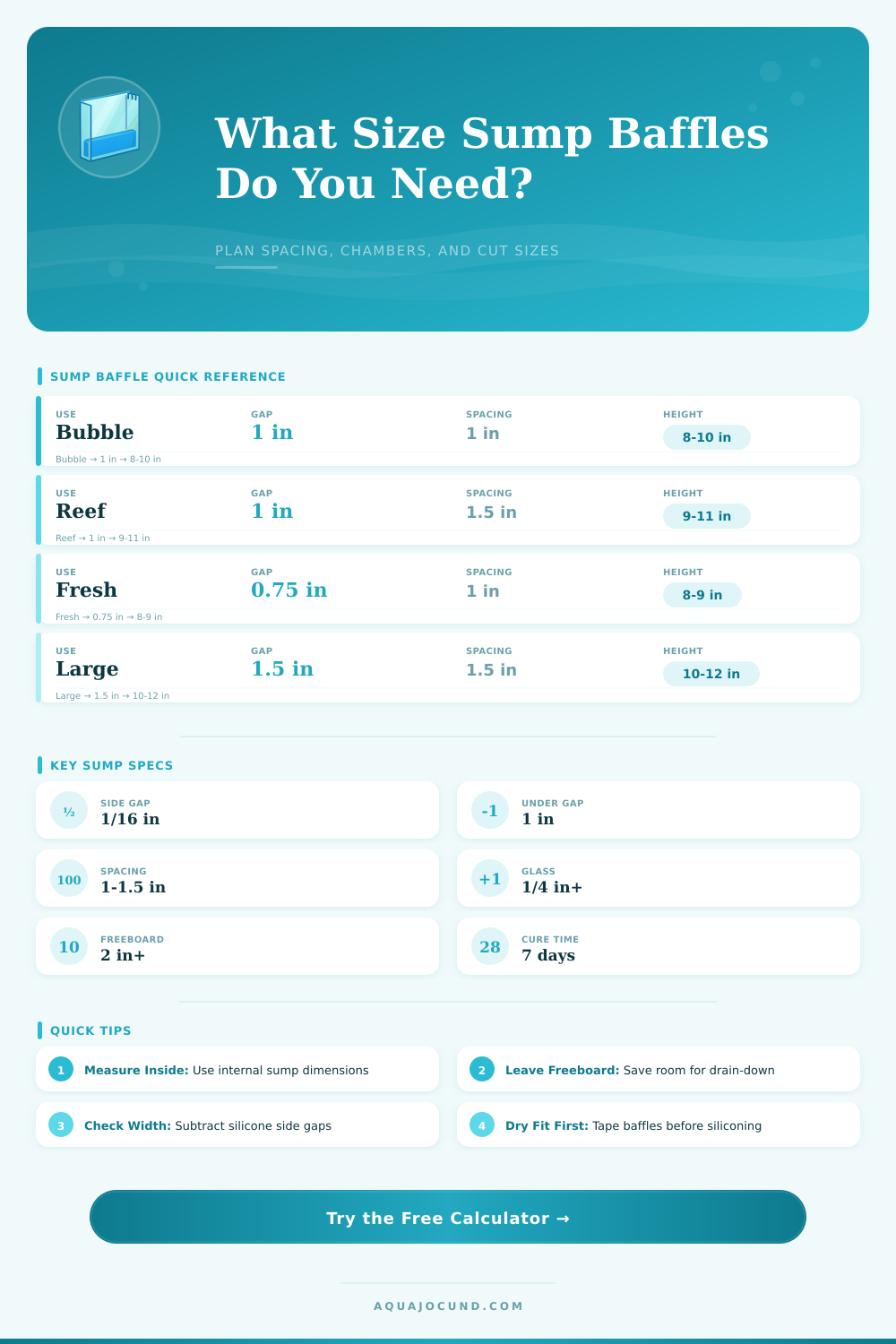
| Nano freshwater | 2 | 0.75-1 in | 0.75 in | Simple divider and trap |
| Reef skimmer sump | 3 | 1-1.5 in | 1 in | Classic over-under-over trap |
| Refugium sump | 4 | 1-1.5 in | 1 in | Trap plus refugium wall |
| Large display sump | 5-6 | 1.5 in | 1-1.5 in | More room for higher flow |
| Sump Size | Typical Inside Dimensions | Useful Water Height | Common Layout |
|---|---|---|---|
| 10 gallon | 19.5 x 9.5 x 11.5 in | 7-8 in | 2 baffles, compact return |
| 20 long | 29.5 x 11.5 x 11.5 in | 8-9 in | 3 baffles, small skimmer |
| 29 gallon | 29.5 x 11.5 x 17.5 in | 9-11 in | 3 baffles, more freeboard |
| 40 breeder | 35.5 x 17.5 x 15.5 in | 9-10 in | 4 baffles, refugium option |
| 55 gallon | 47.5 x 12.5 x 20.5 in | 10-12 in | 4-5 baffles, long chambers |
| 75 gallon | 47.5 x 17.5 x 20.5 in | 10-12 in | 5 baffles, high capacity |
| Measurement | Formula | Why It Matters | Check Before Cutting |
|---|---|---|---|
| Baffle width | Inside width - 2 side gaps | Leaves silicone room on both sides | Measure front and back width |
| Over baffle height | Operating water height | Sets skimmer/refugium water depth | Match skimmer requirement |
| Under baffle height | Water height, raised by gap | Creates under-flow path | Confirm top still clears waterline |
| Freeboard | Sump height - water height | Holds display drain-down | Test during pump-off trial |
Measure inside the sump. Rimmed aquariums, trim, bowed panes, and old silicone can change the real width. Take several width measurements and use the smallest one.
Leave pump-off freeboard. Your sump must hold water that drains from plumbing and display overflow teeth when the return pump stops.
Do not force the pane. A baffle cut too wide can crack glass. The side silicone gap is small, but it is not optional.
Dry fit the entire layout. Tape the baffles in place, confirm equipment clearance, then silicone and allow the sump to cure fully before filling.
An aquarium sump’s filtration container require a functional baffle system to perform corectly. A baffle is the vertical pane of glass or acrylic that define the aquarium sump into separate chamber. If a person creates a baffle system that does not provide adequate function for the aquarium sump, the aquarium sump can create excessive noise, produce bubbles from the water, or allow for uneven movement of the water throughout the sump.
The baffles that define the aquarium sump are critical to the function that the aquarium sump perform. Depending on the type of aquarium setup that a person design for there aquarium, the function of the baffles will change. For instance, in a reef aquarium, baffles will help form a bubble trap for the air to escape from the water before it enter the return pump.
How to Fit Baffles in an Aquarium Sump
However, for freshwater aquariums, the baffles helps to separate the chambers for a skimmer pump from the return pump chamber. The dimension of the aquarium sump will determine how many baffles a person can install into the sump. The length of the sump provide space for the chambers and baffles within the sump.
The operating water height will determine the depth of the water over or under the baffles. The sump must have a certain amount of freeboard to allow for the drain down of the display tank into the sump. If the aquarium sump has insufficient freeboard, the water from the drain down will cause the sump to overflow.
The spacing between the baffles determine how easily a person can clean the sump and how the water will move through the sump. If the spacing between the baffles are too close together, the space between the baffles will be difficultly to clean and will trap bubbles within that area. However, if there is too much space between the baffles, the sump will lose some of the length of the sump to the baffles, preventing it from be used for other purposes within the sump.
The gap under the baffle will determine the movement of the water from one chamber to the next chamber in the sump. Therefore, the size of the gaps between the baffles should of be according to the required flow rate of the water in the sump and the size of the equipment to be install in that sump. The material used to construct the baffles determine the rigidity of the baffle walls.
However, using thick glass or thick acrylic will take up more linear space for the sump than using thinner material for the baffles. Because acrylic flexes different than glass, the gaps between the sides of the baffles made of acrylic will have to be different from the gaps between the sides of the glass baffles. Additionally, the thickness of the material should allow the baffles to fit into the sump without leaving gaps that are too large for the aquarium sump.
Each of the chambers within the sump must have enough room for the equipment required for each of those chambers. For instance, the return pump chamber must have enough horizontal space for the return pump to allow for the pump to not crowd the final baffle within the sump. The same applies to the skimmer and the refugium chamber; each must have enough room for the equipment to be install into each of those chambers.
If the aquarium sump is designed such that the chambers are too small for the required equipment, the sump will not be able to function as it is require to. Finally, a person should perform the baffles in a dry fit to the aquarium sump. A dry fit means installing baffles into a sump without using any silicone to adhere the baffles to the sump.
During this dry fit, the equipment that will be housed in the sump should be able to completely clear the baffles, and the water level should be at an appropriate height for each of the sumps function. Once a person confirms the dimension and the proper fit of each baffle, they can proceed to seal the sumps with silicone. By properly planning the dimension of each baffle and the chambers within the sump, an aquarium will run quiet and require less maintenance for the proper function of its sump.