
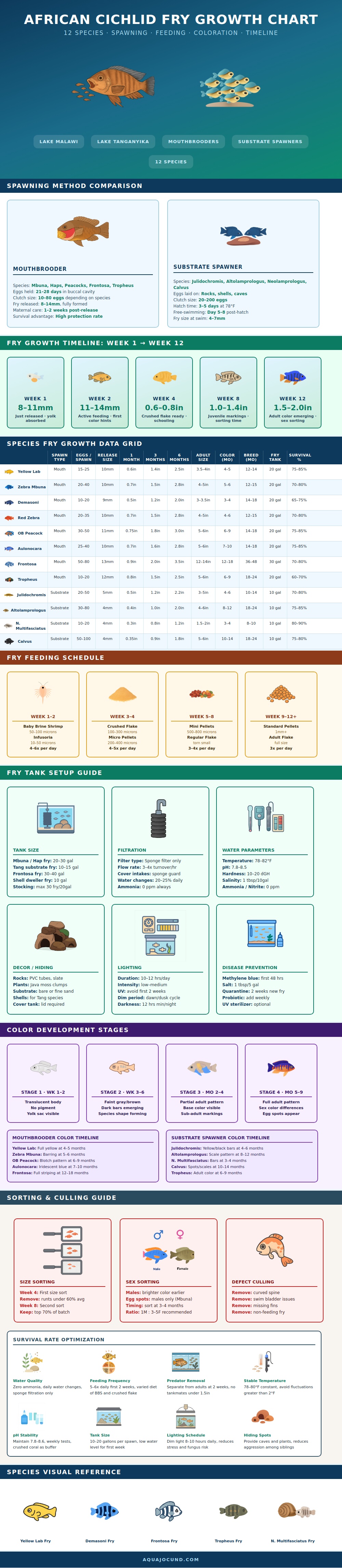
To properly raise African cichlid fry, you must provide appropriate care for there survival. The survival of African cichlid fry depends on feeding the fry and maintaining the right water condition for them. You must understand the growth stage of African cichlid fry because the fry from different species of African cichlids will grow in slightly different ways.
For example, mouthbrooder fry, like peacock and frontosa cichlids, will exit their mother mouth as free-swimming fry that doesnt have a yolk sac. In contrast, fry from species that lay substrate spawn will release their eggs on rocks and shells, and their fry will require different care because they are smaller than mouthbrooder fry. Feeding the fry is the best way to aid the growth of the fry; you must feed them food that is an appropriate size for there mouths.
How to Raise African Cichlid Fry
For the first week, fry will eat infusoria or baby brine shrimp because their mouths is too small for other types of food. As their mouths grow, you will need to feed them micro pellets. Feeding them too little will stall there growth, while feeding them too much will foul the tanks water and make the water poor in quality.
Most cichlid breeder will move their fry to standard cichlid pellets after three month of age when their fry have grown to the point where the standard food will satisfy their diet. Maintaining the correct water parameters is vital to the health of African cichlid fry. African cichlid fry require specific water parameters to exist and to prevent their death.
For example, the water temperature in the tank must be stable around 80 degree Fahrenheit. Furthermore, you must undergo daily water changes to keep the ammonia levels at zero because even a small amount of ammonia can prove fatal to African cichlid fry. Finally, the chemistry of the water must remain alkaline and hard to allow for the proper growth of the fry, and a small amount of salt must be added to aid in the health of their gill.
In addition to maintaining the correct water parameters, the equipment for the tank also matters when raising African cichlid fry. For example, sponge filters are recommended for fry because they create a gentler environment for the fry and wont “suck” the fry into the filter. Additionally, the water level in the tank should be low when raising fry so that they can easily reach the surface of the water.
You can add plant like java moss, or add PVC pipes into the tanks so that the fry can hide in these area. Lastly, the different species of African cichlids will require different amount of water in their tanks. For example, yellow lab cichlid fry are known to be forgiving of beginners tanks because their fry have a high rate of survival.
Frontosa cichlid fry will grow more slow than other species of African cichlids, so they require more space in their tanks. Finally, tanganyikan shell-dweller fry will reach the size required to reproduce, but they will require precise hiding spot in their tanks because their mouths are smaller when they are fry. Another important task with African cichlid fry is culling.
Culling ensures that the strongest African cichlid fry are included in the gene pool. At four week of age, the fry should of been graded according to their size. Any fry that are significantly smaller than the other fry should be removed from the tank.
By removing these smaller fry, the remaining fry will not contract disease from them and there will be no competition for food between the large fry and small fry. Additionally, you can sexually sort the tank at three month of age to ensure that there will be an appropriate male to female ratio in the tank so as to prevent aggression among the fishes. Finally, like all fish in your aquarium, African cichlid fry will need to be monitored daily to ensure that there are no emerging problems that could threaten their life.
