
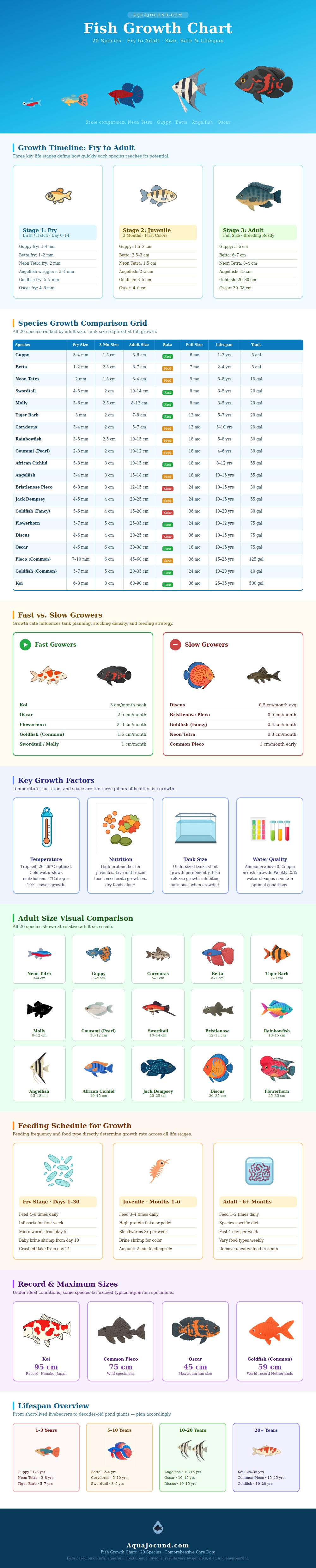
Fish growth follow a specific pattern. Fish growth require careful management of a space, food, and water temperature for the fish. Understanding the growth of the fish is essential to determine the space that the fish will requires and how often the fish need to be fed.
Without planning for the growth of the fish, the fish may grew to become to larger for the aquarium. The life cycle of the fish begin with the fry stage. At this life stage, the fish is small and require food with small particles.
How Fish Grow and How to Care for Them
Following the fry stage is the juvenile stage of the life cycle. At this life stage, the fish grows to be larger and display colors. The last life stage for a fish is an adult stage when the fish are able to reproduce.
However, the growth stage are not constant. Fish growth is rapid at the beginning of the life cycle and then slowlyly during the adult stage of the life cycle. Depending on the species of the fish, they will grow at different rate and reach different sizes.
Some species of fish are of such small size that they can live in nano-tanks. The small size of these fish means they require lesser space to live. Other species of fish are of large sizes and require large tanks or ponds to accommodate the growth requirements of the fish.
Using a growth chart for each species of fish will allow the fish owner to understand the growth rate of the species. Fast growing fish will reach their full size in a short period of time, while slow-growing species will take longer to reach their full size. The temperature of the water in which the fish live will play a major role in the growth of the fish.
As the water temperature increase towards the preferred temperature for tropical fish species, the metabolism of the fish increases, resulting in the fish grow at a rapid rate. Conversely, decreasing the water temperature will slow the metabolism of the fish, leading to the fish taking longer to reach their full size. Furthermore, the nutrition provided to the fish also impacts the rate of growth of the fish.
Fry require small food particles to be eaten multiple times a day. As the fish reach the juvenile life stage, they require larger food item to eat such as bloodworms and fish pellets. Adult fish only need to be fed less frequent to avoid overfeeding the fish.
The space that the fish is provided in will also affect the growth of the fish. If there is not enough space in which the fish live, the fish will stop grow. If the size of the tank in which the fish live is smaller than the fish’ required tank size, the fish will release growth inhibitors into there system.
These growth inhibitors will prevent the fish from growing to its full size. Additionally, the quality of the water in which the fish live will also affect the growth of the fish. If the water quality is poor, the growth of the fish will stall.
To prepare the water for the fish’ environment, water changes should be performed on a weekly schedule to ensure that the water parameter are maintained and the fish can properly grow. When setting up an aquarium, planning for the adult size of the fish is require. Often, people will purchase a juvenile fish due to there small size.
However, as the fish begin to grow, the tank may not be able to accommodate their size. For fast-growing species, the tank must be large enough to accommodate the adult fish. Furthermore, the growth rates of the fish should be equal in the same tank to avoid aggression from the larger fish towards the smaller sized fish in the community tank.
By planning for the adult size of the fish, individuals can enjoy a successful fish aquarium.
